

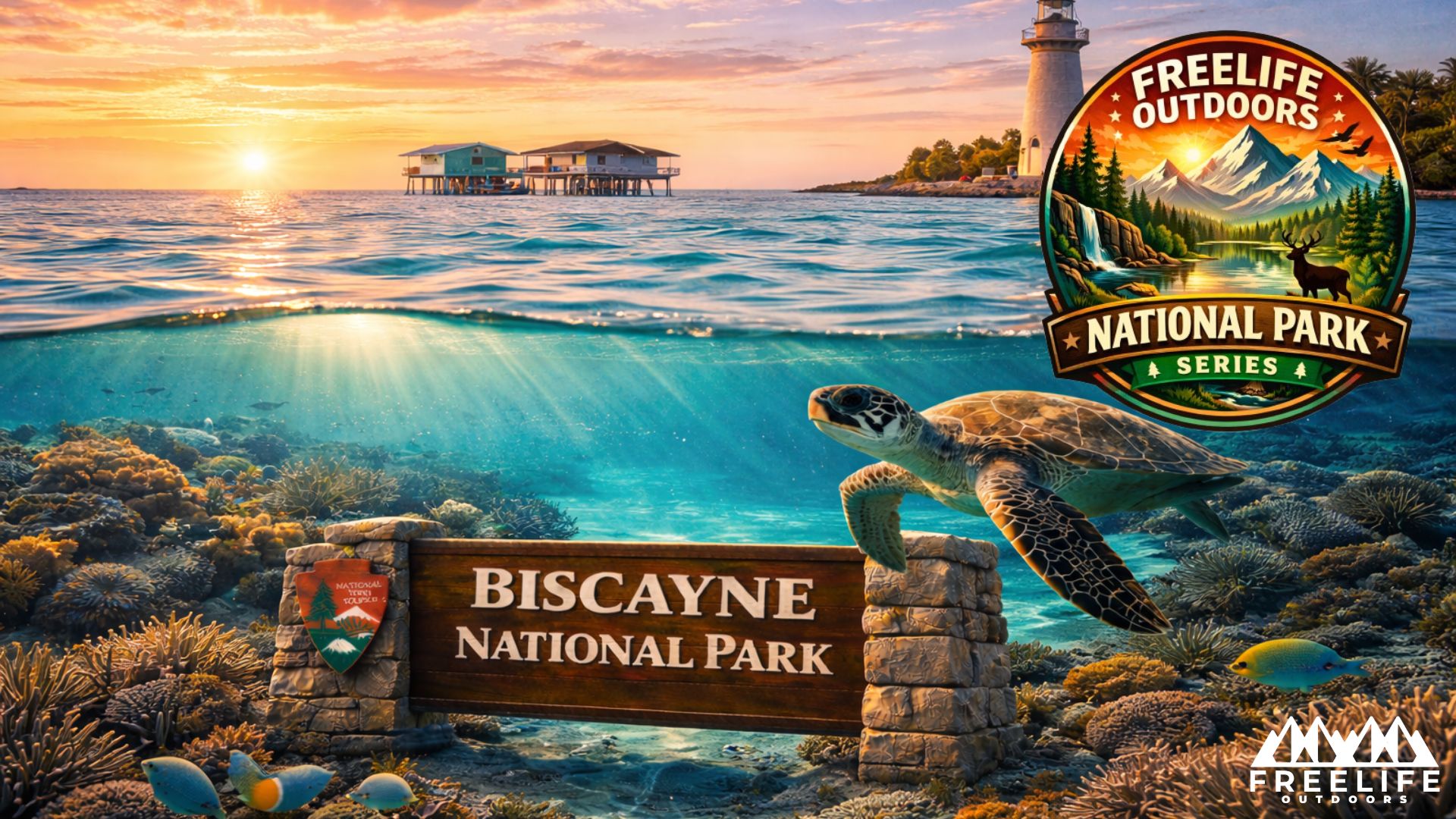
Biscayne National Park
Biscayne National Park protects a vibrant marine ecosystem just south of Miami, Florida. Unlike most national parks, 95% of the park is underwater, preserving coral reefs, seagrass beds, mangrove shorelines, and the northernmost Florida Keys islands. Visitors experience the park primarily through boating, snorkeling, diving, and kayaking. Biscayne also protects historic shipwrecks and abundant marine life within the clear turquoise waters of Biscayne Bay.
Park Data & Statistics
- State: Florida
- Established: June 28, 1980
- Park Size: ~172,971 acres
- Annual Visitors: ~700,000
- Water Coverage: ~95% of the park
- Location: Biscayne Bay and northern Florida Keys
- Nearest Major City: Miami
Best Time to Visit
Winter (December–April)
Best weather with lower humidity and cooler temperatures.
Spring
Excellent conditions for boating and snorkeling.
Summer
Hot and humid with frequent afternoon storms.
Fall
Hurricane season but often fewer crowds.
Best Photography Locations
- Boca Chita Key lighthouse
- Mangrove shorelines
- Coral reef snorkeling areas
- Biscayne Bay sunsets
- Elliott Key island landscapes
Camping & Lodging Options
Elliott Key Campground
The largest island in the park with camping facilities.
Boca Chita Key Campground
Popular boat-access campground with lighthouse views.
Camping is only accessible by boat.
Nearby lodging options are available in Miami and surrounding areas.
Indigenous / Cultural Significance
The region was historically inhabited by Indigenous peoples including the Tequesta People who lived along the coast and relied heavily on marine resources for food and transportation.
Entrance Fees & Pass Information
There is no entrance fee for Biscayne National Park.
However, fees may apply for guided tours and camping reservations.
The America the Beautiful Annual Pass covers entry to all U.S. national parks for one year.
Hidden Gems Most Visitors Miss
- Adams Key historic site
- Boca Chita lighthouse interior
- Mangrove kayaking trails
- Remote coral reef snorkeling spots
- Elliott Key historic pineapple farms
Additional Resources (1)
• Official Biscayne National Park Website (National Park Service) – Official park information, alerts, and visitor planning resources.
• Biscayne National Park Maps – Download official park maps including boating routes and island locations.
• Biscayne Snorkeling and Diving Guide – Information on snorkeling, coral reefs, and underwater exploration.
• Biscayne Current Conditions & Alerts – Weather updates, closures, and safety alerts.
• Biscayne Camping Information – Details about camping on Boca Chita Key and Elliott Key.
Popular Hiking Trails
- Convoy Point Jetty Trail
Short paved trail along the waterfront near the visitor center. - Boca Chita Key Trails
Short walking paths around Boca Chita Key and its historic lighthouse. - Elliott Key Trails
Island hiking trails through tropical hardwood hammocks. - Spite Highway Trail
Historic road trail on Elliott Key with coastal views.
Top Scenic Viewpoints
- Convoy Point waterfront
- Boca Chita Key harbor views
- Elliott Key shoreline
- Biscayne Bay coral reef areas
- Mangrove coastal zones
Beginner-Friendly Activities
- Boat tours of Biscayne Bay
- Snorkeling tours
- Kayaking through mangroves
- Visitor center exhibits
- Island picnicking
Nearby Getaway Towns
Homestead, Florida – Closest city to the park visitor center.
Miami, Florida – Major metropolitan gateway with lodging, restaurants, and transportation.
Waterfalls, Lakes, or Natural Highlights
- Biscayne Bay
- Coral reef ecosystems
- Boca Chita Key
- Elliott Key
- Maritime Heritage Trail shipwreck sites
Scenic Drives
Biscayne National Park has no scenic roads within the park itself since most of it is water.
However, scenic coastal drives nearby include:
- Florida Keys Overseas Highway
- Biscayne Bay coastal routes
Maps & Navigation Resources
Visitors can use:
- Official NPS park maps
- onX Backcountry App
- AllTrails hiking maps
- Printed visitor center maps
- GPS navigation hiking apps
One Day Itinerary
Morning
- Visit Dante Fascell Visitor Center
- Boat tour into Biscayne Bay
Midday
- Snorkeling at coral reefs
- Picnic lunch on Boca Chita Key
Afternoon
- Kayak through mangrove channels
- Explore Elliott Key
Evening
-
Sunset views over Biscayne Bay
Popular Flora
Biscayne National Park protects coastal and tropical ecosystems.
Common plants include:
- Red mangroves
- Black mangroves
- Buttonwood trees
- Sea grape plants
- Tropical hardwood hammock forests
- Seagrass beds
Popular Fauna
Marine life:
- Manatees
- Dolphins
- Sea turtles
- Reef fish
Birds:
- Brown pelicans
- Ospreys
- Great blue herons
Other wildlife:
- American crocodiles
- Nurse sharks
Advanced/Backcountry Activites
- Scuba diving shipwreck sites
- Multi-day kayaking trips
- Offshore reef diving
- Elliott Key backpacking
Park History
The waters of Biscayne Bay have been used by Indigenous peoples, fishermen, and sailors for thousands of years. The area later became known for shipwrecks and maritime trade routes. Conservation efforts in the mid-20th century led to the creation of Biscayne National Monument in 1968, which later became Biscayne National Park in 1980 to protect its fragile marine ecosystems.
Visitor Tips and Safety
- Most park areas require boat access.
- Weather conditions can change quickly on the water.
- Wear reef-safe sunscreen when snorkeling.
- Check boating and tide conditions before heading out.
- Stay hydrated in the tropical climate.
Top 5 Bucket List Experiences
- Snorkel vibrant coral reefs
- Visit Boca Chita Key lighthouse
- Explore shipwrecks on the Maritime Heritage Trail
- Kayak through mangrove forests
- Watch sunset over Biscayne Bay
Fun Facts
- 95% of Biscayne National Park is underwater.
- The park protects part of the third-largest coral reef system in the world.
- There are over 40 historic shipwrecks within park waters.
- The park is only about an hour from downtown Miami.
- Biscayne Bay contains extensive seagrass meadows critical for marine life.
Additional Resources (2)
• Florida Keys Tourism – Biscayne Guide – Travel tips and regional visitor information.
• AllTrails – Biscayne National Park Trails – Hiking maps and trail information for island trails.
• National Park Foundation – Biscayne Overview – Conservation information and park highlights.
• Visit Florida – Biscayne National Park Guide – Travel planning information and visitor highlights.
• Biscayne National Park Wikipedia Overview – Background on the park’s history, geography, and marine ecosystems.