

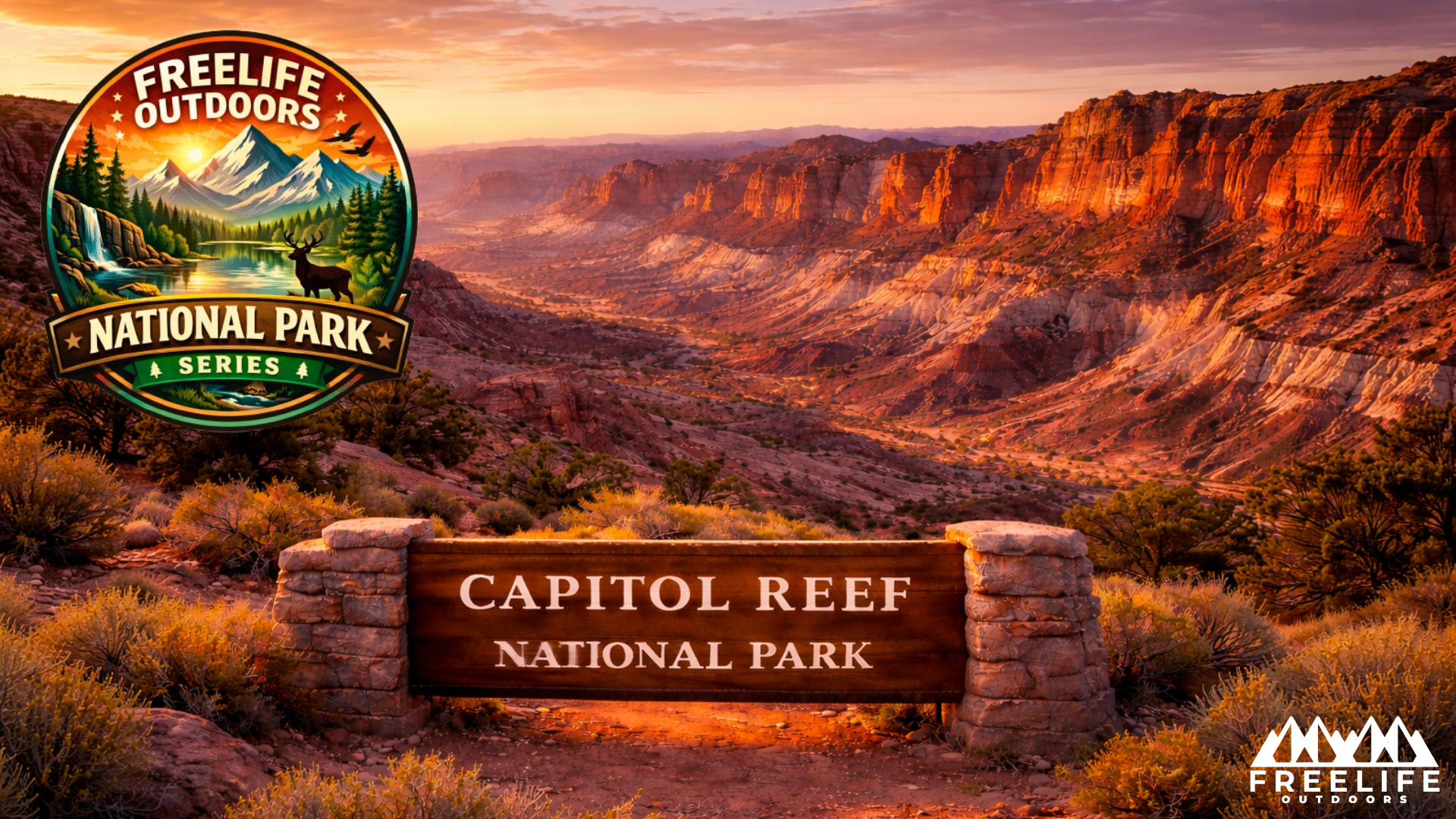
Capitol Reef National Park
Capitol Reef National Park protects one of Utah’s most unique geologic features—the Waterpocket Fold, a nearly 100-mile-long wrinkle in the Earth’s crust. Located in south-central Utah, the park features towering cliffs, colorful sandstone domes, natural arches, deep canyons, and historic pioneer orchards in the Fruita district. Compared to some other Utah parks, Capitol Reef often feels quieter and less crowded, offering visitors a chance to experience dramatic desert landscapes with fewer people.
Park Data & Statistics
- State: Utah
- Established: December 18, 1971
- Park Size: ~241,904 acres
- Annual Visitors: ~1.2 million
- Major Geological Feature: Waterpocket Fold
- Elevation Range: 3,600 – 8,960 ft
- Historic District: Fruita pioneer settlement
Best Time to Visit
Spring (March–May)
Wildflowers bloom and orchard trees blossom.
Fall (September–October)
Harvest season in the Fruita orchards and cooler hiking weather.
Summer
Hot temperatures with occasional thunderstorms.
Winter
Quiet season with mild daytime temperatures.
Best Photography Locations
- Hickman Bridge
- Fruita orchards with red cliffs
- Cathedral Valley monoliths
- Goosenecks overlook
- Waterpocket Fold landscape
Camping & Lodging Options
Fruita Campground
Popular campground surrounded by historic orchards and cottonwood trees.
Cathedral Valley Campgrounds
Primitive backcountry camping areas.
Nearby lodging is available in Torrey, Utah.
Indigenous / Cultural Significance
The region surrounding Capitol Reef was historically used by Indigenous cultures including the Fremont Culture as well as tribes such as the Ute Tribe.
Entrance Fees & Pass Information
- Private vehicle: Yes
- Motorcycle: Yes
- Individual: Yes
The America the Beautiful Annual Pass covers entry to all U.S. national parks for one year.
Hidden Gems Most Visitors Miss
- Cathedral Valley monolith formations
- Cohab Canyon viewpoints
- Fremont petroglyph panels
- Goosenecks overlook
- Lower Muley Twist Canyon
Additional Resources (1)
• Official Capitol Reef National Park Website (National Park Service) – Official park information, alerts, and visitor planning resources.
• Capitol Reef National Park Maps – Download official park maps including trails and scenic drives.
• Capitol Reef Hiking Guide – Official hiking trail descriptions and safety information.
• Capitol Reef Current Conditions & Alerts – Weather updates, closures, and park alerts.
• Capitol Reef Camping Information – Information about Fruita campground and backcountry camping.
Popular Hiking Trails
- Hickman Bridge Trail
1.8 miles round trip – Scenic hike to a large natural stone bridge. - Cassidy Arch Trail
3.4 miles round trip – Trail leading to a dramatic natural arch named after outlaw Butch Cassidy. - Capitol Gorge Trail
2 miles round trip – Easy hike through a narrow canyon with historic inscriptions. - Grand Wash Trail
4.4 miles round trip – Scenic canyon hike through towering rock walls. - Cohab Canyon Trail
3.4 miles – Moderate hike with sweeping views of Fruita Valley.
Top Scenic Viewpoints
- Panorama Point
- Sunset Point
- Goosenecks Overlook
- Capitol Gorge
- Cathedral Valley viewpoints
Beginner-Friendly Activities
- Scenic drive through Fruita
- Hickman Bridge Trail
- Gifford House historic site
- Fruita orchards fruit picking
- Short walks in Capitol Gorge
Nearby Getaway Towns
Torrey, Utah – Primary gateway town with hotels, restaurants, and visitor services.
Waterfalls, Lakes, or Natural Highlights
- Waterpocket Fold geological formation
- Hickman Bridge natural arch
- Capitol Gorge canyon
- Cathedral Valley monoliths
- Fremont River valley
Scenic Drives
A 16-mile round-trip drive passing many notable landmarks including:
- Waterpocket Fold cliffs
- Grand Wash
- Capitol Gorge
Maps & Navigation Resources
Visitors can use:
- Official NPS park maps
- onX Backcountry App
- AllTrails hiking maps
- Printed visitor center maps
- GPS navigation hiking apps
One Day Itinerary
Morning
- Sunrise at Panorama Point
- Hike Hickman Bridge Trail
Midday
- Lunch picnic in Fruita
- Visit Gifford House historic site
Afternoon
- Scenic drive through Capitol Gorge
- Explore Grand Wash Trail
Evening
- Sunset at Goosenecks Overlook
- Stargazing after dark
Popular Flora
Capitol Reef’s desert ecosystem includes a variety of hardy plants.
Common plants include:
- Pinyon pine
- Utah juniper
- Sagebrush
- Prickly pear cactus
- Cottonwood trees along rivers
- Orchard fruit trees in Fruita
Popular Fauna
Mammals:
- Mule deer
- Desert bighorn sheep
- Coyotes
- Bobcats
Birds:
- Golden eagles
- Peregrine falcons
- Canyon wrens
Reptiles:
- Collared lizards
- Rattlesnakes
Advanced/Backcountry Activites
- Cathedral Valley remote exploration
- Cassidy Arch hike
- Backpacking in Waterpocket Fold
- Long desert canyon hikes
Park History
The region was inhabited by Indigenous peoples for thousands of years before Mormon settlers arrived in the late 1800s. The small agricultural community of Fruita was established along the Fremont River. The area was designated Capitol Reef National Monument in 1937 before becoming a national park in 1971.
Visitor Tips and Safety
- Bring plenty of water when hiking in the desert.
- Some park roads require high-clearance vehicles.
- Flash floods can occur in slot canyons.
- Summer temperatures can exceed 100°F.
- Check weather conditions before exploring remote areas.
Top 5 Bucket List Experiences
- Hike to Hickman Bridge
- Drive the Capitol Reef scenic road
- Explore the Cathedral Valley district
- Pick fruit in the Fruita orchards
- Hike Cassidy Arch
Fun Facts
- The Waterpocket Fold is nearly 100 miles long.
- Fruita orchards still produce fruit that visitors can pick during harvest season.
- Early settlers called the cliffs “reefs” because they formed barriers similar to ocean reefs.
- The park’s white sandstone domes resemble the U.S. Capitol building, inspiring the name.
- Some rock layers in the park are over 270 million years old.
Additional Resources (2)
• Capitol Reef Country Tourism Guide – Local visitor information, lodging, and travel tips.
• AllTrails – Capitol Reef National Park Trails – Hiking maps, reviews, and GPS navigation.
• National Park Foundation – Capitol Reef Overview – Park highlights and conservation information.
• Utah Tourism – Capitol Reef Guide – Travel planning information and visitor highlights.
• Capitol Reef National Park Wikipedia Overview – Background on park history, geology, and wildlife.