

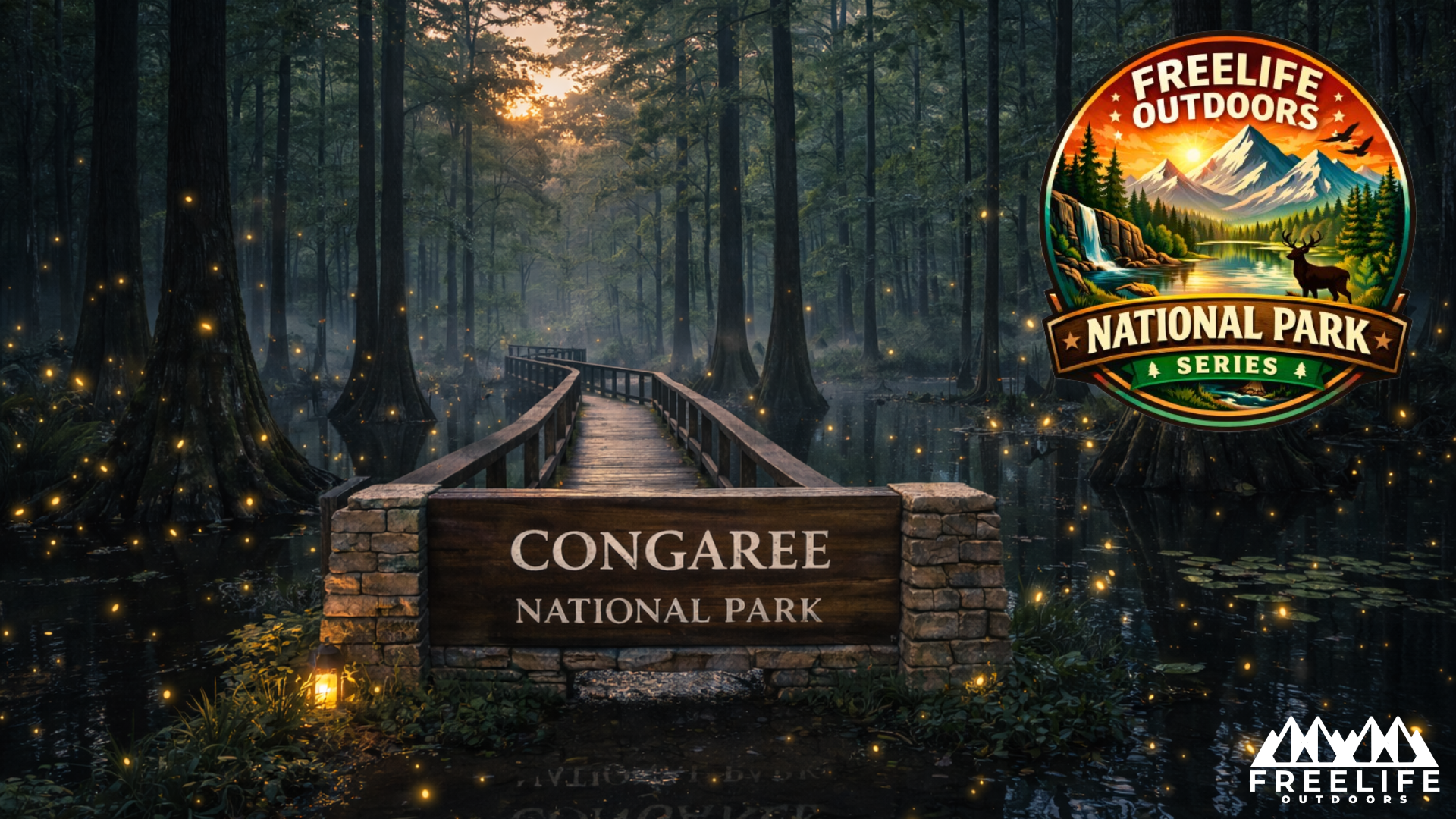
Congaree National Park
Congaree National Park protects the largest intact old-growth bottomland hardwood forest remaining in the United States. Located in central South Carolina near Columbia, the park is known for towering trees, slow-moving waterways, and rich biodiversity. Seasonal flooding from the Congaree and Wateree Rivers nourishes the forest, creating a unique ecosystem. Visitors explore the park through boardwalk trails, hiking paths, and kayaking along Cedar Creek.
Park Data & Statistics
- State: South Carolina
- Established: November 10, 2003
- Park Size: ~26,276 acres
- Annual Visitors: ~200,000
- Primary Ecosystem: Old-growth floodplain forest
- Tallest Trees: Some exceed 160 feet
- Nearest City: Columbia, South Carolina
Best Time to Visit
Spring (March–May)
Comfortable temperatures and active wildlife.
Summer
Firefly viewing events and lush green forest.
Fall (October–November)
Beautiful fall colors and cooler temperatures.
Winter
Quiet season with fewer insects and easier hiking.
Best Photography Locations
- Boardwalk Loop forest scenes
- Cypress tree reflections in flooded forest
- Weston Lake wildlife habitats
- Cedar Creek paddling routes
Camping & Lodging Options
Small developed campground near the visitor center.
Backcountry Camping
Designated sites available throughout the park.
Nearby lodging is available in Columbia, South Carolina.
Indigenous / Cultural Significance
The region was historically inhabited by the Congaree People, who lived along the river systems and relied on fishing, hunting, and river travel.
Entrance Fees & Pass Information
There is no entrance fee for Congaree National Park.
The America the Beautiful Annual Pass covers entry to all U.S. national parks for one year.
Hidden Gems Most Visitors Miss
- Kingsnake Trail backcountry sections
- Cedar Creek quiet paddling routes
- Old-growth tree groves away from the boardwalk
- Floodplain wildlife viewing areas
- Remote forest campsites
Additional Resources (1)
• Official Congaree National Park Website (National Park Service) – Official park information, alerts, and visitor planning resources.
• Congaree National Park Maps – Download official park maps including trails and waterways.
• Congaree Hiking Guide – Information about hiking trails and boardwalk routes.
• Congaree Current Conditions & Alerts – Weather updates, closures, and park alerts.
• Congaree Camping Information – Information about Longleaf Campground and backcountry camping.
Popular Hiking Trails
- Boardwalk Loop Trail
2.6 miles – The park’s most popular trail through the floodplain forest. - Weston Lake Loop Trail
4.5 miles – Scenic trail passing through wetlands and cypress trees. - Kingsnake Trail
11 miles – Long backcountry trail through remote forest areas. - River Trail
10 miles – Trail along the Congaree River with wildlife viewing opportunities.
Top Scenic Viewpoints
- Boardwalk Loop viewpoints
- Weston Lake
- Cedar Creek waterways
- Congaree River overlook areas
Beginner-Friendly Activities
- Boardwalk Loop walk
- Visitor center exhibits
- Wildlife viewing
- Short nature walks
Nearby Getaway Towns
Columbia, South Carolina – Largest nearby city offering hotels, restaurants, and visitor services.
Waterfalls, Lakes, or Natural Highlights
- Cedar Creek paddling route
- Weston Lake
- Congaree River floodplain
- Old-growth hardwood forest ecosystem
- Massive bald cypress trees
Scenic Drives
Congaree does not have scenic drives within the park, as the park is primarily preserved as a wilderness forest.
Nearby scenic routes include regional countryside roads around the Congaree River.
Maps & Navigation Resources
Visitors can use:
- Official NPS park maps
- onX Backcountry App
- AllTrails hiking maps
- Printed visitor center maps
- GPS navigation hiking apps
One Day Itinerary
Morning
- Visit the Harry Hampton Visitor Center
- Walk the Boardwalk Loop Trail
Midday
- Picnic lunch near the visitor center
- Explore Weston Lake Loop Trail
Afternoon
- Kayak Cedar Creek
- Wildlife watching along forest trails
Evening
- Sunset walk through the forest
- Seasonal firefly viewing (late spring)
Popular Flora
Congaree contains some of the tallest trees in eastern North America.
Common plants include:
- Bald cypress trees
- Water tupelo
- Loblolly pine
- Sweetgum trees
- American beech
- River birch
Popular Fauna
Mammals:
- White-tailed deer
- River otters
- Bobcats
- Raccoons
Birds:
- Barred owls
- Prothonotary warblers
- Woodpeckers
Other wildlife:
- American alligators
- Numerous amphibians and reptiles
Advanced/Backcountry Activites
- Kayaking Cedar Creek
- Kingsnake Trail hiking
- Backcountry camping
- River paddling trips
Park History
For centuries the floodplain forest was difficult to develop due to frequent flooding. Logging companies harvested some areas in the early 20th century, but conservationists worked to protect the remaining old-growth forest. The area became Congaree Swamp National Monument in 1976 and was later designated a national park in 2003.
Visitor Tips and Safety
- Mosquitoes can be heavy during warmer months.
- Flooding can occasionally affect trails.
- Bring insect repellent.
- Stay on boardwalks during wet conditions.
- Check weather conditions before paddling.
Top 5 Bucket List Experiences
- Walk the Boardwalk Loop Trail
- Paddle Cedar Creek through the forest
- Visit during the annual firefly event
- Spot wildlife along Weston Lake Trail
- Experience the towering old-growth forest
Fun Facts
- Congaree protects the largest intact old-growth floodplain forest in the U.S.
- Some trees in the park are among the tallest in eastern North America.
- The park hosts one of the largest synchronous firefly displays in North America.
- Seasonal flooding helps nourish the forest ecosystem.
- Congaree became a national park in 2003, making it one of the newer parks.
Additional Resources (2)
• Columbia South Carolina Tourism – Congaree Guide – Local travel information and visitor tips.
• AllTrails – Congaree National Park Trails – Hiking maps, reviews, and GPS navigation.
• National Park Foundation – Congaree Overview – Conservation information and park highlights.
• South Carolina Parks – Congaree Information – Travel planning and park details.
• Congaree National Park Wikipedia Overview – Background on park history, ecology, and wildlife.