

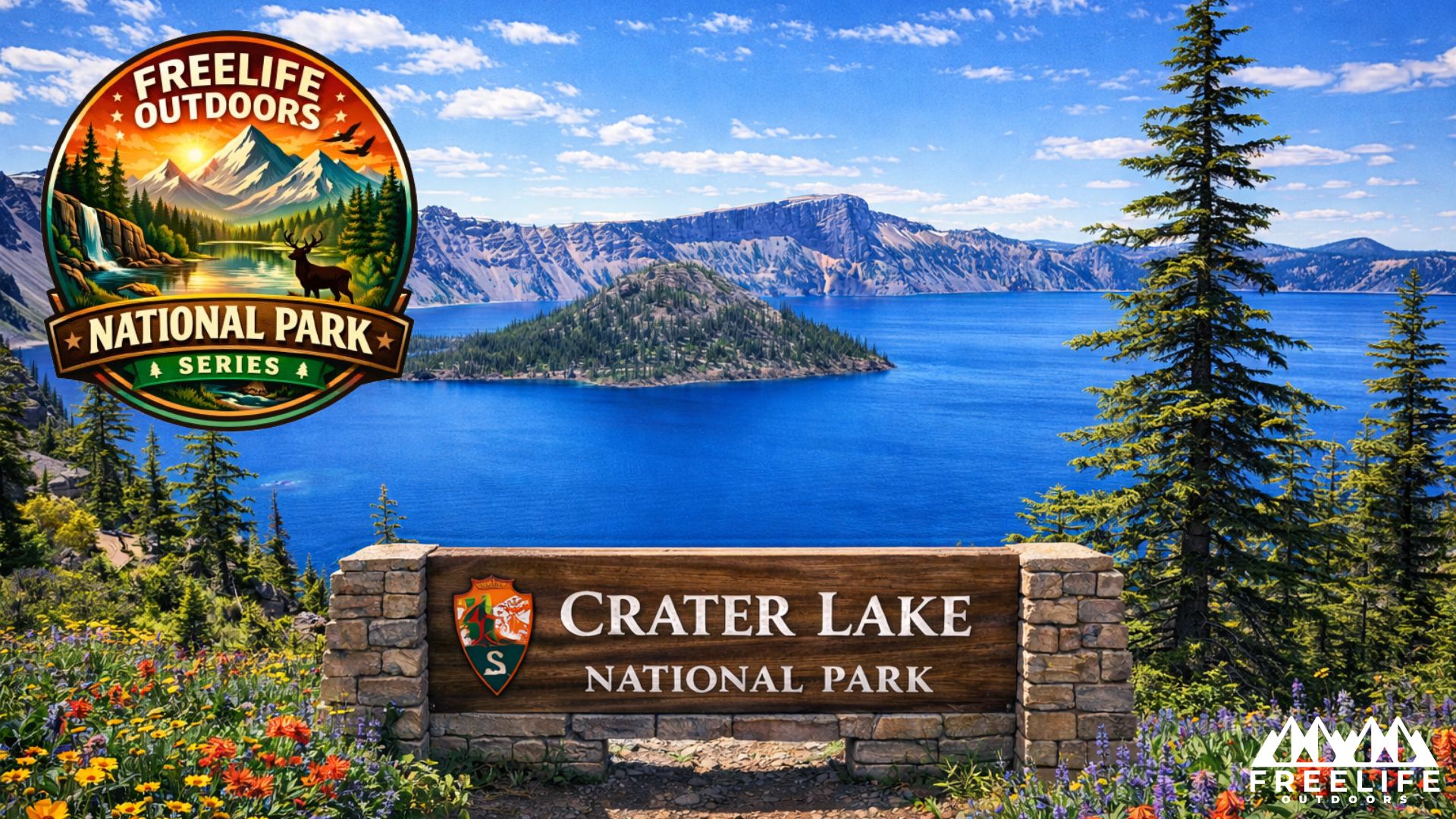
Crater Lake National Park
Crater Lake National Park protects the deepest lake in the United States, formed nearly 7,700 years ago when Mount Mazama collapsed after a massive volcanic eruption. Located in southern Oregon, the park is famous for its incredibly deep blue water, steep surrounding cliffs, and volcanic features such as Wizard Island. The lake is known for its exceptional clarity and striking beauty, attracting visitors for scenic drives, hiking, boat tours, and winter recreation.
Park Data & Statistics
- State: Oregon
- Established: May 22, 1902
- Park Size: ~183,224 acres
- Annual Visitors: ~700,000
- Lake Depth: 1,943 feet (deepest lake in the U.S.)
- Lake Diameter: ~6 miles
- Elevation: ~6,178 – 8,929 ft
Best Time to Visit
Summer (July–September)
Best access to trails, scenic drives, and boat tours.
Spring
Snow often remains at higher elevations.
Fall (September–October)
Fewer crowds and cooler weather.
Winter
Heavy snowfall creates opportunities for snowshoeing and cross-country skiing.
Best Photography Locations
- Wizard Island viewpoints
- Phantom Ship rock formation
- Watchman Overlook sunset
- Rim Village panoramic views
- Cleetwood Cove shoreline
Camping & Lodging Options
Mazama Campground
Large campground open during summer.
Lost Creek Campground
Small campground offering quieter sites.
Nearby lodging options include Crater Lake Lodge inside the park.
Indigenous / Cultural Significance
The eruption that formed Crater Lake was witnessed by Indigenous peoples including the Klamath Tribes, whose oral histories describe the volcanic event and consider the lake a sacred site.
Entrance Fees & Pass Information
- Private vehicle: Yes
- Motorcycle: Yes
- Individual: Yes
The America the Beautiful Annual Pass covers entry to all U.S. national parks for one year.
Hidden Gems Most Visitors Miss
- Plaikni Falls trail
- Pinnacles volcanic formations
- Cloudcap Overlook scenic views
- Sun Notch viewpoint
- Mount Scott summit
Additional Resources (1)
• Official Crater Lake National Park Website (National Park Service) – Official park information, alerts, and visitor planning resources.
• Crater Lake National Park Maps – Download official park maps including Rim Drive and hiking trails.
• Crater Lake Hiking Guide – Trail descriptions and safety information.
• Crater Lake Current Conditions & Alerts – Weather updates, closures, and park alerts.
• Crater Lake Boat Tours – Information about boat tours to Wizard Island.
Popular Hiking Trails
- Garfield Peak Trail
3.4 miles round trip – Stunning views overlooking Crater Lake. - Cleetwood Cove Trail
2.2 miles round trip – The only trail that reaches the lake shoreline. - Watchman Peak Trail
1.6 miles – Excellent sunset views over Wizard Island. - Discovery Point Trail
2.5 miles – Scenic hike along the lake rim. - Mount Scott Trail
4.4 miles round trip – Hike to the park’s highest point.
Top Scenic Viewpoints
- Rim Village overlook
- Watchman Overlook
- Cloudcap Overlook
- Discovery Point
- Phantom Ship Overlook
Beginner-Friendly Activities
- Rim Village viewpoints
- Scenic drive around the lake
- Visitor center exhibits
- Boat tours to Wizard Island
- Short rim hikes
Nearby Getaway Towns
Klamath Falls, Oregon – Largest nearby city offering lodging and services.
Medford, Oregon – Regional travel hub located about two hours away.
Waterfalls, Lakes, or Natural Highlights
- Crater Lake caldera
- Wizard Island volcanic cone
- Phantom Ship rock formation
- Mount Mazama volcanic remnants
- Crystal-clear lake waters
Scenic Drives
Rim Drive
A 33-mile scenic road circling the lake with numerous overlooks including:
- Watchman Overlook
- Phantom Ship Overlook
- Cloudcap Overlook
- Discovery Point
Maps & Navigation Resources
Visitors can use:
- Official NPS park maps
- onX Backcountry App
- AllTrails hiking maps
- Printed visitor center maps
- GPS navigation hiking apps
One Day Itinerary
Morning
- Sunrise at Rim Village
- Hike Garfield Peak Trail
Midday
- Scenic drive along Rim Drive
- Lunch at Rim Village
Afternoon
- Boat tour to Wizard Island
- Short hike along Discovery Point
Evening
- Sunset at Watchman Overlook
- Stargazing after dark
Popular Flora
Crater Lake’s forests consist of high-elevation conifer ecosystems.
Common plants include:
- Mountain hemlock
- Lodgepole pine
- Whitebark pine
- Shasta red fir
- Wildflowers such as lupine and paintbrush
Popular Fauna
Mammals:
- Black bears
- Mule deer
- Coyotes
- Chipmunks
Birds:
- Clark’s nutcrackers
- Steller’s jays
- Bald eagles
Other wildlife:
-
Yellow-bellied marmots
Advanced/Backcountry Activites
- Mount Scott summit hike
- Backcountry camping
- Winter snowshoeing adventures
- Long-distance rim hiking
Park History
Crater Lake formed when Mount Mazama erupted approximately 7,700 years ago. The volcano collapsed into a caldera that later filled with rain and snowmelt, forming the lake. Crater Lake became the fifth national park in the United States in 1902.
Visitor Tips and Safety
- Snow can remain into early summer.
- Bring layers due to cooler high-elevation temperatures.
- Check road conditions before visiting.
- Rim Drive may close during winter.
- Stay on designated trails near steep cliffs.
Top 5 Bucket List Experiences
- Drive the scenic Rim Drive
- Watch sunset from Watchman Overlook
- Take a boat tour to Wizard Island
- Hike Garfield Peak
- Photograph Phantom Ship
Fun Facts
- Crater Lake is the deepest lake in the United States.
- The lake has no rivers flowing into or out of it.
- The water is among the clearest of any lake in the world.
- Wizard Island is actually a volcanic cinder cone formed after the caldera collapse.
- Snowfall in the park averages over 40 feet per year.
Additional Resources (2)
• Crater Lake Hospitality & Lodging – Information about lodging and visitor services.
• AllTrails – Crater Lake National Park Trails – Hiking maps, reviews, and GPS navigation.
• National Park Foundation – Crater Lake Overview – Conservation information and park highlights.
• Oregon Tourism – Crater Lake Guide – Travel tips and visitor highlights.
• Crater Lake National Park Wikipedia Overview – Background on park history, geology, and wildlife.