
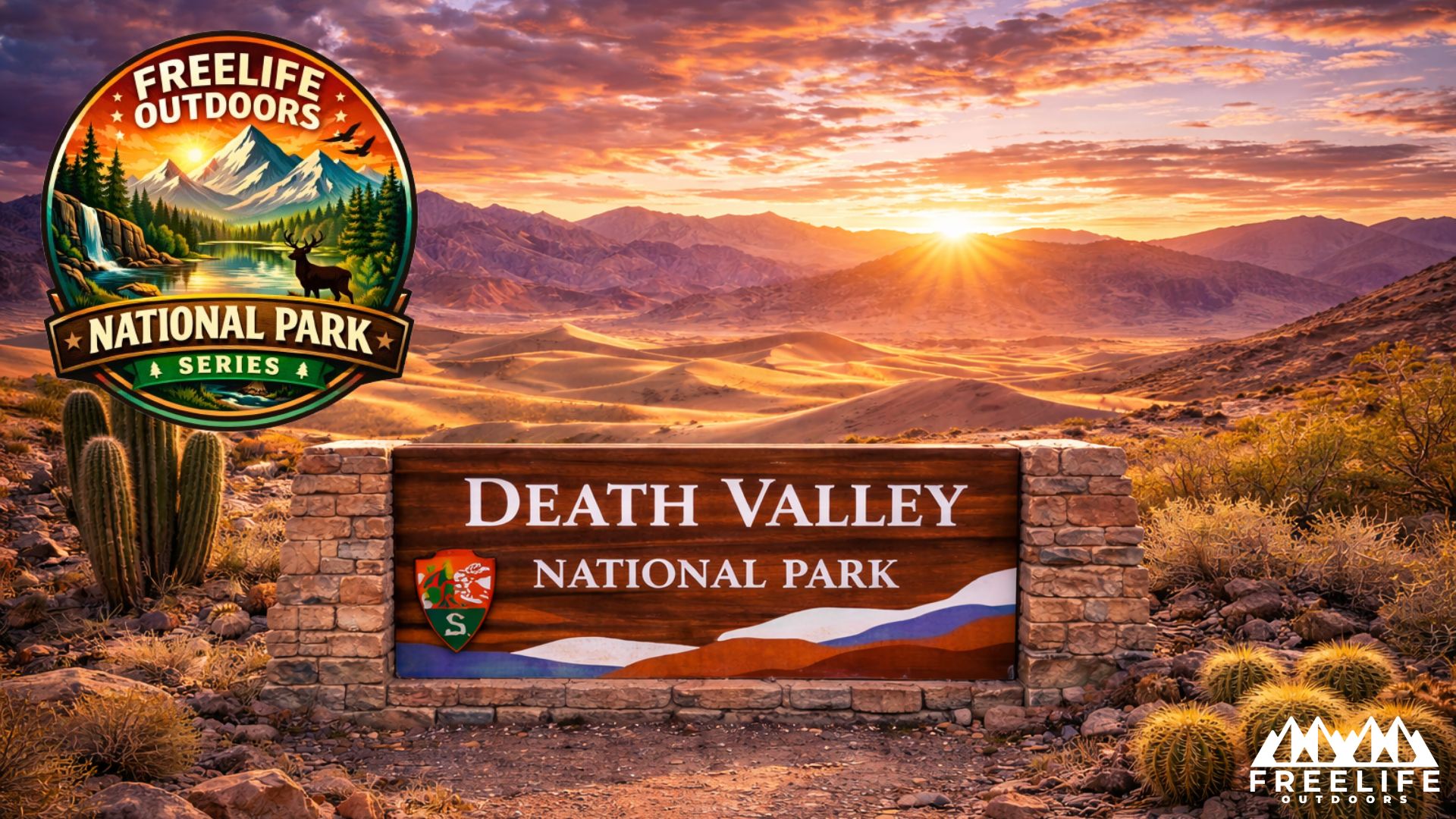
Death Valley National Park
Death Valley National Park is the hottest, driest, and lowest national park in the United States. Located along the California–Nevada border, the park protects vast desert landscapes including salt flats, sand dunes, colorful badlands, rugged mountains, and deep canyons. Despite its extreme environment, Death Valley supports diverse plant and animal life. Visitors explore scenic drives, unique geologic formations, and some of the most dramatic desert landscapes in North America.
Park Data & Statistics
- States: California and Nevada
- Established: October 31, 1994 (National Park designation)
- Park Size: ~3.4 million acres
- Annual Visitors: ~1.1 million
- Lowest Elevation: Badwater Basin (−282 ft)
- Highest Elevation: Telescope Peak (11,043 ft)
- Hottest Recorded Temperature: 134°F (1913)
Best Time to Visit
Fall (October–November)
Pleasant temperatures and ideal hiking conditions.
Winter (December–February)
Cool weather and excellent sightseeing.
Spring (March–April)
Wildflower blooms during wetter years.
Summer
Extreme heat often exceeding 110°F.
Best Photography Locations
- Zabriskie Point sunrise
- Mesquite Flat Sand Dunes sunrise or sunset
- Badwater Basin salt flats
- Artist’s Palette colorful hills
- Dante’s View panoramic overlook
Camping & Lodging Options
Furnace Creek Campground
Largest developed campground in the park.
Mesquite Spring Campground
Quieter campground in the northern park.
Stovepipe Wells Campground
Convenient location near sand dunes.
Lodging is also available at Furnace Creek Resort.
Indigenous / Cultural Significance
The region has long been inhabited by the Timbisha Shoshone Tribe, who still maintain a presence within the park today.
Entrance Fees & Pass Information
- Private vehicle: Yes
- Motorcycle: Yes
- Individual: Yes
The America the Beautiful Annual Pass covers entry to all U.S. national parks for one year.
Hidden Gems Most Visitors Miss
- Eureka Sand Dunes
- Racetrack Playa moving rocks
- Mosaic Canyon marble walls
- Darwin Falls desert oasis
- Aguereberry Point overlook
Additional Resources (1)
• Official Death Valley National Park Website (National Park Service) – Official park information, alerts, and visitor planning resources.
• Death Valley National Park Maps – Download official park maps including scenic drives and hiking trails.
• Death Valley Hiking Guide – Trail descriptions and safety information.
• Death Valley Current Conditions & Alerts – Weather updates, closures, and park alerts.
• Death Valley Camping Information – Information about campgrounds and reservations.
Popular Hiking Trails
- Golden Canyon Trail
2 miles – Hike through colorful badlands formations. - Badwater Salt Flats Walk
Short walk across the lowest point in North America. - Mesquite Flat Sand Dunes Walk
Explore massive sand dunes near Stovepipe Wells. - Mosaic Canyon Trail
4 miles round trip – Marble canyon walls and polished rock. - Telescope Peak Trail
14 miles round trip – Challenging hike to the park’s highest summit.
Top Scenic Viewpoints
- Zabriskie Point
- Dante’s View
- Badwater Basin
- Artist’s Palette
- Father Crowley Vista Point
Beginner-Friendly Activities
- Scenic drives through the valley
- Salt flats walk at Badwater Basin
- Zabriskie Point viewpoints
- Mesquite Flat Sand Dunes exploration
- Visitor center exhibits
Nearby Getaway Towns
Pahrump, Nevada – Eastern gateway city.
Lone Pine, California – Western gateway town.
Waterfalls, Lakes, or Natural Highlights
- Badwater Basin salt flats
- Mesquite Flat Sand Dunes
- Zabriskie Point badlands
- Artist’s Palette colorful hills
- Ubehebe Crater volcanic formation
Scenic Drives
Badwater Road Scenic Drive
A popular drive passing:
- Zabriskie Point
- Badwater Basin
- Artist’s Drive
- Devil’s Golf Course
Maps & Navigation Resources
Visitors can use:
- Official NPS park maps
- onX Backcountry App
- AllTrails hiking maps
- Printed visitor center maps
- GPS navigation hiking apps
One Day Itinerary
Morning
- Sunrise at Zabriskie Point
- Visit Badwater Basin
Midday
- Lunch at Furnace Creek
- Explore Artist’s Palette drive
Afternoon
- Walk Mesquite Flat Sand Dunes
- Visit Devil’s Golf Course
Evening
- Sunset at Dante’s View
- Stargazing in the desert
Popular Flora
Despite the harsh desert environment, many plants thrive in Death Valley.
Common plants include:
- Creosote bush
- Joshua trees
- Desert holly
- Mesquite trees
- Wildflowers during spring bloom
Popular Fauna
Mammals:
- Desert bighorn sheep
- Coyotes
- Kit foxes
- Kangaroo rats
Birds:
- Roadrunners
- Golden eagles
- Ravens
Reptiles:
- Sidewinder rattlesnakes
- Desert tortoises
Advanced/Backcountry Activites
- Telescope Peak summit hike
- Backcountry desert camping
- Off-road exploration in remote valleys
- Long-distance desert hiking routes
Park History
Death Valley was shaped by geological forces including tectonic activity and erosion. The region became famous during the California Gold Rush when travelers crossed the harsh desert landscape. The area was designated a national monument in 1933 and later became a national park in 1994.
Visitor Tips and Safety
- Carry plenty of water when exploring the desert.
- Avoid hiking during extreme summer heat.
- Cell service is limited in most areas.
- Check road conditions before exploring remote areas.
- Stay on designated trails when possible.
Top 5 Bucket List Experiences
- Walk the salt flats at Badwater Basin
- Watch sunrise at Zabriskie Point
- Explore Mesquite Flat Sand Dunes
- Drive Artist’s Palette scenic road
- View the valley from Dante’s View
Fun Facts
- Death Valley contains the lowest point in North America.
- The park is larger than several U.S. states.
- The hottest temperature ever recorded on Earth was measured here.
- Rare desert wildflower blooms can transform the valley into a colorful landscape.
- The park is one of the best stargazing locations in the United States.
Additional Resources (2)
• Death Valley Tourism Guide – Visitor information, lodging, and regional attractions.
• AllTrails – Death Valley National Park Trails – Hiking maps, reviews, and GPS navigation.
• National Park Foundation – Death Valley Overview – Conservation information and park highlights.
• Nevada Tourism – Death Valley Guide – Travel tips and visitor highlights.
• Death Valley National Park Wikipedia Overview – Background on park history, geology, and wildlife.