

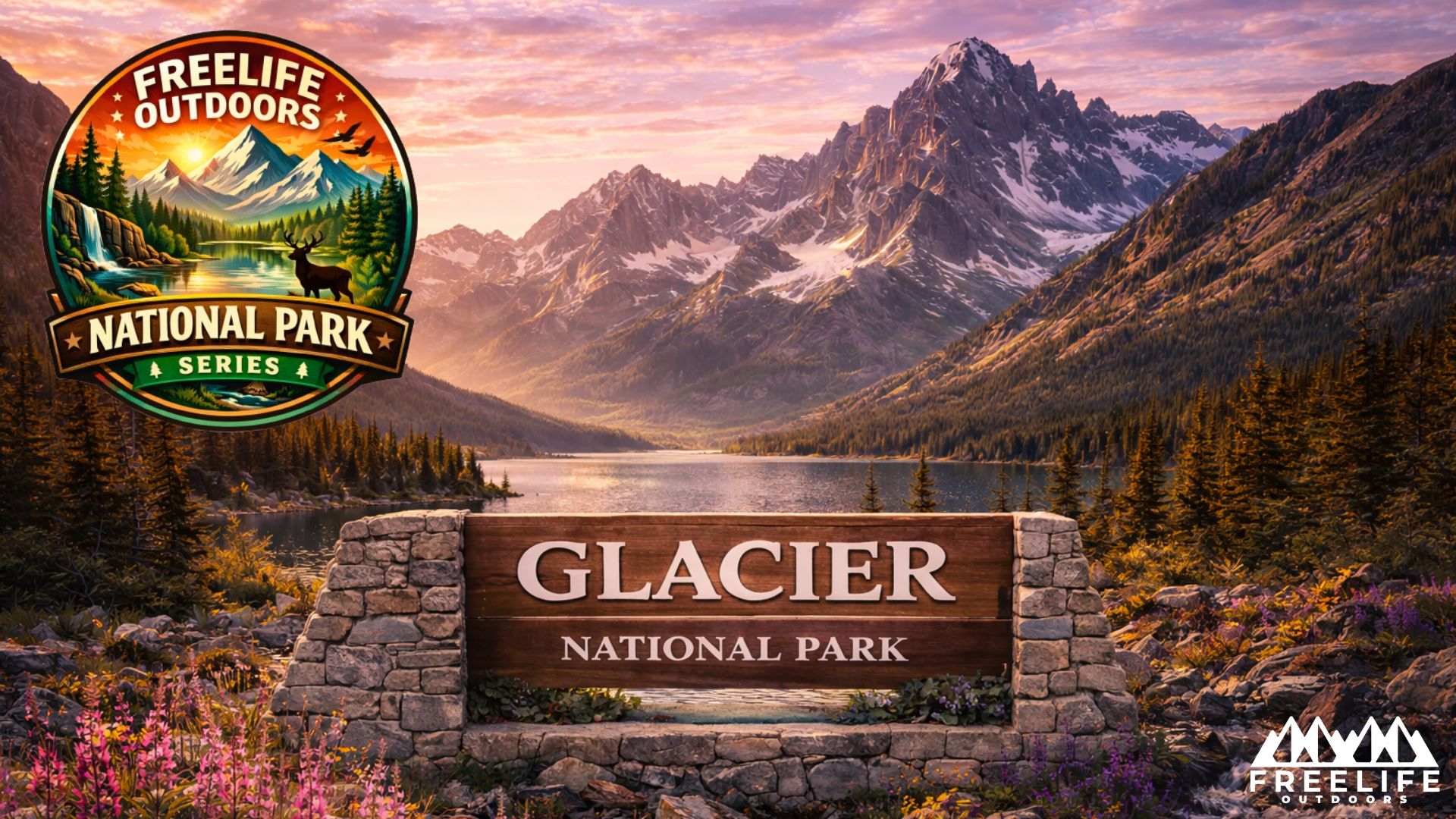
Glacier National Park
Glacier National Park is one of the most spectacular mountain parks in North America. Located in northern Montana along the Canadian border, the park features rugged peaks, alpine lakes, glaciers, and over 700 miles of hiking trails. Known as the “Crown of the Continent,” Glacier is famous for its breathtaking scenery, abundant wildlife, and the iconic Going-to-the-Sun Road, one of the most scenic drives in the world.
Park Data & Statistics
- State: Montana
- Established: May 11, 1910
- Park Size: ~1,013,322 acres
- Annual Visitors: ~3 million
- Number of Glaciers (currently): ~25 active glaciers
- Miles of Hiking Trails: 700+
- International Park: Part of Waterton-Glacier International Peace Park
Best Time to Visit
Summer (July–September)
Best weather and full access to Going-to-the-Sun Road.
Fall (September–October)
Fewer crowds and golden larch trees.
Winter
Snowshoeing and cross-country skiing.
Spring
Wildlife activity increases but many roads remain closed due to snow.
Best Photography Locations
- Lake McDonald sunrise reflections
- Grinnell Glacier and turquoise lakes
- Logan Pass alpine views
- Many Glacier Hotel and Swiftcurrent Lake
- Going-to-the-Sun Road viewpoints
Camping & Lodging Options
Popular campgrounds include:
Apgar Campground
Large campground near Lake McDonald.
Many Glacier Campground
Excellent location for hiking.
St. Mary Campground
Large campground on the east side of the park.
Historic lodging options include:
- Many Glacier Hotel
- Lake McDonald Lodge
Indigenous / Cultural Significance
The land within Glacier National Park is traditionally connected to Indigenous tribes including the Blackfeet Nation, the Salish Tribe, and the Kootenai Tribe.
Entrance Fees & Pass Information
- Private vehicle: Yes
- Motorcycle: Yes
- Individual: Yes
The America the Beautiful Annual Pass covers entry to all U.S. national parks for one year.
Hidden Gems Most Visitors Miss
- Bowman Lake remote scenery
- Two Medicine Valley
- Virginia Falls
- Ptarmigan Tunnel
- Red Rock Falls
Additional Resources (1)
• Official Glacier National Park Website (National Park Service) – Official park information, alerts, and visitor planning resources.
• Glacier National Park Maps – Download official park maps including trails and scenic drives.
• Glacier National Park Hiking Guide – Trail descriptions and safety information.
• Glacier National Park Current Conditions & Alerts – Weather updates, closures, and park alerts.
• Going-to-the-Sun Road Information – Updates about road access and vehicle reservations.
Popular Hiking Trails
- Hidden Lake Overlook Trail
3 miles round trip – One of the most popular hikes from Logan Pass. - Grinnell Glacier Trail
10.6 miles round trip – Spectacular hike to a glacier and alpine lakes. - Highline Trail
11.8 miles – Scenic trail along the Garden Wall ridge. - Avalanche Lake Trail
4.5 miles round trip – Beautiful lake surrounded by waterfalls. - Iceberg Lake Trail
9.6 miles round trip – Incredible alpine lake surrounded by towering cliffs.
Top Scenic Viewpoints
- Logan Pass
- St. Mary Lake
- Many Glacier Valley
- Lake McDonald shoreline
- Hidden Lake overlook
Beginner-Friendly Activities
- Scenic drive along Going-to-the-Sun Road
- Walk the Trail of the Cedars
- Visitor center exhibits
- Short hikes near Logan Pass
Nearby Getaway Towns
West Glacier, Montana – Main western entrance to the park.
St. Mary, Montana – Gateway to the eastern side of the park.
Waterfalls, Lakes, or Natural Highlights
- Lake McDonald
- Grinnell Glacier
- Hidden Lake
- St. Mary Lake
- Iceberg Lake
Scenic Drives
Going-to-the-Sun Road
A legendary 50-mile mountain road crossing the Continental Divide with incredible views including:
- Logan Pass
- St. Mary Lake
- Lake McDonald Valley
Maps & Navigation Resources
Visitors can use:
- Official NPS park maps
- onX Backcountry App
- AllTrails hiking maps
- Printed visitor center maps
- GPS navigation hiking apps
One Day Itinerary
Morning
- Sunrise at Lake McDonald
- Drive Going-to-the-Sun Road
Midday
- Hike Hidden Lake Overlook Trail
- Lunch at Logan Pass
Afternoon
- Explore St. Mary Lake viewpoints
- Visit Many Glacier area
Evening
- Sunset at Swiftcurrent Lake
- Wildlife viewing
Popular Flora
Glacier National Park contains diverse alpine and forest ecosystems.
Common plants include:
- Lodgepole pine
- Western larch
- Beargrass
- Glacier lilies
- Wild lupine
Popular Fauna
Large mammals:
- Grizzly bears
- Black bears
- Mountain goats
- Bighorn sheep
- Moose
Birds:
- Bald eagles
- Clark’s nutcrackers
- Ptarmigans
Other wildlife:
- Marmots
- Pikas
Advanced/Backcountry Activites
- Multi-day backpacking trips
- Glacier trekking
- High alpine ridge hikes
- Backcountry camping
Park History
Glacier National Park was established in 1910 to preserve its stunning mountain landscapes and glaciers. In 1932, the park joined with Canada’s Waterton Lakes National Park to form the world’s first International Peace Park.
Visitor Tips and Safety
- Carry bear spray when hiking.
- Check road conditions before traveling.
- Weather can change quickly in the mountains.
- Reservations may be required during peak season.
- Stay on marked trails.
Top 5 Bucket List Experiences
- Drive the Going-to-the-Sun Road
- Hike the Highline Trail
- See Grinnell Glacier
- Watch sunrise at Lake McDonald
- Spot mountain goats at Logan Pass
Fun Facts
- Glacier National Park once contained over 150 glaciers.
- The park forms part of the Waterton-Glacier International Peace Park.
- Going-to-the-Sun Road took 11 years to construct.
- The park protects some of the most pristine ecosystems in North America.
- Glacier is often called the “Crown of the Continent.”
Additional Resources (2)
• Glacier Country Tourism Guide – Regional visitor information and travel tips.
• AllTrails – Glacier National Park Trails – Hiking maps, reviews, and GPS navigation.
• National Park Foundation – Glacier Overview – Conservation information and park highlights.
• Montana Tourism – Glacier Guide – Travel tips and visitor highlights.
• Glacier National Park Wikipedia Overview – Background on park history, geography, and wildlife.