

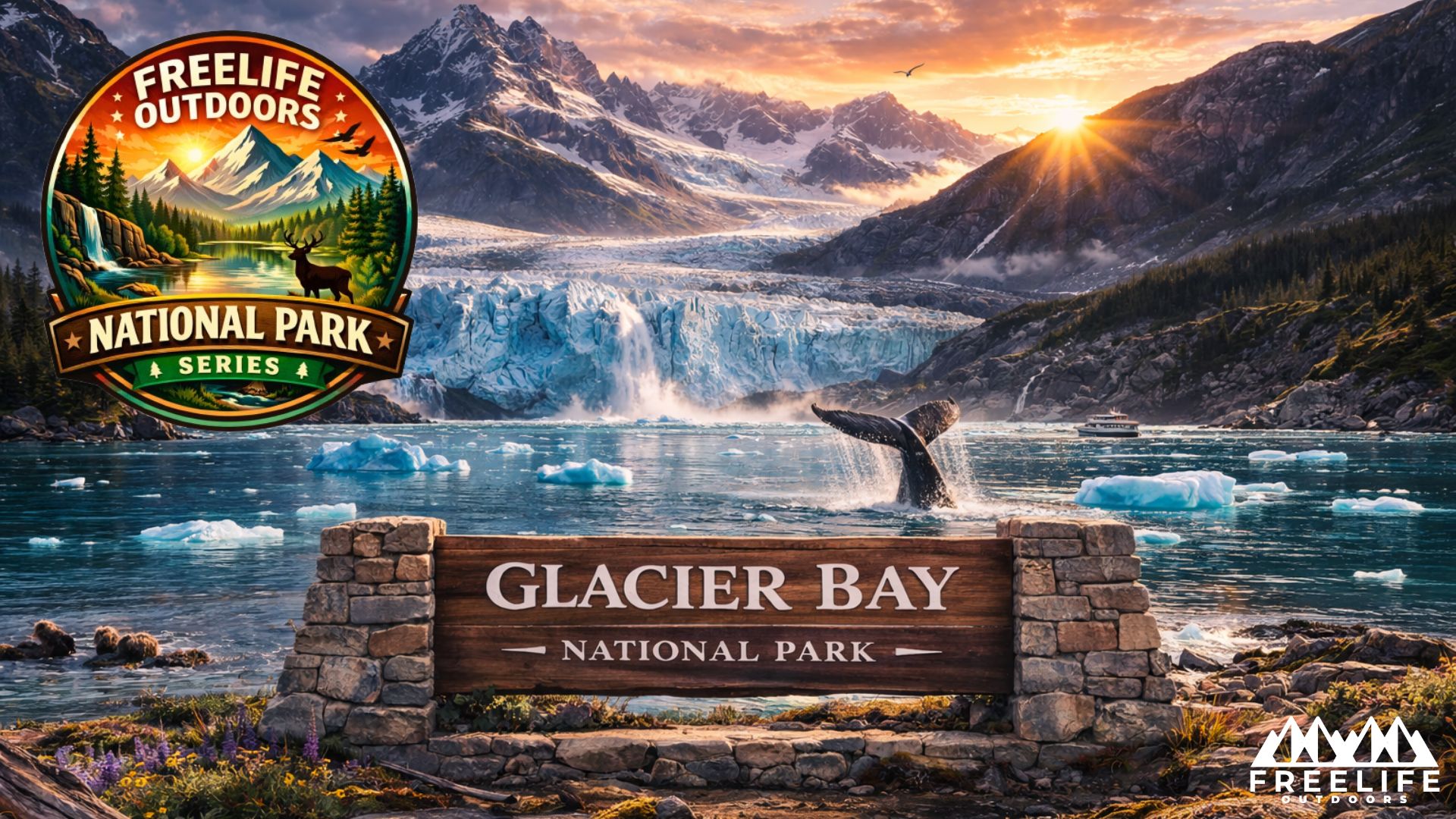
Glacier Bay National Park
Glacier Bay National Park and Preserve protects a vast coastal wilderness of glaciers, fjords, mountains, and marine ecosystems in southeastern Alaska. The park is famous for its dramatic tidewater glaciers, including Margerie Glacier and Johns Hopkins Glacier, which frequently calve massive chunks of ice into the sea. Visitors experience Glacier Bay primarily through boat tours, cruise ships, kayaking, and wildlife viewing in one of the most pristine marine environments on Earth.
Park Data & Statistics
- State: Alaska
- Established: December 2, 1980
- Park Size: ~3.3 million acres
- Annual Visitors: ~650,000
- Number of Glaciers: Over 1,000 within the park region
- Coastline: Over 1,300 miles
- UNESCO World Heritage Site: Yes
Best Time to Visit
Summer (June–August)
Best conditions for boat tours and wildlife viewing.
Spring (May)
Migrating whales and fewer crowds.
Fall (September)
Fewer visitors and dramatic coastal scenery.
Best Photography Locations
- Margerie Glacier calving events
- Johns Hopkins Glacier ice walls
- Glacier Bay fjords
- Whale feeding areas
Camping & Lodging Options
Bartlett Cove Campground
The park’s only developed campground located near the visitor center.
Most visitors stay in nearby communities or aboard cruise ships.
Indigenous / Cultural Significance
The region has long been home to Indigenous peoples including the Huna Tlingit People, whose ancestors lived in the Glacier Bay area before glaciers advanced and later returned as the glaciers receded.
Entrance Fees & Pass Information
There is no entrance fee to visit Glacier Bay National Park.
The America the Beautiful Annual Pass covers entry to all U.S. national parks for one year.
Hidden Gems Most Visitors Miss
- Johns Hopkins Inlet glaciers
- Quiet kayaking routes in the bay
- Bartlett River wildlife areas
- Remote fjords rarely visited by cruise ships
- Glacier Bay backcountry wilderness
Additional Resources (1)
• Official Glacier Bay National Park Website (National Park Service) – Official park information, alerts, and visitor planning resources.
• Glacier Bay National Park Maps – Download official park maps and marine navigation guides.
• Glacier Bay Current Conditions & Alerts – Weather updates and park alerts.
• Glacier Bay Kayaking Information – Details about sea kayaking routes and permits.
• Glacier Bay Camping Information – Information about Bartlett Cove campground.
Popular Hiking Trails
- Bartlett River Trail
8 miles round trip – Scenic forest trail with wildlife viewing opportunities. - Forest Loop Trail
1 mile – Easy walk through coastal rainforest. - Tlingit Trail
Short interpretive trail near the visitor center. - Mount Fairweather Backcountry Routes
Remote alpine routes for experienced hikers.
Top Scenic Viewpoints
- Margerie Glacier
- Johns Hopkins Glacier
- Glacier Bay fjords
- Mount Fairweather views
Beginner-Friendly Activities
- Glacier Bay boat tours
- Visitor center exhibits
- Short forest trails
- Wildlife watching
Nearby Getaway Towns
Gustavus – Primary gateway community near the park entrance.
Waterfalls, Lakes, or Natural Highlights
- Margerie Glacier
- Johns Hopkins Glacier
- Glacier Bay fjords
- Mount Fairweather
- Coastal rainforest ecosystems
Scenic Drives
There are no scenic drives within Glacier Bay, as the park is primarily accessed by water or air.
Maps & Navigation Resources
Visitors can use:
- Official NPS park maps
- onX Backcountry App
- AllTrails hiking maps
- Printed visitor center maps
- GPS navigation hiking apps
One Day Itinerary
Morning
- Boat tour into Glacier Bay
- Wildlife watching along the fjords
Midday
- Visit Margerie Glacier
- Lunch aboard tour boat
Afternoon
- Explore Bartlett Cove trails
- Visit Glacier Bay visitor center
Evening
- Sunset views over Glacier Bay
- Wildlife watching near the shoreline
Popular Flora
Glacier Bay contains coastal temperate rainforest ecosystems.
Common plants include:
- Sitka spruce
- Western hemlock
- Devil’s club
- Mosses and lichens
- Fireweed
Popular Fauna
Marine mammals:
- Humpback whales
- Orcas
- Sea otters
- Harbor seals
Land mammals:
- Black bears
- Brown bears
- Mountain goats
Birds:
- Bald eagles
- Puffins
- Seabirds
Advanced/Backcountry Activites
- Multi-day sea kayaking trips
- Glacier trekking
- Remote wilderness camping
- Mountaineering
Park History
Glacier Bay was first protected as a national monument in 1925 after scientists observed rapid glacial retreat in the region. The park later expanded and became a national park and preserve in 1980 as part of the Alaska National Interest Lands Conservation Act.
Visitor Tips and Safety
- Most areas of the park are accessible only by boat or plane.
- Weather can change quickly in coastal Alaska.
- Bring warm layers even during summer.
- Wildlife viewing opportunities are abundant along the fjords.
Top 5 Bucket List Experiences
- Glacier Bay glaciers have retreated over 60 miles since the 1700s.
- The park protects part of the largest protected biosphere area in the world.
- Some glaciers in the park are over 200 feet tall above the waterline.
- Glacier Bay is a UNESCO World Heritage Site.
- The park contains thousands of miles of coastline.
Fun Facts
- Glacier National Park once contained over 150 glaciers.
- The park forms part of the Waterton-Glacier International Peace Park.
- Going-to-the-Sun Road took 11 years to construct.
- The park protects some of the most pristine ecosystems in North America.
- Glacier is often called the “Crown of the Continent.”
Additional Resources (2)
Tourism – Glacier Bay Guide – Regional visitor information and travel tips.
• AllTrails – Glacier Bay Trails – Hiking maps and exploration routes.
• National Park Foundation – Glacier Bay Overview – Conservation information and park highlights.
• Gustavus Alaska Visitor Guide – Local travel information and services.
• Glacier Bay National Park Wikipedia Overview – Background on park history, geology, and wildlife.