
Quick Tips to Developing Essential Wilderness Navigation Skills Every Adventurer Should Know
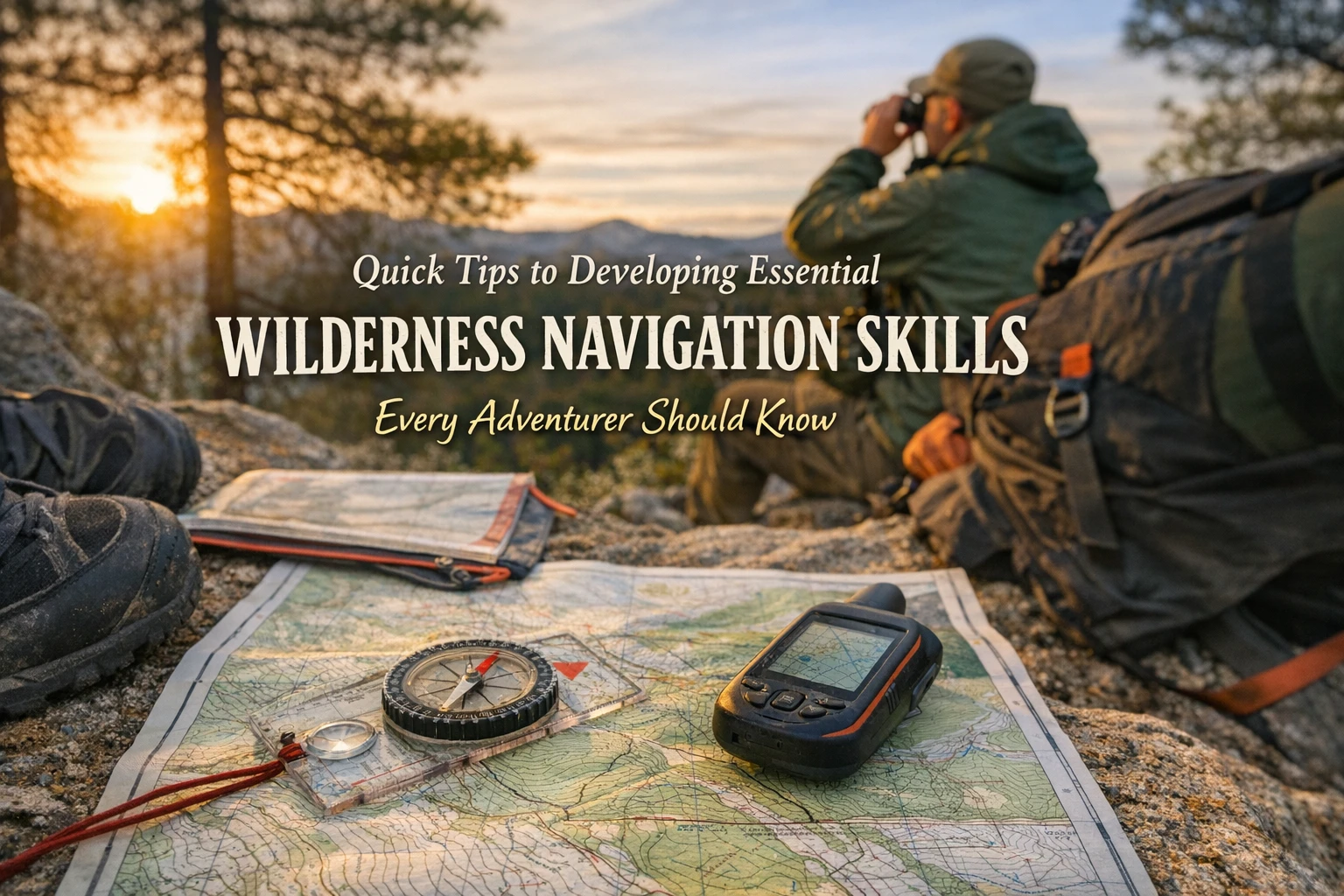
Wilderness navigation is an essential skill for any adventurer looking to explore the great outdoors. Whether you’re trekking through dense forests, scaling mountains, or navigating along rugged coastlines, knowing how to find your way can enhance your experience and keep you safe. Here are some fundamental skills every adventurer should master.
1. Understanding Maps
Maps are critical tools for navigation. Familiarize yourself with different types of maps, including topographic maps that show elevation changes and terrain features. Key skills include:
-
- Reading contour lines to understand elevation.
-
- Identifying landmarks and other geographic features.
-
- Understanding map scales and distances.
2. Compass Skills
A compass can be your best friend in the wilderness. Learn how to use a compass effectively:
-
- Understand the basic components of a compass, including the magnetic needle and orienting arrow.
-
- Practice taking bearings and following them accurately.
-
- Learn how to declinate—a vital skill to account for the difference between magnetic north and true north.
3. GPS Navigation
Modern adventurers often use GPS devices or smartphone apps. While these tools can be incredibly helpful, it’s important to:
-
- Learn how to read GPS coordinates and plot a course.
-
- Understand how to use your GPS in conjunction with traditional tools like maps and compasses.
-
- Practice using your GPS in various conditions to ensure it remains reliable.
4. Terrain Association
Real-world navigation isn’t about following a straight line. Being able to interpret the landscape is essential.
-
- Identify and utilize prominent landmarks such as rivers, peaks, and valleys.
-
- Develop skills to understand how natural features can influence your route.
-
- Practice setting a course based on terrain, not just distance.
5. Weather Awareness
Weather can change rapidly in the wild, affecting safety and navigation. Make it a habit to:
-
- Watch for changes in cloud formations and wind direction.
-
- Understand weather patterns and forecasts before heading out.
-
- Develop skills to read the signs of impending weather changes.
6. Backtracking and Route Planning
Knowing how to retrace your steps and plan your route can be lifesaving.
-
- Practice backtracking techniques when you make a wrong turn.
-
- Use tools like a notebook to log your path and observations.
-
- Plan multiple routes for your journey, considering potential hazards.
7. Practicing Navigation
Lastly, practice makes perfect. Before hitting the trails:
-
- Go out into a familiar area and practice navigating with your map and compass.
-
- Join navigation workshops or courses to learn from experts.
-
- Spend time in various terrains to build confidence and skill.