

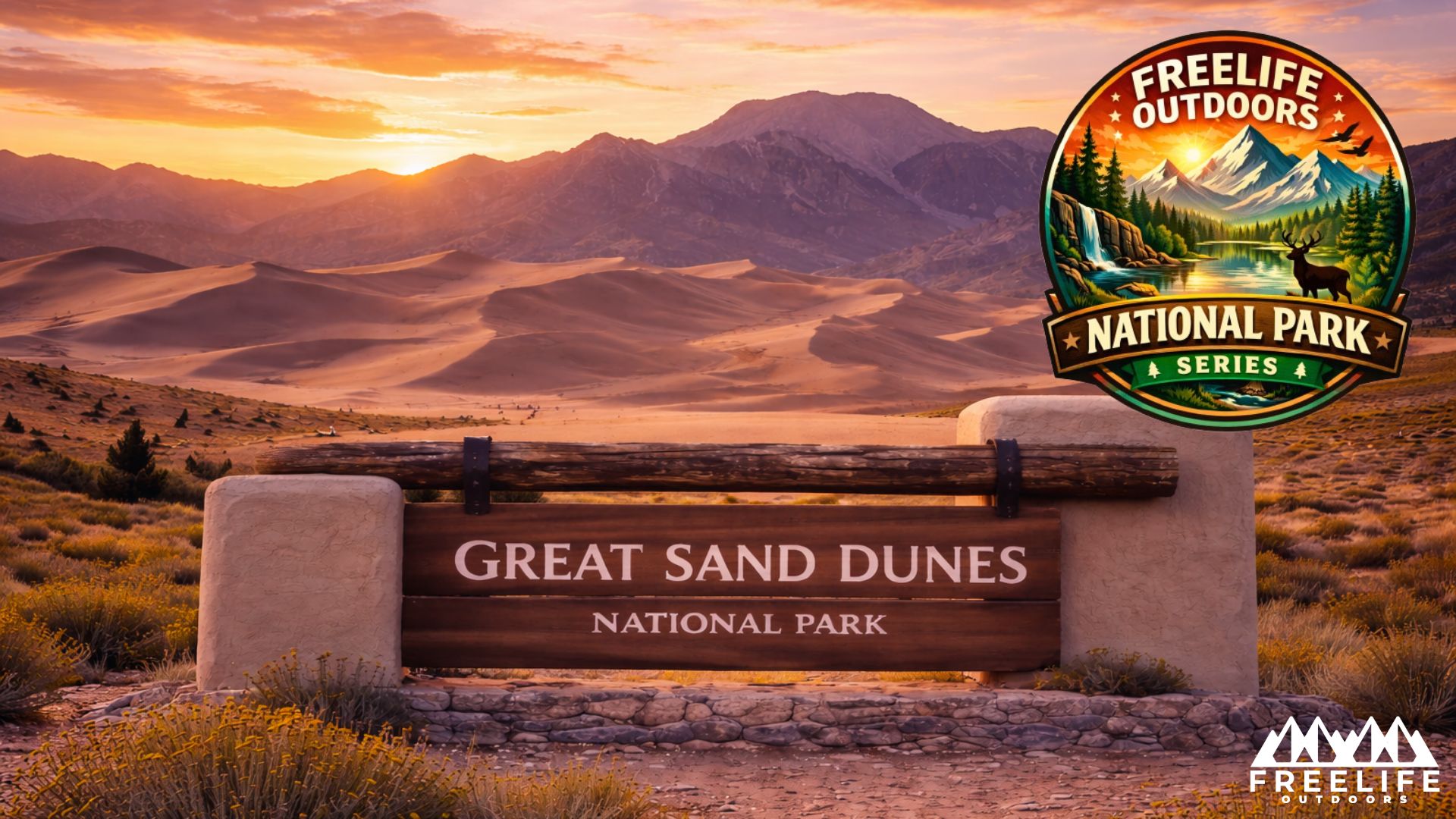
Great Sand Dunes National Park
Great Sand Dunes National Park and Preserve protects the tallest sand dunes in North America, rising dramatically against the Sangre de Cristo Mountains of southern Colorado. The park features massive dunes, alpine lakes, grasslands, wetlands, and forested mountain terrain. Visitors enjoy sandboarding, hiking across dunes, exploring Medano Creek, and stargazing under some of the darkest skies in the United States.
Park Data & Statistics
- State: Colorado
- Established: September 13, 2004 (National Park designation)
- Park Size: ~149,000 acres
- Tallest Dune: Star Dune (~750 ft tall)
- Annual Visitors: ~500,000
- Elevation Range: ~7,500 ft to over 13,000 ft
- Dark Sky Park: International Dark Sky designation
Best Time to Visit
Spring (April–June)
Best time to experience Medano Creek flowing across the dunes.
Summer (June–August)
Popular season for hiking and sandboarding.
Fall (September–October)
Cooler weather and fewer crowds.
Winter
Snow-covered dunes create unique scenery.
Best Photography Locations
- Sunrise on the dunes
- Medano Creek reflections
- Star Dune summit views
- Sangre de Cristo Mountains backdrop
Camping & Lodging Options
Piñon Flats Campground
The main campground located near the dunes.
Backcountry Dune Camping
Unique experience camping directly in the dune field.
Nearby lodging options are available in surrounding communities.
Indigenous / Cultural Significance
The region surrounding the dunes has long been used by Indigenous peoples including the Ute Tribe and Jicarilla Apache Nation, who traveled through the San Luis Valley for hunting and trade.
Entrance Fees & Pass Information
- Private vehicle: Yes
- Motorcycle: Yes
- Individual: Yes
The America the Beautiful Annual Pass covers entry to all U.S. national parks for one year.
Hidden Gems Most Visitors Miss
- Sand Ramp Trail wilderness
- Medano Pass remote drive
- Alpine lakes in the preserve
- Dune field backcountry camping
- Zapata Falls nearby
Additional Resources (1)
• Official Great Sand Dunes National Park Website (National Park Service) – Official park information, alerts, and visitor planning resources.
• Great Sand Dunes National Park Maps – Download official park maps including dunes and hiking trails.
• Great Sand Dunes Hiking Guide – Trail descriptions and safety information.
• Great Sand Dunes Current Conditions & Alerts – Weather updates, closures, and park alerts.
• Sandboarding and Sand Sledding Information – Information about dune recreation activities.
Popular Hiking Trails
- High Dune Trail
2.5 miles round trip – One of the most popular hikes into the dunes. - Star Dune Route
6 miles round trip – Hike to the tallest dune in North America. - Mosca Pass Trail
7 miles round trip – Scenic forest hike through mountain terrain. - Sand Ramp Trail
11 miles – Remote trail along the base of the mountains. - Montville Nature Trail
0.5 miles – Short interpretive forest walk.
Top Scenic Viewpoints
- Dunes Parking Area overlook
- High Dune summit views
- Sangre de Cristo mountain backdrops
- Medano Creek valley
Beginner-Friendly Activities
- Walking across the main dunes
- Splashing in Medano Creek
- Sandboarding or sand sledding
- Visitor center exhibits
Nearby Getaway Towns
Alamosa – Largest nearby town with lodging and services.
Mosca – Small town located near the park entrance.
Waterfalls, Lakes, or Natural Highlights
- Star Dune
- High Dune
- Medano Creek
- Sangre de Cristo Mountains
- Sand Ramp Trail landscapes
Scenic Drives
Medano Pass Primitive Road
A rugged 22-mile road crossing sand dunes, creeks, and mountain terrain requiring high-clearance vehicles.
Maps & Navigation Resources
Visitors can use:
- Official NPS park maps
- onX Backcountry App
- AllTrails hiking maps
- Printed visitor center maps
- GPS navigation hiking apps
One Day Itinerary
Morning
- Sunrise hike on the dunes
- Explore Medano Creek
Midday
- Sandboarding or sledding
- Picnic near the dunes
Afternoon
- Visit Montville Nature Trail
- Scenic drive along Medano Pass Road
Evening
- Sunset photography on the dunes
- Stargazing after dark
Popular Flora
The park contains a variety of ecosystems from dunes to alpine forests.
Common plants include:
- Cottonwood trees
- Sagebrush
- Grasses
- Aspen trees
- Alpine wildflowers
Popular Fauna
Mammals:
- Mule deer
- Elk
- Coyotes
- Black bears (in mountain areas)
Birds:
- Golden eagles
- Prairie falcons
- Mountain bluebirds
Other wildlife:
- Kangaroo rats
- Numerous insects adapted to dune environments
Advanced/Backcountry Activites
- Hiking to Star Dune
- Backpacking in the preserve
- High alpine hiking
- Medano Pass 4WD exploration
Park History
The dunes formed over thousands of years as sand deposits from surrounding mountains were carried by wind and trapped by the Sangre de Cristo Mountains. The area became a national monument in 1932 and was later designated a national park and preserve in 2004.
Visitor Tips and Safety
- Sand can become extremely hot during summer afternoons.
- Bring plenty of water when hiking the dunes.
- Early morning hikes are best during warmer months.
- Weather can change quickly in mountain areas.
Top 5 Bucket List Experiences
- Hike to the top of High Dune
- Sandboard down massive dunes
- Play in Medano Creek during spring runoff
- Watch sunrise over the dune field
- Stargaze in the dark desert skies
Fun Facts
- The dunes reach over 750 feet tall, making them the tallest in North America.
- Medano Creek forms a seasonal beach-like environment at the base of the dunes.
- The park includes ecosystems ranging from desert dunes to alpine tundra.
- Sandboarding is one of the most popular activities in the park.
- Great Sand Dunes is an International Dark Sky Park.
Additional Resources (2)
• Alamosa Colorado Visitor Guide – Regional travel information and visitor services.
• AllTrails – Great Sand Dunes Trails – Hiking maps, reviews, and GPS navigation.
• National Park Foundation – Great Sand Dunes Overview – Conservation information and park highlights.
• Colorado Tourism – Great Sand Dunes Guide – Travel tips and visitor highlights.
• Great Sand Dunes National Park Wikipedia Overview – Background on park history, geography, and wildlife.