

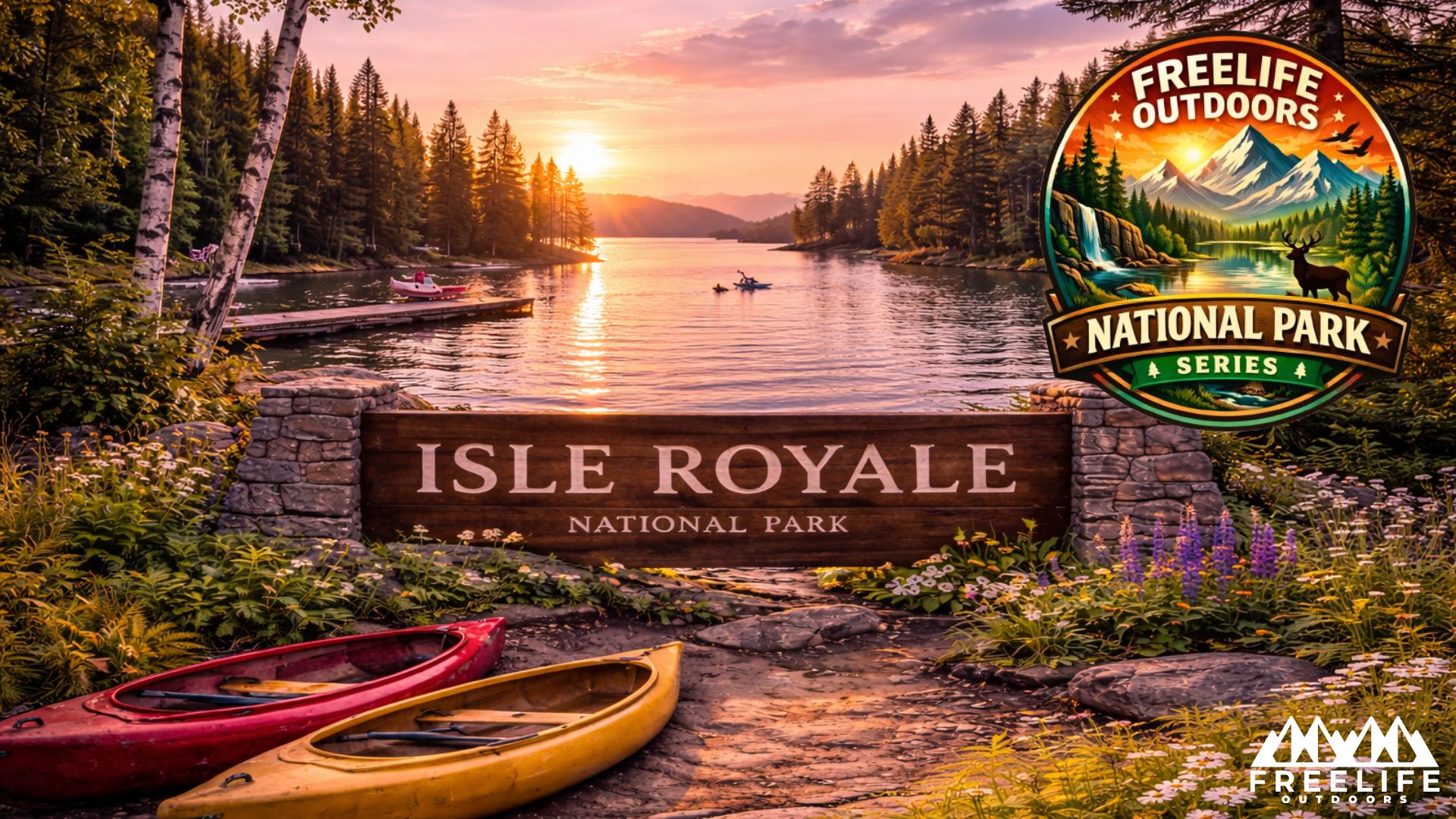
Isle Royale National Park
Isle Royale National Park is one of the most remote national parks in the United States. Located in the northwest portion of Lake Superior, the park consists of a large island and hundreds of smaller surrounding islands. Known for rugged wilderness, pristine forests, and quiet solitude, Isle Royale is famous for backpacking, kayaking, and its long-term wolf and moose ecological research study. The park offers visitors an authentic wilderness experience with limited services and incredible natural beauty.
Park Data & Statistics
- State: Michigan
- Established: April 3, 1940
- Park Size: ~894 square miles (including water)
- Land Area: ~209 square miles
- Annual Visitors: ~25,000
- Number of Islands: Over 450
- Largest Island Length: ~45 miles
Best Time to Visit
Summer (June–August)
Best weather and ferry access to the island.
Late Summer / Early Fall (September)
Fewer visitors and excellent hiking conditions.
The park is generally closed from November through mid-April due to harsh winter conditions.
Best Photography Locations
- Lake Superior shorelines
- Rock Harbor sunrise views
- Greenstone Ridge landscapes
- Moose sightings in wetlands
Camping & Lodging Options
Rock Harbor Campground
Popular campground near visitor services.
Daisy Farm Campground
Common stop for backpackers.
Windigo Campground
Located on the west end of the island.
Lodging is available at the Rock Harbor Lodge.
Indigenous / Cultural Significance
The island was historically used by Indigenous peoples including the Ojibwe Tribe, who visited the island for fishing, hunting, and copper mining long before European exploration.
Entrance Fees & Pass Information
- Daily fee: Yes/per person
The America the Beautiful Annual Pass covers entry to all U.S. national parks for one year.
Hidden Gems Most Visitors Miss
- Stoll Trail scenic overlooks
- Quiet inland lakes
- Remote Feldtmann Ridge wilderness
- Tobin Harbor shoreline
- Mount Ojibway fire tower views
Additional Resources (1)
• Official Isle Royale National Park Website (National Park Service) – Official park information, alerts, and visitor planning resources.
• Isle Royale National Park Maps – Download official park maps including backpacking routes.
• Isle Royale Hiking Guide – Trail descriptions and safety information.
• Isle Royale Current Conditions & Alerts – Weather updates and park alerts.
• Isle Royale Transportation Guide – Ferry and seaplane access information.
Popular Hiking Trails
- Greenstone Ridge Trail
40 miles – The park’s main trail running along the spine of the island. - Mount Franklin Trail
2 miles round trip – Short hike with beautiful island views. - Stoll Trail
4 miles round trip – Scenic trail along rocky ridges. - Rock Harbor Trail
Various distances – Popular hiking area near Rock Harbor. - Feldtmann Ridge Trail
28 miles – Remote wilderness trail on the west side of the island.
Top Scenic Viewpoints
- Mount Ojibway Fire Tower
- Mount Franklin
- Greenstone Ridge viewpoints
- Rock Harbor shoreline
Beginner-Friendly Activities
- Day hikes near Rock Harbor
- Canoeing and kayaking along the shoreline
- Visitor center exhibits
- Wildlife viewing
Nearby Getaway Towns
Primary mainland departure points include:
Houghton – Ferry access from the Keweenaw Peninsula.
Copper Harbor – Ferry access to Rock Harbor.
Waterfalls, Lakes, or Natural Highlights
- Lake Superior shoreline
- Inland island lakes
- Greenstone Ridge
- Rugged rocky coastlines
- Boreal forest landscapes
Scenic Drives
While there are no roads on the island, visitors experience scenic travel through:
- Ferry rides across Lake Superior
- Boat travel around the island
- Kayaking along rugged shorelines
Maps & Navigation Resources
Visitors can use:
- Official NPS park maps
- onX Backcountry App
- AllTrails hiking maps
- Printed visitor center maps
- GPS navigation hiking apps
One Day Itinerary
Morning
- Arrive by ferry or seaplane
- Explore Rock Harbor Visitor Center
Midday
- Hike Mount Franklin Trail
- Picnic along Lake Superior shoreline
Afternoon
- Canoe or kayak along the harbor
- Wildlife watching
Evening
- Sunset over Lake Superior
- Overnight at Rock Harbor Lodge
Popular Flora
The island supports boreal forest ecosystems similar to Canada.
Common plants include:
- Spruce trees
- Balsam fir
- Paper birch
- Wildflowers
- Mosses and lichens
Popular Fauna
Mammals:
- Moose
- Wolves
- Red foxes
Birds:
- Bald eagles
- Loons
- Peregrine falcons
Other wildlife:
- Beavers
- Snowshoe hares
Advanced/Backcountry Activites
- Multi-day backpacking trips
- Thru-hiking the Greenstone Ridge Trail
- Remote wilderness camping
- Sea kayaking around the island
Park History
Isle Royale became a national park in 1940 to protect its wilderness ecosystems. The island’s remote location allowed it to remain largely untouched by development. The park is internationally known for its ongoing wolf and moose predator-prey study, one of the longest-running wildlife studies in the world.
Visitor Tips and Safety
- Transportation to the island requires a ferry or seaplane.
- Services are limited—plan carefully before visiting.
- Weather on Lake Superior can change rapidly.
- Mosquitoes and black flies can be heavy during summer.
Top 5 Bucket List Experiences
- Backpack the Greenstone Ridge Trail
- Spot moose in the wild
- Kayak along the Lake Superior shoreline
- Watch sunrise at Rock Harbor
- Climb Mount Ojibway Fire Tower
Fun Facts
- Isle Royale is one of the least visited national parks in the U.S.
- The park contains over 450 islands.
- The island is home to a famous wolf and moose research study.
- No cars are allowed anywhere on the island.
- Isle Royale is one of the largest wilderness areas in the eastern United States.
Additional Resources (2)
• Isle Royale Seaplane Transportation – Air travel options to the island.
• AllTrails – Isle Royale National Park Trails – Hiking maps, reviews, and GPS navigation.
• National Park Foundation – Isle Royale Overview – Conservation information and park highlights.
• Michigan Tourism – Isle Royale Guide – Travel tips and visitor highlights.
• Isle Royale National Park Wikipedia Overview – Background on park history, geography, and wildlife.