

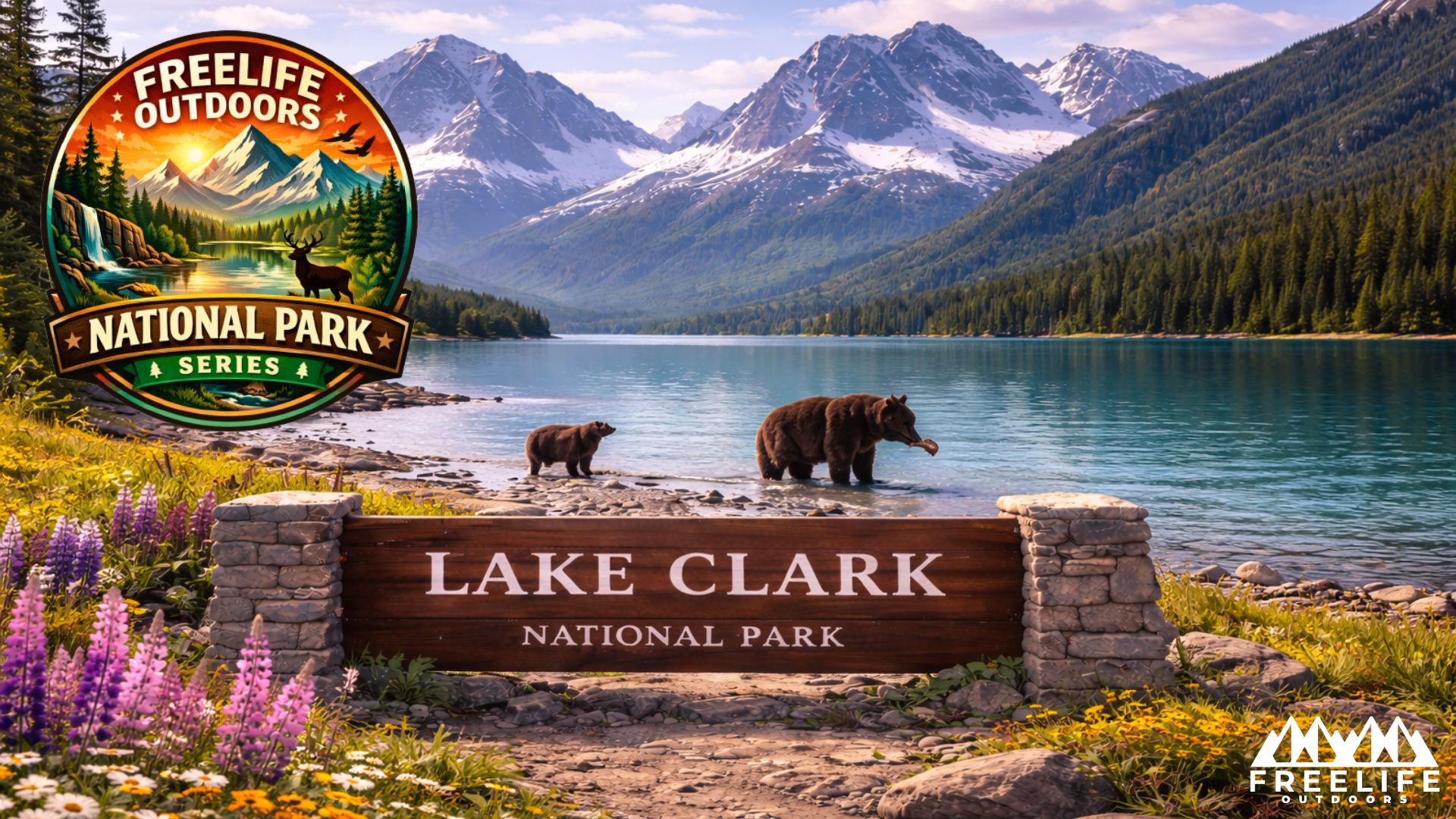
Lake Clark National Park
Lake Clark National Park and Preserve protects a stunning and remote wilderness of volcanoes, glaciers, alpine lakes, rivers, and coastal ecosystems in southern Alaska. The park is famous for its dramatic mountain landscapes, excellent brown bear viewing, and pristine backcountry wilderness. Visitors can explore turquoise lakes, fly over active volcanoes, kayak remote waters, and observe wildlife in one of the most untouched landscapes in North America.
Park Data & Statistics
- State: Alaska
- Established: December 2, 1980
- Park Size: ~4,030,015 acres
- Annual Visitors: ~20,000
- Largest Lake: Lake Clark (42 miles long)
- Number of Active Volcanoes: Several within the park
- Major Ecosystems: Coastal rainforest, tundra, alpine mountains
Best Time to Visit
Summer (June–August)
Best weather for wildlife viewing and outdoor exploration.
July–September
Peak salmon runs attract bears along rivers.
Winter access is extremely limited due to harsh conditions.
Best Photography Locations
- Lake Clark mountain reflections
- Brown bears fishing for salmon
- Glacier-covered volcanoes
- Coastal wilderness landscapes
Camping & Lodging Options
There are no developed campgrounds in most of the park.
Visitors typically camp in remote backcountry locations.
Lodging is available in the small community of Port Alsworth, located inside the park.
Indigenous / Cultural Significance
The region has long been inhabited by Indigenous peoples including the Dena'ina Athabascan People, who have lived along Lake Clark and nearby rivers for thousands of years.
Entrance Fees & Pass Information
There is no entrance fee for Lake Clark National Park.
Transportation to the park typically requires charter flights with a fee.
The America the Beautiful Annual Pass covers entry to all U.S. national parks for one year.
Hidden Gems Most Visitors Miss
- Turquoise Lake remote wilderness
- Kontrashibuna Lake glacier views
- Quiet coastal bear viewing areas
- Remote alpine hiking routes
Additional Resources (1)
• Official Lake Clark National Park Website (National Park Service) – Official park information, alerts, and visitor planning resources.
• Lake Clark National Park Maps – Download official park maps including wilderness areas.
• Lake Clark Current Conditions & Alerts – Weather updates and park alerts.
• Lake Clark Bear Viewing Information – Information about safe wildlife viewing.
• Lake Clark Transportation Guide – Details about air and boat access to the park.
Popular Hiking Trails
- Lake Clark has very few developed trails, but visitors often explore these popular areas:
- Tanalian Falls Trail
4.8 miles round trip – Scenic hike near the town of Port Alsworth to a beautiful waterfall. - Tanalian Mountain Route
8 miles round trip – Challenging hike with incredible views of Lake Clark. - Kontrashibuna Lake Area
Remote hiking area near glaciers. - Turquoise Lake Wilderness Area
Remote alpine hiking and camping.
Top Scenic Viewpoints
- Great Kobuk Sand Dunes
- Kobuk River valley
- Arctic tundra landscapes
- Sand dune ridges overlooking the river
Beginner-Friendly Activities
- Guided bear viewing tours
- Boat trips on Lake Clark
- Scenic bush flights
- Short hikes near Port Alsworth
Nearby Getaway Towns
Port Alsworth – Primary gateway community inside the park.
Flights to the park typically depart from: Anchorage
Waterfalls, Lakes, or Natural Highlights
- Lake Clark
- Turquoise Lake
- Tanalian Falls
- Chigmit Mountains
- Glacier-fed rivers
Scenic Drives
There are no roads into Lake Clark National Park.
Visitors access the park through:
- Floatplanes
- Bush planes
- Boats along the coastline
Maps & Navigation Resources
Visitors can use:
- Official NPS park maps
- onX Backcountry App
- AllTrails hiking maps
- Printed visitor center maps
- GPS navigation hiking apps
One Day Itinerary
Morning
- Fly from Anchorage to Port Alsworth
- Visit Lake Clark Visitor Center
Midday
- Hike to Tanalian Falls
- Picnic along Lake Clark shoreline
Afternoon
- Boat trip on Lake Clark
- Wildlife viewing along rivers
Evening
- Sunset photography over the lake
- Overnight stay in Port Alsworth
Popular Flora
Lake Clark contains diverse ecosystems from coastal forests to alpine tundra.
Common plants include:
- Spruce forests
- Alder shrubs
- Wild berries
- Mosses and lichens
- Alpine wildflowers
Popular Fauna
Mammals:
- Brown bears
- Black bears
- Moose
- Wolves
Marine wildlife:
- Sea otters
- Harbor seals
Birds:
- Bald eagles
- Loons
- Sandhill cranes
Advanced/Backcountry Activites
- Remote wilderness backpacking
- Sea kayaking along remote coastlines
- Glacier trekking
- Multi-day rafting expeditions
Park History
Lake Clark National Park and Preserve was established in 1980 to protect the unique ecosystems of the Alaska Peninsula, including volcanoes, glaciers, rivers, and wildlife habitats. The park preserves landscapes shaped by volcanic activity and glacial movement.
Visitor Tips and Safety
- Access requires bush plane or boat transportation.
- Visitors must be prepared for remote wilderness conditions.
- Bears are common throughout the park.
- Weather conditions can change rapidly.
Top 5 Bucket List Experiences
- Watch brown bears fishing for salmon
- Fly over glacier-covered volcanoes
- Explore Lake Clark by kayak
- Hike Tanalian Falls Trail
- Experience remote Alaskan wilderness
Fun Facts
- Lake Clark is 42 miles long and surrounded by mountains.
- The park protects several active volcanoes.
- Lake Clark is one of the least visited national parks in the U.S.
- The park contains multiple ecosystems from ocean coastlines to alpine peaks.
- Brown bears are commonly seen along salmon streams during summer.
Additional Resources (2)
• Lake Clark Air Transportation – Charter flights from Anchorage to Port Alsworth.
• AllTrails – Lake Clark National Park Information – Hiking and exploration information.
• National Park Foundation – Lake Clark Overview – Conservation information and park highlights.
• Alaska Tourism – Lake Clark Guide – Regional visitor information and travel tips.
• Lake Clark National Park Wikipedia Overview – Background on park history, geography, and wildlife.