

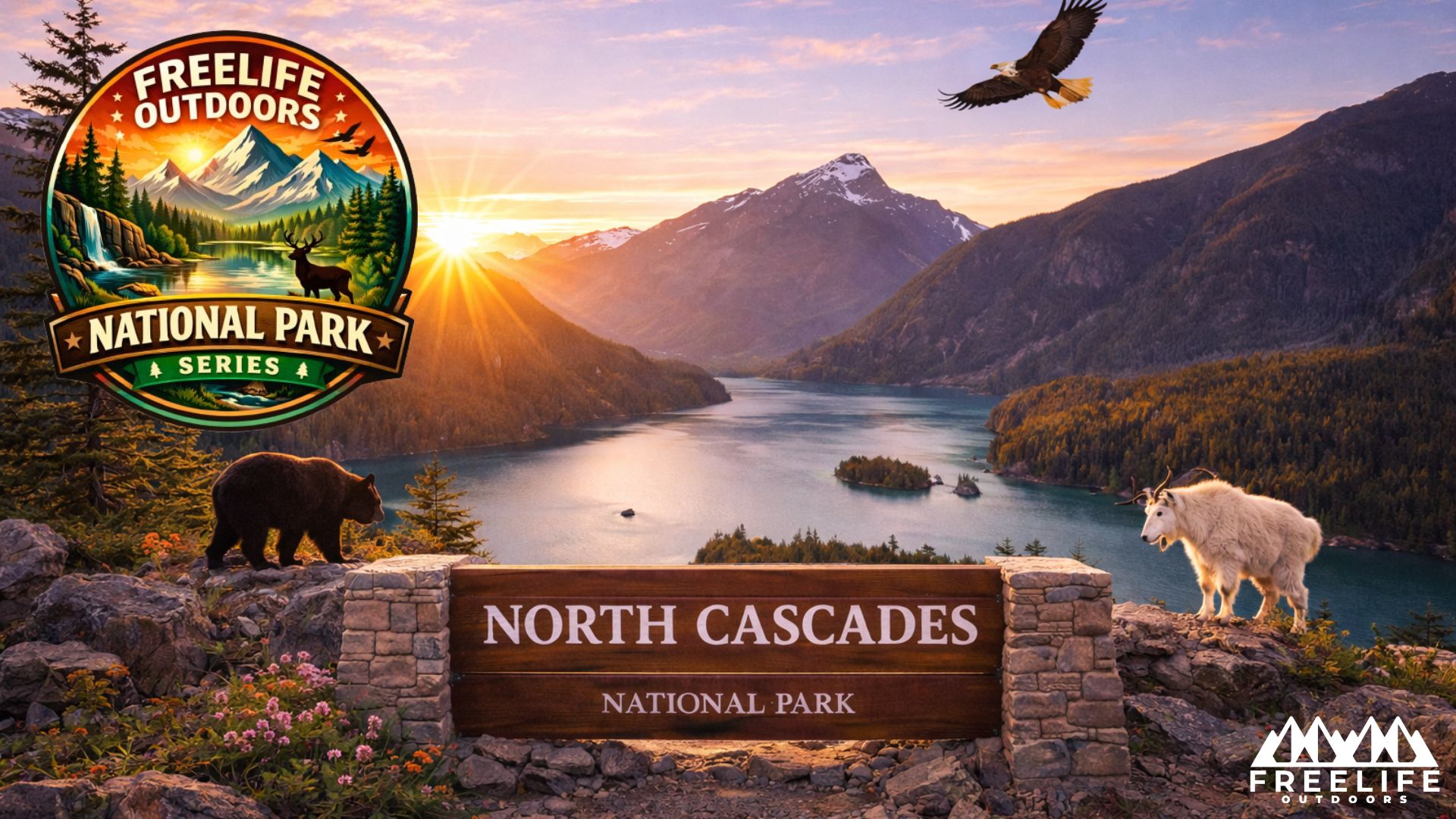
North Cascades National Park
North Cascades National Park protects one of the most rugged and wild mountain landscapes in the United States. Often called the “American Alps,” the park features jagged peaks, deep valleys, turquoise glacial lakes, and over 300 glaciers—the most of any national park in the lower 48 states. Visitors can explore dramatic alpine scenery, remote wilderness trails, scenic drives, and pristine mountain ecosystems.
Park Data & Statistics
- State: Washington
- Established: October 2, 1968
- Park Size: ~504,781 acres
- Annual Visitors: ~40,000 (one of the least visited parks)
- Number of Glaciers: Over 300
- Highest Peak: Mount Goode (9,220 ft)
- Major Lake: Ross Lake
Best Time to Visit
Summer (July–September)
Best weather for hiking and mountain exploration.
Fall (September–October)
Beautiful fall colors and fewer crowds.
Winter
Excellent for backcountry skiing and snowshoeing.
Snow often lingers in high elevations until early summer.
Best Photography Locations
- Diablo Lake turquoise waters
- Washington Pass alpine scenery
- Cascade Pass mountain views
- Ross Lake reflections
Camping & Lodging Options
Popular campgrounds include:
Newhalem Creek Campground
Forest campground near the park entrance.
Colonial Creek Campground
Beautiful lakeside campground near Diablo Lake.
Backcountry camping permits are available for wilderness areas.
Indigenous / Cultural Significance
The region has long been inhabited by Indigenous peoples including the Upper Skagit Tribe and the Nooksack Tribe, who historically lived in the surrounding mountain valleys.
Entrance Fees & Pass Information
There is no entrance fee for North Cascades National Park.
The America the Beautiful Annual Pass covers entry to all U.S. national parks for one year.
Hidden Gems Most Visitors Miss
- Hidden Lake Lookout
- Quiet Ross Lake shorelines
- Early morning wildlife sightings
- Remote alpine meadows
Additional Resources (1)
• Official North Cascades National Park Website (National Park Service) – Official park information, alerts, and visitor planning resources.
• North Cascades National Park Maps – Download official park maps including trails and scenic drives.
• North Cascades Hiking Guide – Trail descriptions and safety information.
• North Cascades Current Conditions & Alerts – Weather updates and park alerts.
• North Cascades Camping Information – Details about campgrounds and backcountry permits.
Popular Hiking Trails
- Cascade Pass Trail
7 miles round trip – One of the park’s most famous hikes with incredible alpine views. - Maple Pass Loop
7.2 miles – Stunning fall colors and mountain scenery. - Thunder Knob Trail
3.6 miles – Scenic views of Diablo Lake. - Blue Lake Trail
4.4 miles round trip – Beautiful alpine lake hike. - Hidden Lake Lookout Trail
8 miles round trip – Dramatic mountain and glacier views.
Top Scenic Viewpoints
- Diablo Lake Overlook
- Washington Pass Overlook
- Cascade Pass viewpoint
- Ross Lake vistas
Beginner-Friendly Activities
- Scenic drive along North Cascades Highway
- Short hikes to alpine lakes
- Visitor center exhibits
- Wildlife viewing
Nearby Getaway Towns
Marblemount – Gateway community near the park entrance.
Winthrop – Popular mountain town east of the park.
Waterfalls, Lakes, or Natural Highlights
- Diablo Lake
- Ross Lake
- Cascade Pass
- Glacial valleys
- Rugged mountain peaks
Scenic Drives
North Cascades Highway (State Route 20)
One of the most scenic drives in the United States, crossing the Cascade Mountains with breathtaking views of glaciers, peaks, and lakes.
Maps & Navigation Resources
Visitors can use:
- Official NPS park maps
- onX Backcountry App
- AllTrails hiking maps
- Printed visitor center maps
- GPS navigation hiking apps
One Day Itinerary
Morning
- Drive the North Cascades Highway
- Stop at Diablo Lake Overlook
Midday
- Hike the Thunder Knob Trail
- Picnic near Diablo Lake
Afternoon
- Explore Washington Pass Overlook
- Short alpine lake hike
Evening
- Sunset photography along the scenic highway
- Dinner in Winthrop
Popular Flora
The park contains diverse alpine and forest ecosystems.
Common plants include:
- Douglas fir
- Western hemlock
- Subalpine wildflowers
- Mountain heather
- Alpine grasses
Popular Fauna
Mammals:
- Black bears
- Mountain goats
- Gray wolves
- Marmots
Birds:
- Golden eagles
- Clark’s nutcrackers
- Gray jays
Other wildlife:
- Pikas
- Amphibians
Advanced/Backcountry Activites
- Multi-day backpacking trips
- Alpine mountaineering
- Glacier travel
- Backcountry skiing
Park History
North Cascades National Park was established in 1968 to protect the rugged alpine landscapes and wilderness ecosystems of the Cascade Range. The park remains one of the most remote and least developed national parks in the contiguous United States.
Visitor Tips and Safety
- Mountain weather can change rapidly.
- Snow may remain on trails into early summer.
- Bring plenty of water and navigation tools when hiking.
- Some trails require advanced preparation.
Top 5 Bucket List Experiences
- Drive the North Cascades Highway
- Photograph Diablo Lake
- Hike Cascade Pass Trail
- Explore alpine lakes and glaciers
- Backpack through remote wilderness
Fun Facts
- North Cascades has more glaciers than any other U.S. national park outside Alaska.
- The park protects over 300 glaciers.
- It is sometimes called the “American Alps.”
- The park receives some of the highest snowfall totals in the U.S.
- Despite its incredible scenery, it remains one of the least visited national parks.
Additional Resources (2)
• Winthrop Washington Visitor Guide – Regional tourism information and travel planning.
• AllTrails – North Cascades National Park Trails – Hiking maps and trail reviews.
• National Park Foundation – North Cascades Overview – Conservation information and park highlights.
• Washington Tourism – North Cascades Guide – Travel tips and visitor highlights.
• North Cascades National Park Wikipedia Overview – Background on park history, geography, and wildlife.