

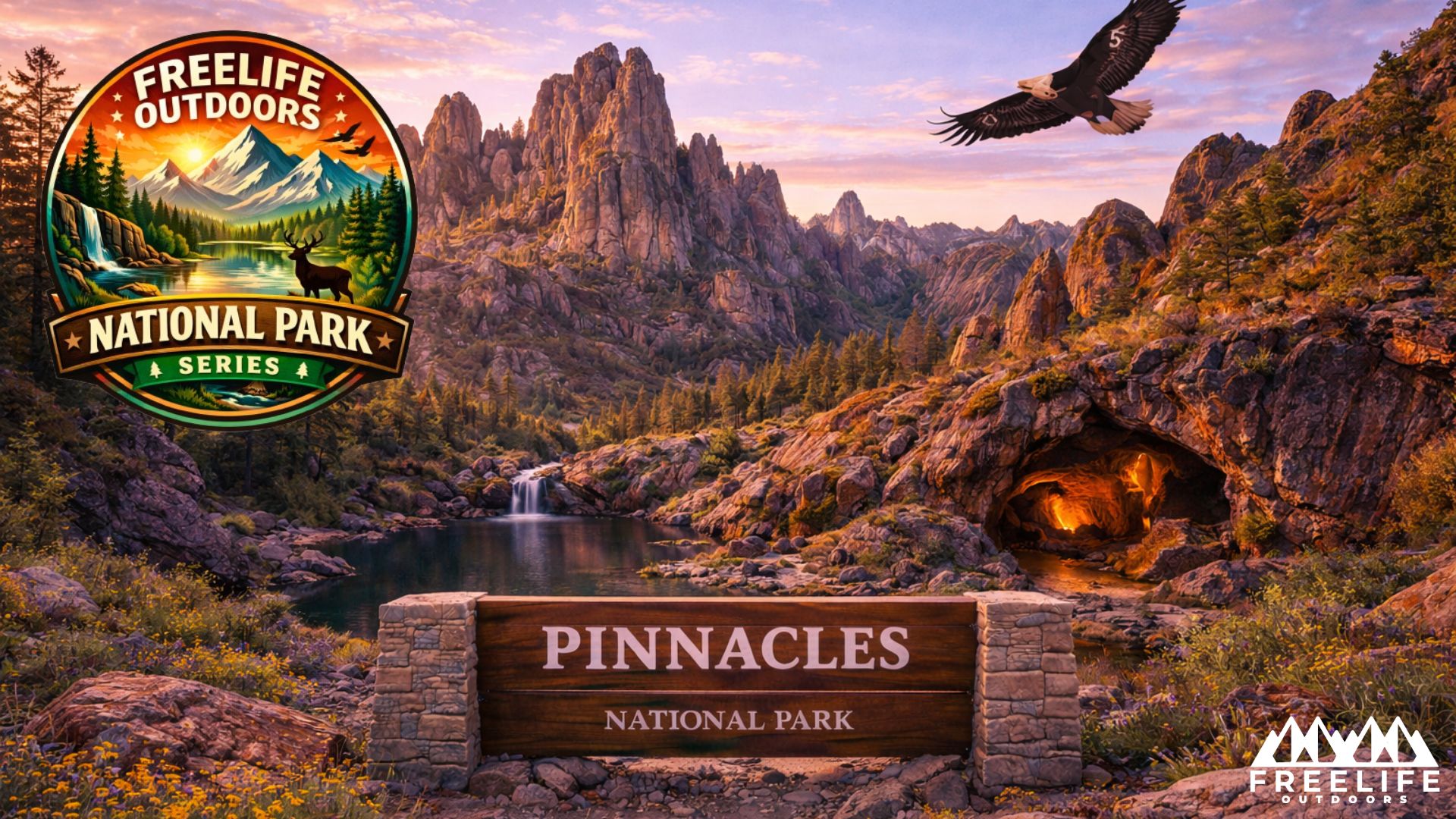
Pinnacles National Park
Pinnacles National Park protects a dramatic landscape of towering volcanic rock spires, deep canyons, talus caves, and rugged cliffs in central California. Formed from the remnants of an ancient volcanic field that moved along the San Andreas Fault, the park offers unique geological features, scenic hiking trails, and excellent rock climbing. Pinnacles is also one of the best places in North America to see the endangered California condor soaring above the cliffs.
Park Data & Statistics
- State: California
- Established as National Park: January 10, 2013
- Original Protection: Pinnacles National Monument (1908)
- Park Size: ~26,685 acres
- Annual Visitors: ~350,000
- Major Geological Feature: Ancient volcanic formations
- Highest Peak: North Chalone Peak (3,304 ft)
Best Time to Visit
Spring (March–May)
Wildflowers bloom and temperatures are pleasant.
Fall (October–November)
Cooler temperatures and fewer crowds.
Summer
Very hot temperatures—visit early morning.
Winter is mild and quieter.
Best Photography Locations
- High Peaks Trail rock spires
- Bear Gulch Reservoir reflections
- Talus cave entrances
- Condor flight views above cliffs
Camping & Lodging Options
Pinnacles Campground
The main campground inside the park with tent and RV sites.
Indigenous / Cultural Significance
The area surrounding Pinnacles was historically used by Indigenous peoples including the Ohlone People, who lived throughout the coastal regions of California.
Entrance Fees & Pass Information
- Private vehicle: Yes
- Motorcycle: Yes
- Individual: Yes
The America the Beautiful Annual Pass covers entry to all U.S. national parks for one year.
Hidden Gems Most Visitors Miss
- Balconies Cave Trail
- Chalone Peak summit hike
- Quiet trails in the west entrance area
- Early morning condor sightings
Additional Resources (1)
• Official Pinnacles National Park Website (National Park Service) – Official park information, alerts, and visitor planning resources.
• Pinnacles National Park Maps – Download official park maps including trails and cave locations.
• Pinnacles Hiking Guide – Trail descriptions and safety information.
• Pinnacles Current Conditions & Alerts – Weather updates and park alerts.
• Pinnacles Cave Information – Details about Bear Gulch and Balconies cave systems.
Popular Hiking Trails
- High Peaks Trail
6 miles loop – The park’s most famous trail with ladders and stunning views. - Bear Gulch Cave Trail
1.5 miles – Trail through talus caves and scenic canyon landscapes. - Condor Gulch Trail
3 miles round trip – Excellent trail for spotting California condors. - Moses Spring Trail
2.2 miles round trip – Access to Bear Gulch Reservoir and caves. - Balconies Cave Trail
2.4 miles – Trail through another talus cave system.
Top Scenic Viewpoints
- High Peaks rock formations
- Bear Gulch Reservoir
- Chalone Peak viewpoints
- Condor Gulch overlooks
Beginner-Friendly Activities
- Walk the Moses Spring Trail
- Explore Bear Gulch area
- Wildlife viewing
- Visitor center exhibits
Nearby Getaway Towns
Soledad – Closest town to the west entrance.
Hollister – Gateway town near the east entrance.
Waterfalls, Lakes, or Natural Highlights
- Volcanic rock spires
- Bear Gulch Reservoir
- Talus cave systems
- Rugged canyon landscapes
Scenic Drives
Pinnacles Access Roads
Visitors access the park through scenic rural roads leading to the east and west entrances. The park itself does not have a road connecting the two sides.
Maps & Navigation Resources
Visitors can use:
- Official NPS park maps
- onX Backcountry App
- AllTrails hiking maps
- Printed visitor center maps
- GPS navigation hiking apps
One Day Itinerary
Morning
- Arrive early at the east entrance
- Hike the Moses Spring Trail
Midday
- Explore Bear Gulch Cave
- Picnic near Bear Gulch Reservoir
Afternoon
- Hike the High Peaks Trail
- Watch for condors along Condor Gulch
Evening
- Sunset views across the volcanic formations
- Dinner in nearby Hollister
Popular Flora
The park features Mediterranean-style ecosystems.
Common plants include:
- Oak woodlands
- Chaparral shrubs
- Gray pines
- Manzanita
- Wildflowers
Popular Fauna
Mammals:
- Bobcats
- Gray foxes
- Mule deer
Birds:
- California condors
- Golden eagles
- Prairie falcons
Other wildlife:
- Bats
- Lizards
- Amphibians
Advanced/Backcountry Activites
- Rock climbing on volcanic spires
- Long-distance hiking
- Technical cave exploration
- Backcountry camping
Park History
Pinnacles was originally designated as a national monument in 1908 by President Theodore Roosevelt to protect the unique volcanic rock formations. In 2013, the site was redesignated as a national park.
Visitor Tips and Safety
- Summer temperatures can exceed 100°F.
- Bring plenty of water when hiking.
- Check cave access conditions before visiting.
- Watch for condors flying overhead.
Top 5 Bucket List Experiences
- Hike the High Peaks Trail
- Explore Bear Gulch Cave
- Spot California condors in flight
- Visit Bear Gulch Reservoir
- Rock climb the volcanic spires
Fun Facts
- Pinnacles was formed by volcanic activity over 20 million years ago.
- The rock formations moved over 195 miles along the San Andreas Fault.
- Pinnacles is one of the best places to see California condors in the wild.
- The park contains unique talus cave systems formed by fallen boulders.
- Pinnacles is one of the newest national parks, designated in 2013.
Additional Resources (2)
• Monterey County Tourism – Pinnacles Guide – Regional visitor information and travel tips.
• AllTrails – Pinnacles National Park Trails – Hiking maps and trail reviews.
• National Park Foundation – Pinnacles Overview – Conservation information and park highlights.
• California Tourism – Pinnacles Guide – Travel tips and visitor highlights.
• Pinnacles National Park Wikipedia Overview – Background on park history, geology, and wildlife.