

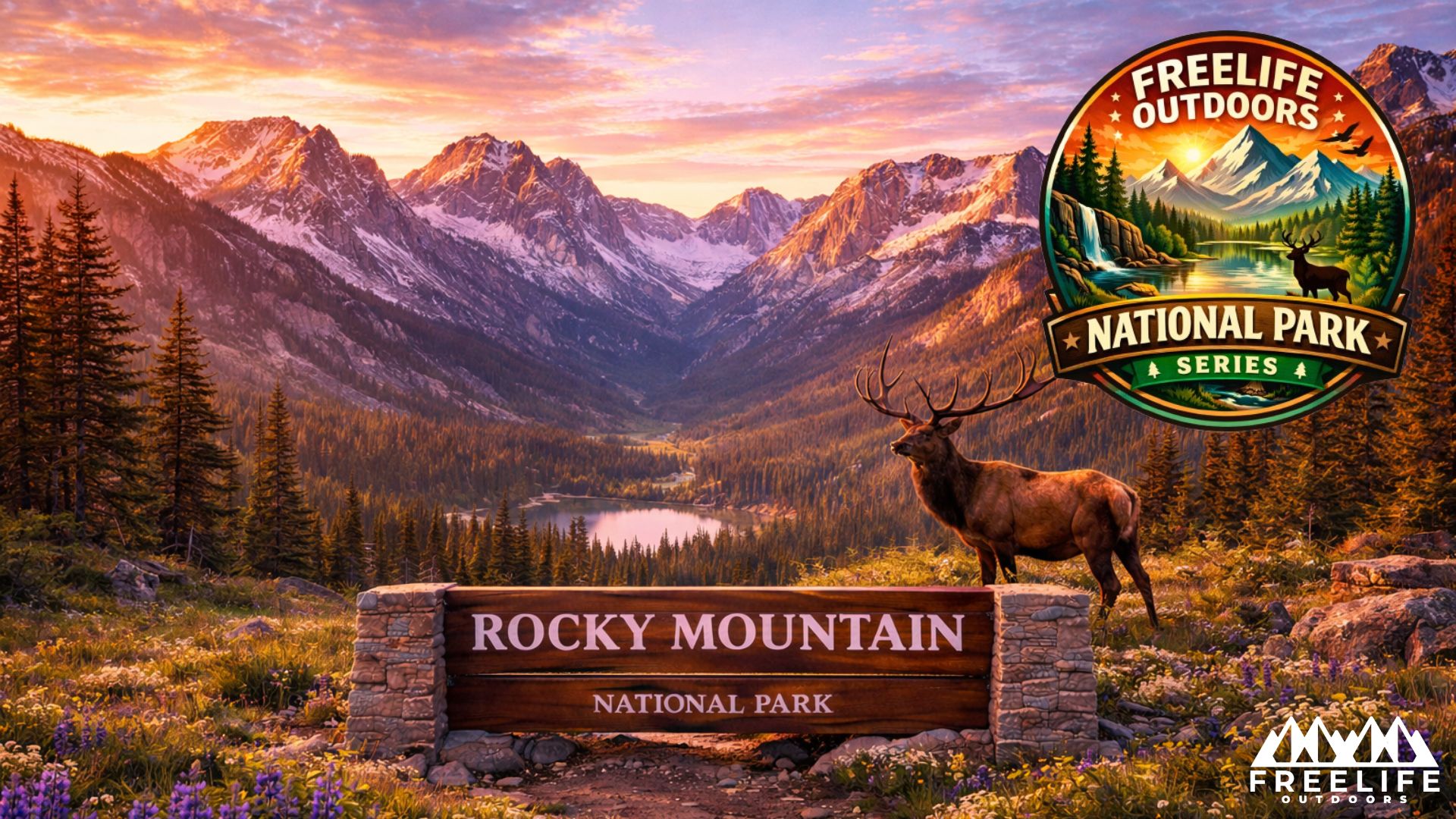
Rocky Mountain National Park
Rocky Mountain National Park protects one of the most spectacular alpine landscapes in North America. Located in northern Colorado, the park features towering peaks, alpine lakes, tundra ecosystems, and diverse wildlife. With over 300 miles of hiking trails and elevations exceeding 14,000 feet, visitors can explore everything from lush forests and waterfalls to windswept mountain summits and high-altitude tundra.
Park Data & Statistics
- State: Colorado
- Established: January 26, 1915
- Park Size: ~265,807 acres
- Annual Visitors: ~4.5 million
- Highest Peak: Longs Peak (14,259 ft)
- Number of Named Peaks: Over 100
- Number of Lakes: Over 150 alpine lakes
Best Time to Visit
Summer (June–September)
Best time for hiking and alpine lake exploration.
Fall (September–October)
Elk rut season and fall colors.
Winter
Snowshoeing and cross-country skiing.
Snow can remain in high elevations well into early summer.
Best Photography Locations
- Bear Lake reflections
- Dream Lake sunrise views
- Alpine tundra landscapes
- Trail Ridge Road overlooks
Camping & Lodging Options
Popular campgrounds include:
Moraine Park Campground
Large campground with scenic mountain views.
Glacier Basin Campground
Popular base for hiking and climbing.
Aspenglen Campground
Located near the Fall River entrance.
Indigenous / Cultural Significance
The Rocky Mountains were historically used by Indigenous peoples including the Ute Tribe and the Arapaho Tribe, who hunted and traveled through the mountain valleys.
Entrance Fees & Pass Information
- Private vehicle: Yes
- Motorcycle: Yes
- Individual: Yes
The America the Beautiful Annual Pass covers entry to all U.S. national parks for one year.
Hidden Gems Most Visitors Miss
- Sky Pond alpine hike
- Quiet alpine tundra trails
- Early morning wildlife sightings
- Lakes in the Wild Basin area
Additional Resources (1)
• Official Rocky Mountain National Park Website (National Park Service) – Official park information, alerts, and visitor planning resources.
• Rocky Mountain National Park Maps – Download official park maps including trails and scenic drives.
• Rocky Mountain Hiking Guide – Trail descriptions and safety information.
• Rocky Mountain Current Conditions & Alerts – Weather updates and park alerts.
• Rocky Mountain Timed Entry Permit Information – Reservation requirements and entry details.
Popular Hiking Trails
- Bear Lake Loop
0.6 miles – Easy walk around one of the park’s most famous lakes. - Emerald Lake Trail
3.2 miles round trip – Scenic hike past multiple alpine lakes. - Sky Pond Trail
9 miles round trip – One of the park’s most stunning high-alpine hikes. - Alberta Falls Trail
1.6 miles round trip – Short hike to a beautiful waterfall. - Longs Peak Keyhole Route
14 miles round trip – Challenging climb to the summit of Longs Peak.
Top Scenic Viewpoints
- Trail Ridge Road alpine overlooks
- Bear Lake viewpoints
- Many Parks Curve
- Alpine tundra viewpoints
Beginner-Friendly Activities
- Walk Bear Lake Loop
- Short hikes to alpine lakes
- Scenic drives through the park
- Visitor center exhibits
Nearby Getaway Towns
Estes Park – Primary gateway town on the east side of the park.
Grand Lake – Western gateway town near the park entrance.
Waterfalls, Lakes, or Natural Highlights
- Bear Lake
- Emerald Lake
- Alberta Falls
- Trail Ridge Road alpine tundra
- Longs Peak summit
Scenic Drives
Trail Ridge Road
One of the highest paved roads in North America, reaching elevations above 12,000 feet with spectacular views of the Rocky Mountains and alpine tundra.
Maps & Navigation Resources
Visitors can use:
- Official NPS park maps
- onX Backcountry App
- AllTrails hiking maps
- Printed visitor center maps
- GPS navigation hiking apps
One Day Itinerary
Morning
- Sunrise at Bear Lake
- Hike to Dream Lake and Emerald Lake
Midday
- Picnic near Bear Lake
- Drive Trail Ridge Road
Afternoon
- Visit Alpine Visitor Center
- Short hike across alpine tundra
Evening
- Sunset at Many Parks Curve
- Dinner in Estes Park
Popular Flora
The park features several ecosystems including montane forest and alpine tundra.
Common plants include:
- Engelmann spruce
- Lodgepole pine
- Alpine wildflowers
- Aspen trees
- Moss campion
Popular Fauna
Mammals:
- Elk
- Mule deer
- Black bears
- Bighorn sheep
Birds:
- Golden eagles
- Clark’s nutcrackers
- Gray jays
Other wildlife:
- Marmots
- Pikas
Advanced/Backcountry Activites
- Summit climbs including Longs Peak
- Multi-day backpacking trips
- Alpine mountaineering
- Wilderness camping
Park History
Rocky Mountain National Park was established in 1915 to preserve the natural beauty of the Rocky Mountains and protect wildlife and alpine ecosystems. The park quickly became one of the most popular destinations for outdoor recreation in the United States.
Visitor Tips and Safety
- High elevations can cause altitude sickness.
- Weather changes rapidly in the mountains.
- Timed entry reservations may be required during peak season.
- Wildlife is common—maintain safe distances.
Top 5 Bucket List Experiences
- Drive Trail Ridge Road
- Watch sunrise at Bear Lake
- Hike to Emerald Lake
- Spot elk during the fall rut
- Climb Longs Peak
Fun Facts
- Trail Ridge Road reaches over 12,000 feet in elevation.
- Rocky Mountain National Park contains over 150 alpine lakes.
- Longs Peak is one of Colorado’s famous “fourteeners.”
- The park protects three major ecosystems: montane, subalpine, and alpine tundra.
- Rocky Mountain National Park is one of the most visited national parks in the United States.
Additional Resources (2)
• Estes Park Visitor Guide – Regional tourism information and lodging.
• AllTrails – Rocky Mountain National Park Trails – Hiking maps and trail reviews.
• National Park Foundation – Rocky Mountain Overview – Conservation information and park highlights.
• Colorado Tourism – Rocky Mountain Guide – Travel tips and visitor highlights.
• Rocky Mountain National Park Wikipedia Overview – Background on park history, geography, and wildlife.