

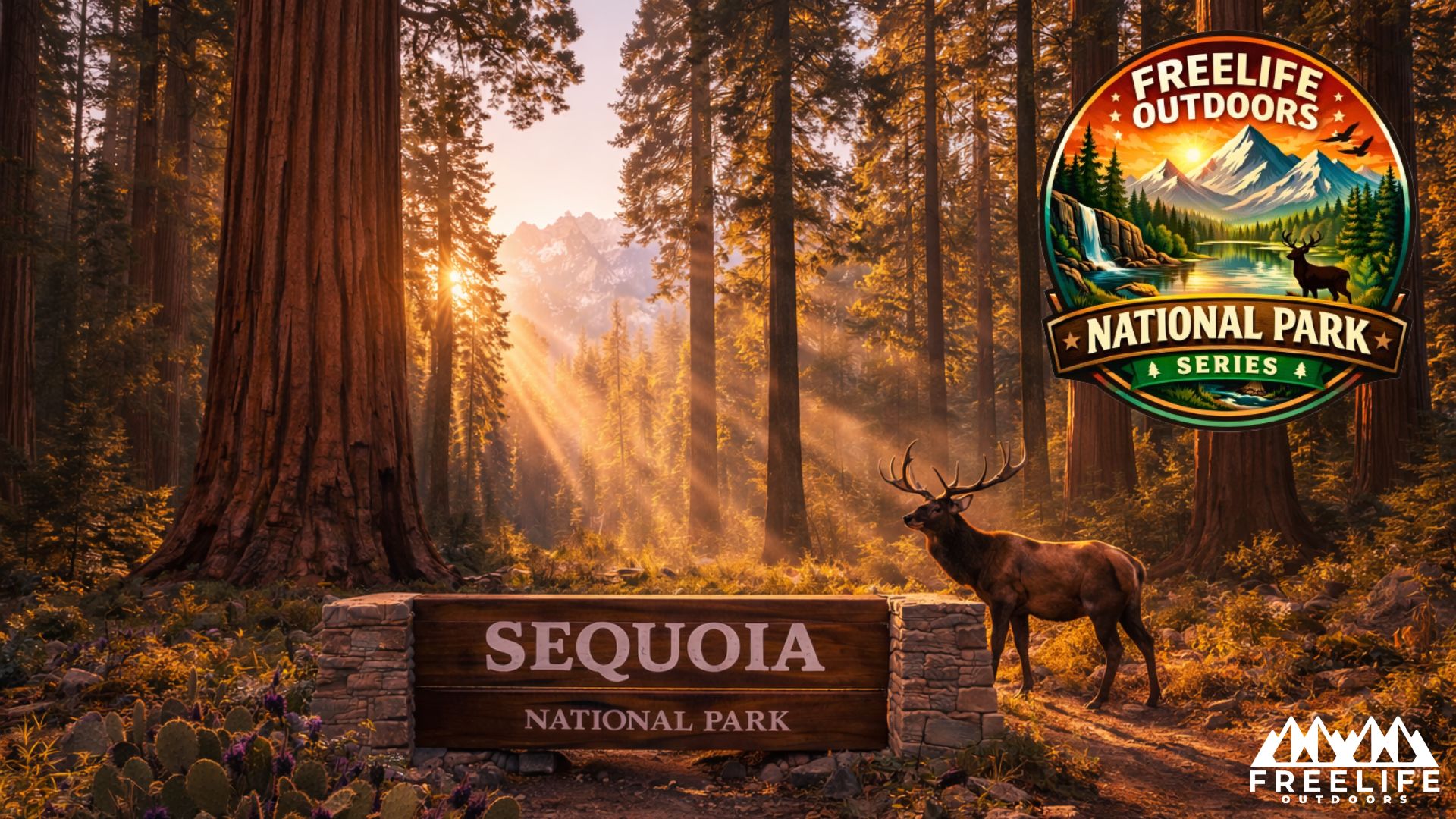
Sequioa National Park
Sequoia National Park protects some of the most massive trees on Earth along with dramatic Sierra Nevada mountain landscapes. Famous for its giant sequoia groves, the park is home to the General Sherman Tree—the largest tree in the world by volume. Visitors can explore towering forests, deep canyons, alpine peaks, caves, and scenic mountain trails while experiencing one of the most awe-inspiring natural environments in the United States.
Park Data & Statistics
- State: California
- Established: September 25, 1890
- Park Size: ~404,064 acres
- Annual Visitors: ~1.2 million
- Largest Tree: General Sherman Tree
- Highest Peak in Park: Mount Whitney (14,505 ft – tallest in the contiguous U.S.)
- Combined Management: Managed jointly with Kings Canyon National Park
Best Time to Visit
Spring (March–April)
Wildflowers bloom across the desert.
Fall (October–November)
Comfortable hiking temperatures.
Winter (December–February)
Cool weather and clear desert skies.
Summer
Very hot temperatures but dramatic monsoon storms.
Best Photography Locations
- General Sherman Tree
- Giant Forest sequoia groves
- Moro Rock panoramic views
- Crescent Meadow
Camping & Lodging Options
Popular campgrounds include:
Lodgepole Campground
Large campground near Giant Forest.
Dorst Creek Campground
Popular base for exploring the park.
Potwisha Campground
Lower elevation campground in the foothills.
Lodging is available at the Wuksachi Lodge, located within the park.
Indigenous / Cultural Significance
The Sierra Nevada region has long been home to Indigenous peoples including the Mono Tribe and the Yokuts Tribe, who lived in and traveled through these mountain landscapes.
Entrance Fees & Pass Information
- Private vehicle: Yes
- Motorcycle: Yes
- Individual: Yes
The America the Beautiful Annual Pass covers entry to all U.S. national parks for one year.
Hidden Gems Most Visitors Miss
- Crescent Meadow peaceful trails
- Tunnel Log scenic drive
- Quiet alpine lakes
- Early morning wildlife sightings
Additional Resources (1)
• Official Sequoia National Park Website (National Park Service) – Official park information, alerts, and visitor planning resources.
• Sequoia National Park Maps – Download official park maps including trails and scenic drives.
• Sequoia National Park Hiking Guide – Trail descriptions and safety information.
• Sequoia National Park Current Conditions & Alerts – Weather updates and park alerts.
• Crystal Cave Tour Information – Details about visiting the park’s marble cave system.
Popular Hiking Trails
- Congress Trail
2 miles loop – Walk among some of the largest sequoia trees in the world. - Moro Rock Trail
0.6 miles – Stair climb to a granite dome with incredible views. - Tokopah Falls Trail
3.8 miles round trip – Scenic hike to a powerful waterfall. - Alta Peak Trail
14 miles round trip – Challenging hike to panoramic summit views. - Lakes Trail
12 miles round trip – Alpine lakes surrounded by granite peaks.
Top Scenic Viewpoints
- Moro Rock summit
- Beetle Rock overlook
- Tunnel Log scenic area
- Crescent Meadow
Beginner-Friendly Activities
- Walk the Congress Trail
- Visit the General Sherman Tree
- Scenic drives through the Giant Forest
- Visitor center exhibits
Nearby Getaway Towns
Three Rivers – Primary gateway town near the park entrance.
Visalia – Larger nearby city with services.
Waterfalls, Lakes, or Natural Highlights
- General Sherman Tree
- Giant Forest sequoia groves
- Tokopah Falls
- High Sierra alpine lakes
- Mount Whitney
Scenic Drives
Generals Highway
A stunning mountain road connecting Sequoia and Kings Canyon National Parks with views of giant sequoia forests, granite cliffs, and mountain landscapes.
Maps & Navigation Resources
Visitors can use:
- Official NPS park maps
- onX Backcountry App
- AllTrails hiking maps
- Printed visitor center maps
- GPS navigation hiking apps
One Day Itinerary
Morning
- Visit the General Sherman Tree
- Walk the Congress Trail
Midday
- Picnic near Giant Forest
- Hike to Moro Rock summit
Afternoon
- Hike Tokopah Falls Trail
- Explore Lodgepole area
Evening
- Sunset views across the Sierra Nevada
- Dinner at Wuksachi Lodge
Popular Flora
The park contains diverse Sonoran Desert vegetation.
Common plants include:
- Saguaro cactus
- Prickly pear cactus
- Cholla cactus
- Palo verde trees
- Ocotillo
Popular Fauna
Mammals:
- Black bears
- Mule deer
- Mountain lions
- Bobcats
Birds:
- Stellar’s jays
- Peregrine falcons
- Owls
Other wildlife:
- Marmots
- Pikas
Advanced/Backcountry Activites
- Summit climbs such as Alta Peak
- Multi-day backpacking trips
- High Sierra wilderness hiking
- Mount Whitney expeditions
Park History
Sequoia National Park was established in 1890 as the second national park in the United States, created specifically to protect giant sequoia trees from logging. The park continues to preserve one of the most extraordinary forests on Earth.
Visitor Tips and Safety
- Bears are common—store food properly.
- Mountain roads are steep and winding.
- Weather can change quickly at higher elevations.
- Snow may close roads during winter.
Top 5 Bucket List Experiences
- Stand beneath the General Sherman Tree
- Climb Moro Rock for panoramic views
- Walk the Congress Trail through giant sequoias
- Explore Crescent Meadow
- Drive the Generals Highway
Fun Facts
- The General Sherman Tree is the largest tree on Earth by volume.
- Giant sequoias can live over 3,000 years.
- Sequoia National Park was the second national park in the United States.
- The park protects some of the largest living organisms on Earth.
- Mount Whitney, the tallest peak in the contiguous United States, lies along the park’s eastern boundary.
Additional Resources (2)
• Sequoia Tourism Guide – Regional visitor information and travel planning.
• AllTrails – Sequoia National Park Trails – Hiking maps and trail reviews.
• National Park Foundation – Sequoia Overview – Conservation information and park highlights.
• California Tourism – Sequoia Guide – Travel tips and visitor highlights.
• Sequoia National Park Wikipedia Overview – Background on park history, geography, and ecology.