

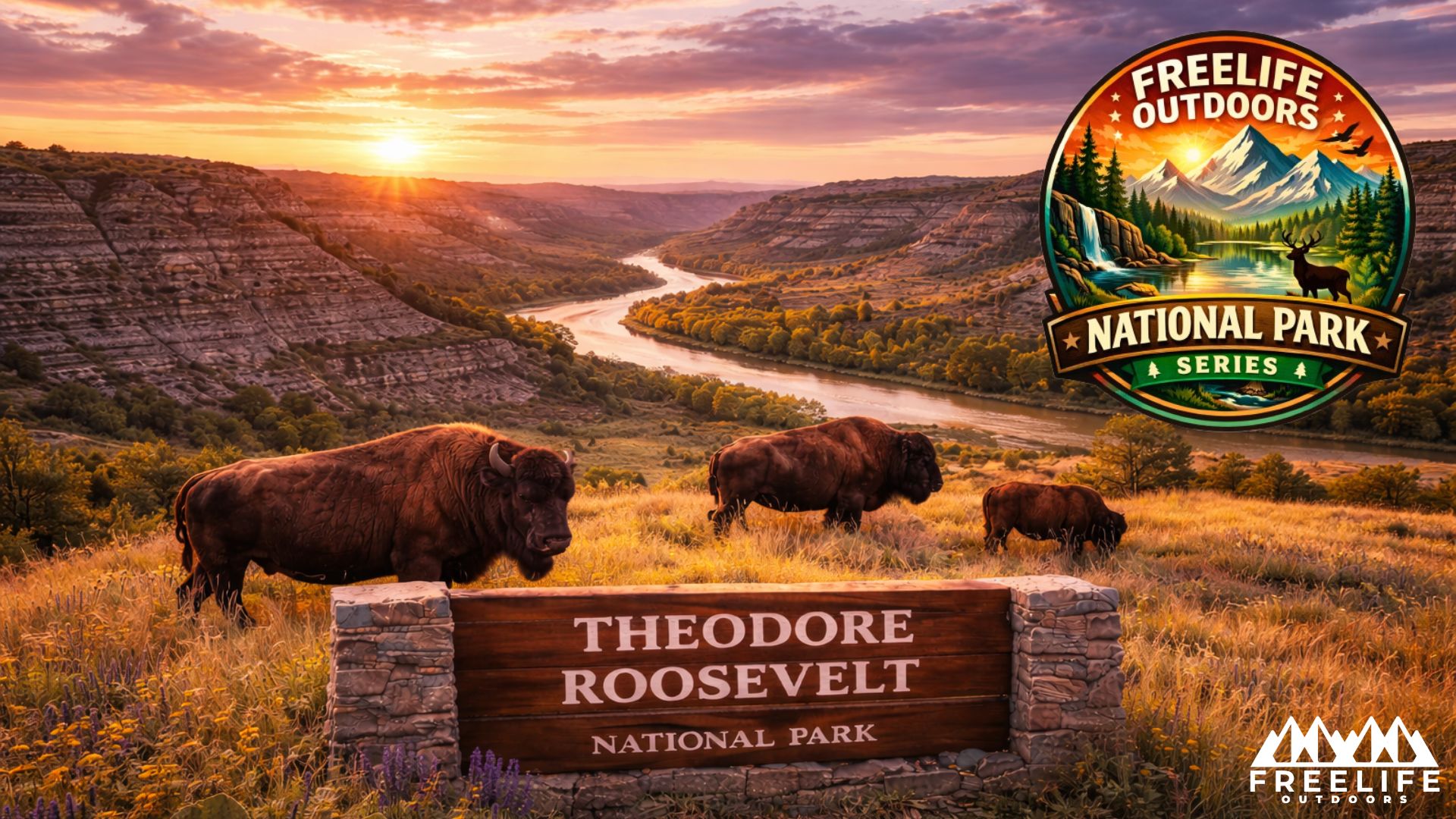
Theodore Roosevelt National Park
Theodore Roosevelt National Park protects the rugged badlands landscape that helped shape the conservation philosophy of President Theodore Roosevelt. Located in western North Dakota, the park features colorful rock formations, wide-open prairies, winding rivers, and abundant wildlife. Visitors can explore scenic drives, hike through dramatic badlands terrain, and observe iconic wildlife such as bison, wild horses, and prairie dogs across the park’s three units.
Park Data & Statistics
- State: North Dakota
- Established: November 10, 1978
- Park Size: ~70,447 acres
- Annual Visitors: ~800,000
- Park Units: North Unit, South Unit, and Elkhorn Ranch Unit
- Primary Landscape: Badlands and prairie ecosystems
Best Time to Visit
Spring (April–May)
Wildflowers bloom and wildlife is active.
Summer (June–August)
Warm weather and full park access.
Fall (September–October)
Beautiful prairie colors and fewer crowds.
Winter
Quiet landscapes and dramatic snow-covered badlands.
Best Photography Locations
- Painted Canyon badlands
- Little Missouri River valleys
- Buck Hill panoramic views
- Prairie wildlife scenes
Camping & Lodging Options
Popular campgrounds include:
Cottonwood Campground
Located in the South Unit along the Little Missouri River.
Juniper Campground
Located in the North Unit with scenic badlands views.
Indigenous / Cultural Significance
The region has long been inhabited by Indigenous peoples including the Mandan Tribe, Hidatsa Tribe, and the Arikara Nation, who lived along the Missouri River and surrounding plains.
Entrance Fees & Pass Information
- Private vehicle: Yes
- Motorcycle: Yes
- Individual: Yes
The America the Beautiful Annual Pass covers entry to all U.S. national parks for one year.
Hidden Gems Most Visitors Miss
- Quiet trails in the North Unit
- Elkhorn Ranch historic site
- Early morning wildlife sightings
- Remote prairie hiking routes
Additional Resources (1)
• Official Theodore Roosevelt National Park Website (National Park Service) – Official park information, alerts, and visitor planning resources.
• Theodore Roosevelt National Park Maps – Download official park maps including scenic drives and trails.
• Theodore Roosevelt National Park Hiking Guide – Trail descriptions and safety information.
• Theodore Roosevelt National Park Current Conditions & Alerts – Weather updates and park alerts.
• Scenic Drives in Theodore Roosevelt National Park – Information about the park’s scenic drives.
Popular Hiking Trails
- Caprock Coulee Trail
4 miles – Scenic loop through the rugged badlands. - Ridgeline Trail
3 miles – Elevated trail with incredible views of the park. - Coal Vein Trail
0.8 miles – Short hike featuring burning coal seam geology. - Wind Canyon Trail
0.4 miles – Short hike with sweeping Little Missouri River views. - Buck Hill Trail
0.2 miles – Quick hike to one of the park’s highest viewpoints.
Top Scenic Viewpoints
- Buck Hill overlook
- Wind Canyon overlook
- River Bend overlook
- Painted Canyon overlook
Beginner-Friendly Activities
- Scenic drives through the badlands
- Short viewpoint hikes
- Wildlife viewing
- Visitor center exhibits
Nearby Getaway Towns
Medora – Historic gateway town to the South Unit.
Watford City – Gateway community near the North Unit.
Waterfalls, Lakes, or Natural Highlights
- Painted Canyon badlands
- Little Missouri River
- Prairie landscapes
- Badlands rock formations
Scenic Drives
South Unit Scenic Loop Drive
A 36-mile scenic drive through dramatic badlands formations with multiple overlooks and wildlife viewing opportunities.
Maps & Navigation Resources
Visitors can use:
- Official NPS park maps
- onX Backcountry App
- AllTrails hiking maps
- Printed visitor center maps
- GPS navigation hiking apps
One Day Itinerary
Morning
- Visit Painted Canyon Visitor Center
- Drive the South Unit Scenic Loop
Midday
- Hike Wind Canyon Trail
- Picnic near Cottonwood Campground
Afternoon
- Explore Buck Hill overlook
- Wildlife viewing across prairie landscapes
Evening
- Sunset across the badlands
- Dinner in Medora
Popular Flora
The park features mixed grass prairie and badlands vegetation.
Common plants include:
- Prairie grasses
- Sagebrush
- Juniper trees
- Cottonwood trees
- Wildflowers
Popular Fauna
Mammals:
- American bison
- Wild horses
- Mule deer
- Coyotes
Birds:
- Golden eagles
- Prairie falcons
- Hawks
Other wildlife:
- Prairie dogs
- Rattlesnakes
- Amphibians
Advanced/Backcountry Activites
- Backcountry hiking across prairie landscapes
- Long-distance trails
- Wildlife photography expeditions
- Wilderness camping
Park History
Theodore Roosevelt first visited the North Dakota badlands in the 1880s after the death of his wife and mother. His time ranching and exploring the region deeply influenced his conservation beliefs. The park was later established to preserve the landscapes that shaped his legacy.
Visitor Tips and Safety
- Wildlife such as bison roam freely—keep safe distances.
- Summer temperatures can be hot and dry.
- Weather can change quickly across open prairie landscapes.
- Bring water when hiking.
Top 5 Bucket List Experiences
- Drive the South Unit Scenic Loop
- Watch wild horses roaming the badlands
- Hike Caprock Coulee Trail
- Photograph Painted Canyon
- Watch sunset from Buck Hill
Fun Facts
- Theodore Roosevelt credited the North Dakota badlands with shaping his conservation philosophy.
- The park protects three separate units across western North Dakota.
- Wild horses roam freely throughout the park.
- The park preserves part of the historic Little Missouri River badlands.
- Roosevelt once said this landscape “changed his life.”
Additional Resources (2)
• Medora North Dakota Visitor Guide – Regional tourism information and attractions.
• AllTrails – Theodore Roosevelt National Park Trails – Hiking maps and trail reviews.
• National Park Foundation – Theodore Roosevelt National Park Overview – Conservation information and park highlights.
• North Dakota Tourism – Theodore Roosevelt National Park Guide – Travel tips and visitor highlights.
• Theodore Roosevelt National Park Wikipedia Overview – Background on park history, geography, and wildlife.