

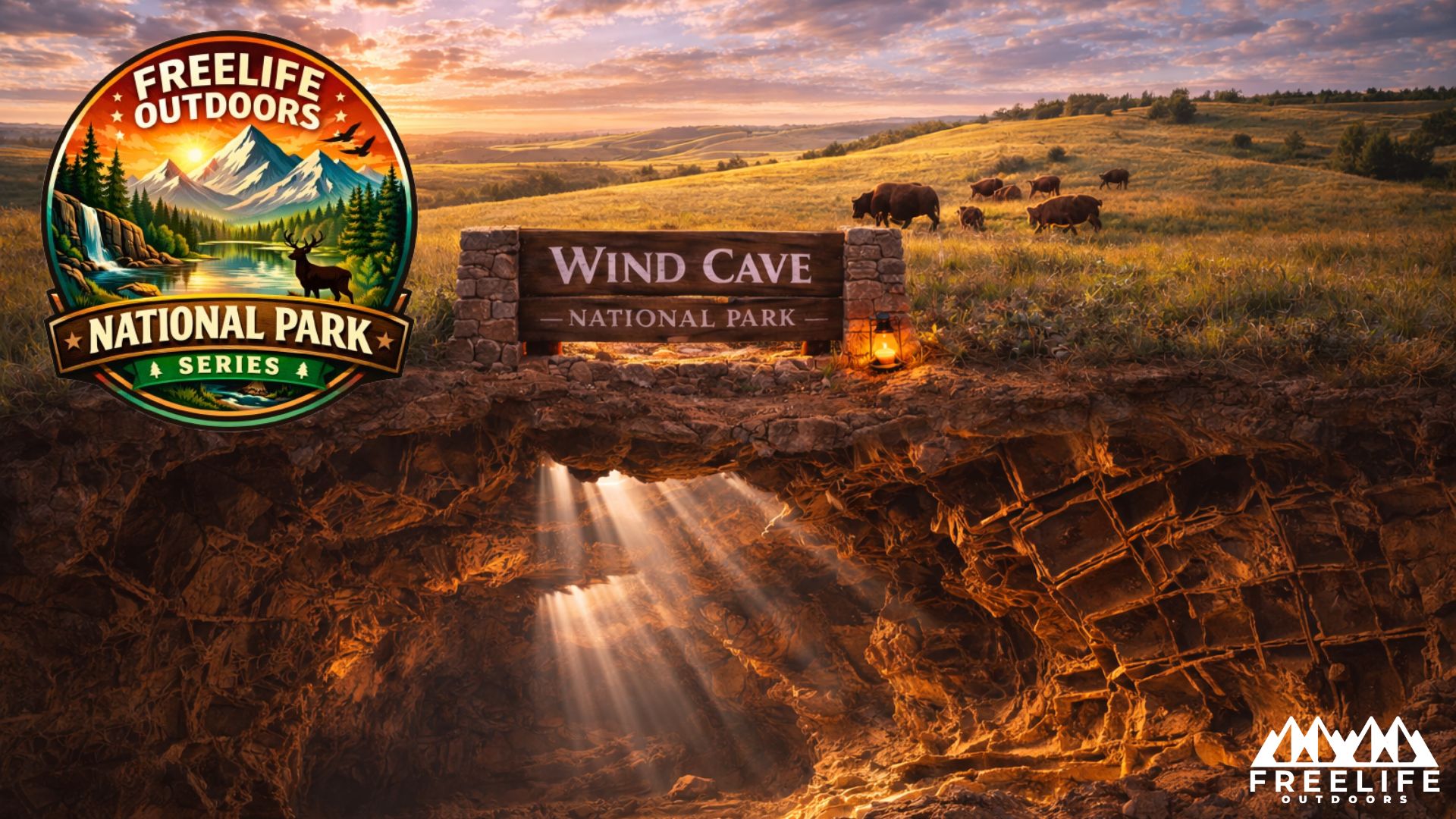
Wind Cave National Park
Wind Cave National Park protects one of the longest and most complex caves in the world along with a vast mixed-grass prairie ecosystem above ground. Located in the Black Hills of South Dakota, the park is famous for its rare cave formations called boxwork, which are found in very few caves worldwide. Visitors can explore underground cave passages on guided tours, hike across prairie landscapes, and observe wildlife such as bison, elk, and prairie dogs roaming freely across the park.
Park Data & Statistics
- State: South Dakota
- Established: January 9, 1903
- Park Size: ~33,970 acres
- Annual Visitors: ~600,000
- Cave Length: Over 150 miles of mapped passages
- Unique Formation: Boxwork cave formations
- Distinction: One of the first caves in the world designated as a national park
Best Time to Visit
Spring (April–May)
Wildflowers bloom and wildlife becomes active.
Summer (June–August)
Warm weather and full cave tour access.
Fall (September–October)
Pleasant temperatures and fewer crowds.
Winter offers quiet prairie landscapes.
Best Photography Locations
- Prairie landscapes with bison
- Rankin Ridge summit views
- Wildflower meadows
- Black Hills forest edges
Camping & Lodging Options
Elk Mountain Campground
The main campground inside the park offering scenic prairie views.
Indigenous / Cultural Significance
Wind Cave is considered sacred by Indigenous peoples including the Lakota Tribe, who have traditional stories connecting the cave to their origin stories.
Entrance Fees & Pass Information
- Park entrance: Free
- Cave tours require a separate fee.
The America the Beautiful Annual Pass covers entry to all U.S. national parks for one year.
Hidden Gems Most Visitors Miss
- Quiet prairie backcountry hikes
- Early morning wildlife viewing
- Less crowded cave tours
- Centennial Trail prairie sections
Additional Resources (1)
• Official Wind Cave National Park Website (National Park Service) – Official park information, alerts, and visitor planning resources.
• Wind Cave National Park Maps – Download official park maps including trails and park roads.
• Wind Cave Cave Tour Reservations – Information about guided cave tours.
• Wind Cave Hiking Guide – Trail descriptions and safety information.
• Wind Cave Current Conditions & Alerts – Weather updates and park alerts.
Popular Hiking Trails
- Rankin Ridge Trail
1 mile – Short hike to one of the highest viewpoints in the park. - Prairie Vista Trail
1 mile loop – Easy trail through prairie landscapes. - Lookout Point Trail
1 mile – Scenic trail connecting overlooks. - Centennial Trail
111-mile regional trail that passes through the park. - Elk Mountain Trail
3.5 miles – Quiet hike through prairie and forest areas.
Top Scenic Viewpoints
- Rankin Ridge overlook
- Prairie Vista viewpoints
- Black Hills prairie landscapes
- Rolling grassland panoramas
Beginner-Friendly Activities
- Guided cave tours
- Short prairie hikes
- Wildlife viewing
- Visitor center exhibits
Nearby Getaway Towns
Hot Springs – Closest gateway town to the park.
Custer – Nearby town with lodging and services.
Waterfalls, Lakes, or Natural Highlights
- Wind Cave underground passages
- Rare boxwork cave formations
- Mixed-grass prairie ecosystems
- Black Hills landscapes
Scenic Drives
Wildlife Loop Area Roads
Scenic roads within the park provide opportunities to see prairie wildlife and beautiful Black Hills landscapes.
Maps & Navigation Resources
Visitors can use:
- Official NPS park maps
- onX Backcountry App
- AllTrails hiking maps
- Printed visitor center maps
- GPS navigation hiking apps
One Day Itinerary
Morning
- Visit the Wind Cave Visitor Center
- Take a guided cave tour
Midday
- Picnic lunch near Elk Mountain Campground
- Hike Prairie Vista Trail
Afternoon
- Wildlife viewing across prairie landscapes
- Hike Rankin Ridge Trail
Evening
- Sunset photography across the prairie
- Dinner in Hot Springs
Popular Flora
The park contains mixed-grass prairie ecosystems.
Common plants include:
- Prairie grasses
- Ponderosa pine
- Wildflowers
- Sagebrush
- Yucca
Popular Fauna
Mammals:
- American bison
- Elk
- Prairie dogs
- Coyotes
Birds:
- Golden eagles
- Hawks
- Meadowlarks
Other wildlife:
- Snakes
- Amphibians
- Small prairie mammals
Advanced/Backcountry Activites
- Backcountry prairie hiking
- Long-distance trail exploration
- Wildlife photography
- Wilderness camping
Park History
Wind Cave National Park was established in 1903, making it the seventh national park in the United States and the first national park created specifically to protect a cave system. The park preserves both the underground cave formations and the natural prairie ecosystems above ground.
Visitor Tips and Safety
- Cave tours require advance reservations.
- Temperatures inside the cave remain cool year-round.
- Wildlife such as bison roam freely—maintain safe distances.
- Prairie weather can change quickly.
Top 5 Bucket List Experiences
- Take a guided tour through Wind Cave
- See the rare boxwork formations underground
- Hike to Rankin Ridge summit
- Watch bison roaming the prairie
- Explore mixed-grass prairie ecosystems
Fun Facts
- Wind Cave is one of the longest caves in the world.
- The cave contains rare boxwork formations found almost nowhere else.
- The park protects both underground cave systems and prairie ecosystems.
- Wind Cave National Park was established in 1903.
- The cave’s name comes from air rushing through the entrance as atmospheric pressure changes.
Additional Resources (2)
• Hot Springs South Dakota Visitor Guide – Regional tourism information and travel planning.
• AllTrails – Wind Cave National Park Trails – Hiking maps and trail reviews.
• National Park Foundation – Wind Cave Overview – Conservation information and park highlights.
• South Dakota Tourism – Wind Cave Guide – Travel tips and visitor highlights.
• Wind Cave National Park Wikipedia Overview – Background on park history, geology, and wildlife.