

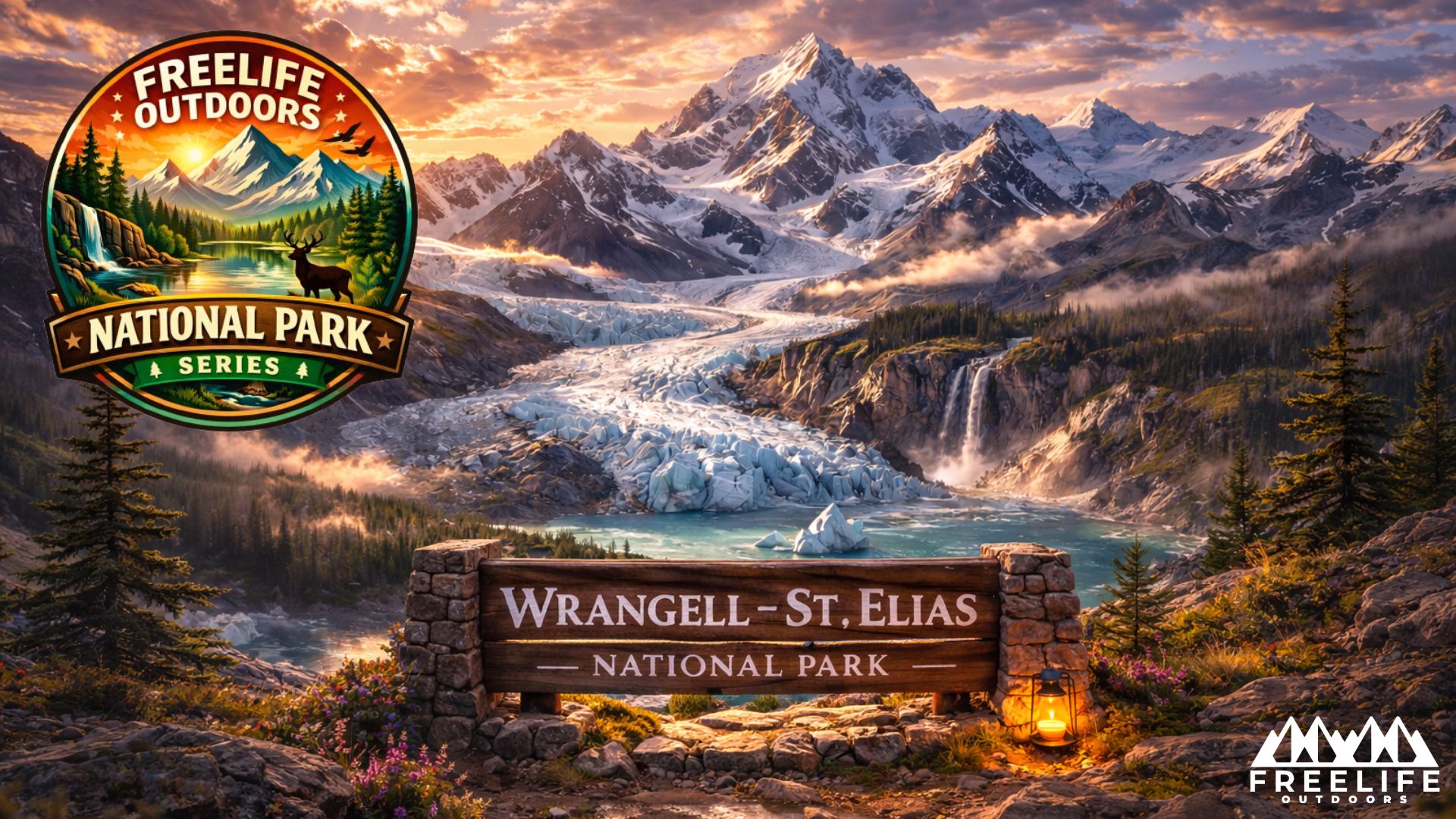
Wrangell - St. Elias National Park
Wrangell–St. Elias National Park and Preserve is the largest national park in the United States and one of the most remote wilderness areas in North America. Located in southeastern Alaska near the Canadian border, the park contains massive glaciers, towering mountain ranges, historic mining sites, and vast wilderness landscapes. Visitors can experience dramatic scenery, remote backcountry adventures, glacier exploration, and wildlife viewing across a park larger than several U.S. states combined.
Park Data & Statistics
- State: Alaska
- Established: December 2, 1980
- Park Size: ~13.2 million acres
- Annual Visitors: ~80,000
- Largest National Park in the U.S.
- Number of Major Mountain Ranges: 4 (Wrangell, St. Elias, Chugach, and Alaska Range portions)
Best Time to Visit
Summer (June–August)
Best weather and access to most park areas.
Fall (September)
Beautiful tundra colors and fewer visitors.
Winter
Extreme conditions but opportunities for snow travel.
Spring can still have heavy snow in many areas.
Best Photography Locations
- Root Glacier ice fields
- Kennicott Mine historic buildings
- Wrangell mountain peaks
- Vast tundra landscapes
Camping & Lodging Options
The park offers numerous backcountry camping opportunities.
Small campgrounds exist along Nabesna Road and McCarthy Road.
Lodging is available in the historic Kennecott mining town area.
Indigenous / Cultural Significance
The region has long been inhabited by Indigenous peoples including the Ahtna Athabascan Tribe, who have lived throughout the region for thousands of years.
Entrance Fees & Pass Information
- There is no entrance fee for Wrangell–St. Elias National Park and Preserve.
- Some guided tours and services may require fees.
The America the Beautiful Annual Pass covers entry to all U.S. national parks for one year.
Hidden Gems Most Visitors Miss
- Remote Nabesna Road wilderness
- Quiet alpine valleys
- Early morning wildlife sightings
- Remote glacier viewpoints
Additional Resources (1)
• Official Wrangell–St. Elias National Park Website (National Park Service) – Official park information, alerts, and visitor planning resources.
• Wrangell–St. Elias National Park Maps – Download official park maps including trails and access roads.
• Wrangell–St. Elias Hiking Guide – Trail descriptions and safety information.
• Wrangell–St. Elias Current Conditions & Alerts – Weather updates and park alerts.
• Kennecott Historic District Guide – Information about the historic copper mining town.
Popular Hiking Trails
- Root Glacier Trail
4 miles round trip – Hike across a glacier near Kennecott. - Bonanza Mine Trail
9 miles round trip – Historic mining trail with stunning views. - Nabesna Mine Trail
Short historic trail near Nabesna Road. - Skookum Volcano Trail
3 miles – Scenic trail near volcanic landscapes. - Caribou Creek Trail
Popular trail along the Nabesna Road area.
Top Scenic Viewpoints
- Kennicott Glacier views
- Wrangell Mountains vistas
- Nabesna Road viewpoints
- Root Glacier overlooks
Beginner-Friendly Activities
- Guided glacier walks
- Scenic drives along McCarthy Road
- Historic Kennecott exploration
- Visitor center exhibits
Nearby Getaway Towns
McCarthy – Historic town near Kennecott Mine.
Copper Center – Gateway community along the Richardson Highway.
Waterfalls, Lakes, or Natural Highlights
- Root Glacier
- Kennicott Glacier
- Wrangell Mountains
- Vast ice fields
- Historic Kennecott Mine
Scenic Drives
McCarthy Road
A remote gravel road leading to the historic Kennecott mining district and stunning glacier landscapes.
Nabesna Road
A scenic route providing access to remote wilderness areas and wildlife viewing.
Maps & Navigation Resources
Visitors can use:
- Official NPS park maps
- onX Backcountry App
- AllTrails hiking maps
- Printed visitor center maps
- GPS navigation hiking apps
One Day Itinerary
Morning
- Travel to McCarthy Road
- Visit Kennecott Mine historic site
Midday
- Hike to Root Glacier
- Guided glacier walk
Afternoon
- Explore the Kennecott mining buildings
- Wildlife viewing
Evening
- Sunset across glacier landscapes
- Dinner in McCarthy
Popular Flora
The park contains mixed-grass prairie ecosystems.
Common plants include:
- Prairie grasses
- Ponderosa pine
- Wildflowers
- Sagebrush
- Yucca
Popular Fauna
Mammals:
- American bison
- Elk
- Prairie dogs
- Coyotes
Birds:
- Golden eagles
- Hawks
- Meadowlarks
Other wildlife:
- Snakes
- Amphibians
- Small prairie mammals
Advanced/Backcountry Activites
- Glacier mountaineering
- Multi-day backpacking expeditions
- Flightseeing over glaciers
- Ice climbing
Park History
Wrangell–St. Elias National Park and Preserve was established in 1980 under the Alaska National Interest Lands Conservation Act to protect massive wilderness landscapes, glaciers, and historic mining areas including the Kennecott copper mines.
Visitor Tips and Safety
- Many areas are extremely remote.
- Weather can change quickly in mountain environments.
- Bring proper navigation tools for backcountry travel.
- Wildlife encounters are possible—carry bear safety equipment.
Top 5 Bucket List Experiences
- Walk across Root Glacier
- Explore the historic Kennecott Mine
- Take a flightseeing tour over massive glaciers
- Drive the remote McCarthy Road
- Backpack through Alaska wilderness
Fun Facts
- Wrangell–St. Elias is the largest national park in the United States.
- The park is larger than Yellowstone, Yosemite, and Switzerland combined.
- It contains nine of the sixteen tallest peaks in the United States.
- Massive glaciers dominate the park’s landscape.
- The park is part of a UNESCO World Heritage Site shared with Canada.
Additional Resources (2)
• Wrangell–St. Elias Tourism Guide – Regional visitor information and travel planning.
• AllTrails – Wrangell–St. Elias Trails – Hiking maps and trail reviews.
• National Park Foundation – Wrangell–St. Elias Overview – Conservation information and park highlights.
• Alaska Tourism – Wrangell–St. Elias Guide – Travel tips and visitor highlights.
• Wrangell–St. Elias National Park Wikipedia Overview – Background on park history, geography, and wildlife.