

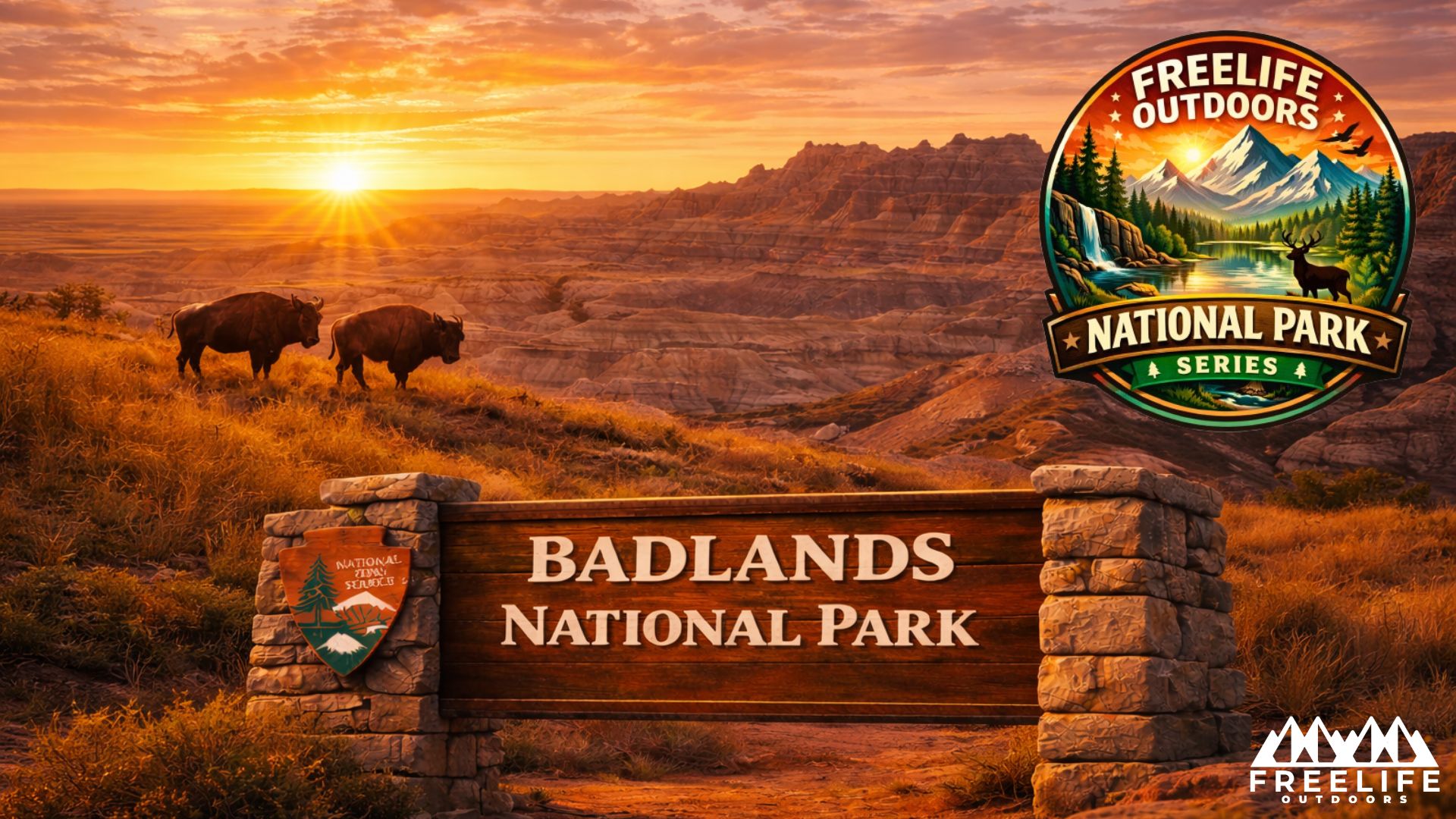
Badlands National Park
Badlands National Park protects one of the most dramatic landscapes in North America. Located in southwestern South Dakota, the park is known for its sharply eroded buttes, pinnacles, and layered rock formations surrounded by expansive prairie grasslands. The park also preserves one of the richest fossil beds in the world and provides habitat for wildlife such as bison, bighorn sheep, prairie dogs, and black-footed ferrets.
Park Data & Statistics
- State: South Dakota
- Established: November 10, 1978
- Park Size: ~244,000 acres
- Annual Visitors: ~1 million
- Highest Point: Sheep Mountain Table (~3,340 ft)
- Notable Feature: One of the world’s richest fossil beds
- Landscape: Mixed-grass prairie and eroded sedimentary formations
Best Time to Visit
Spring (April–June)
Wildflowers bloom and wildlife activity increases.
Fall (September–October)
Cool temperatures and fewer crowds.
Summer
Hot temperatures but longer daylight hours.
Winter
Quiet season with snow occasionally highlighting the rock formations.
Best Photography Locations
- Delicate Arch at sunset
- Landscape Arch in Devils Garden
- Double Arch at sunrise
- Balanced Rock at sunset
- North Window Arch framing Turret Arch
Camping & Lodging Options
Cedar Pass Campground
Main developed campground located near the visitor center.
Sage Creek Campground
Free primitive campground with wildlife viewing opportunities.
Nearby lodging is available in nearby towns.
Indigenous / Cultural Significance
The Badlands region is part of the ancestral lands of the Oglala Lakota Nation, a branch of the Lakota People. Portions of the park are co-managed with the Oglala Sioux Tribe and are considered culturally and spiritually important.
Entrance Fees & Pass Information
- Private vehicle: Yes
- Motorcycle: Yes
- Individual: Yes
The America the Beautiful Annual Pass covers entry to all U.S. national parks for one year.
Hidden Gems Most Visitors Miss
- Sage Creek Rim Road wildlife area
- Roberts Prairie Dog Town
- Castle Trail backcountry sections
- Fossil Preparation Lab at the visitor center
- Sheep Mountain Table remote viewpoints
Additional Resources (1)
• Official Badlands National Park Website (National Park Service) – Official park information, visitor updates, and trip planning resources.
• Badlands National Park Maps – Downloadable park maps showing trails, overlooks, and scenic drives.
• Badlands Hiking Guide – Official trail descriptions and hiking safety tips.
• Badlands Current Conditions & Alerts – Weather updates, closures, and park alerts.
• Badlands Camping Information – Details about Cedar Pass and Sage Creek campgrounds.
Popular Hiking Trails
- Notch Trail
1.5 miles round trip – Includes a wooden ladder climb and ends with an incredible overlook. - Door Trail
0.8 miles – Easy walk through a natural break in the Badlands Wall. - Window Trail
0.25 miles – Short boardwalk trail to a scenic overlook. - Castle Trail
10 miles round trip – The longest trail in the park crossing prairie and Badlands formations. - Saddle Pass Trail
0.7 miles – Short but steep hike with sweeping views.
Top Scenic Viewpoints
- Big Badlands Overlook
- Yellow Mounds Overlook
- Panorama Point
- Pinnacles Overlook
- White River Valley Overlook
Beginner-Friendly Activities
- Door Trail walk
- Window Trail boardwalk
- Wildlife viewing near Sage Creek
- Scenic drives
- Fossil exhibits at the visitor center
Nearby Getaway Towns
Wall, South Dakota – Home of the famous Wall Drug and main gateway to the park.
Interior, South Dakota – Small town located close to park entrances.
Waterfalls, Lakes, or Natural Highlights
- Badlands Wall formations
- Yellow Mounds geological layers
- Sage Creek wilderness
- White River Valley
- Prairie dog towns
Scenic Drives
Badlands Loop Road (Highway 240)
A 39-mile scenic drive featuring numerous overlooks, trailheads, and dramatic views of the Badlands formations.
Maps & Navigation Resources
Visitors can use:
- Official NPS park maps
- onX Backcountry App
- AllTrails hiking maps
- Printed visitor center maps
- GPS navigation hiking apps
One Day Itinerary
Morning
- Sunrise at Big Badlands Overlook
- Hike the Door Trail
Midday
- Lunch at Cedar Pass Lodge
- Explore fossil exhibits
Afternoon
- Hike Notch Trail
- Wildlife viewing near Sage Creek
Evening
-
Sunset at Pinnacles Overlook
Popular Flora
Badlands National Park is part of the mixed-grass prairie ecosystem.
Common plants include:
- Western wheatgrass
- Little bluestem
- Buffalo grass
- Prairie coneflower
- Purple prairie clover
- Yucca plants
Popular Fauna
Mammals:
- American bison
- Bighorn sheep
- Prairie dogs
- Coyotes
- Black-footed ferrets (rare)
Birds:
- Golden eagles
- Prairie falcons
- Meadowlarks
Reptiles:
-
Prairie rattlesnake
Advanced/Backcountry Activites
- Castle Trail full hike
- Sage Creek wilderness hiking
- Backpacking in the Badlands backcountry
- Photography exploration of remote formations
Park History
The Badlands landscape formed over millions of years through erosion of sedimentary rock layers deposited by ancient seas and rivers. Fossils discovered here reveal an incredible prehistoric ecosystem dating back over 30 million years. The area was designated a national monument in 1939 before becoming a national park in 1978.
Visitor Tips and Safety
- Carry plenty of water, especially in summer.
- Stay on marked trails near steep drop-offs.
- Watch for wildlife along roads.
- Thunderstorms can develop quickly.
- Wear sun protection due to limited shade.
Top 5 Bucket List Experiences
- Drive the Badlands Loop Road
- Hike the Notch Trail ladder climb
- Watch sunrise at Big Badlands Overlook
- Spot bison and bighorn sheep
- Visit a prairie dog town
Fun Facts
- The Badlands erode at a rate of about one inch per year.
- Fossils discovered here are over 30 million years old.
- The park protects one of the largest mixed-grass prairie ecosystems in the U.S.
- Prairie dog towns can contain thousands of burrows.
- Some of the park’s rock layers are over 75 million years old.
Additional Resources (2)
• Black Hills & Badlands Tourism Guide – Regional travel information and attractions.
• AllTrails – Badlands National Park Trails – Trail maps, reviews, and GPS navigation.
• National Park Foundation – Badlands Overview – Conservation information and park highlights.
• South Dakota Tourism – Badlands Guide – Travel tips and visitor information.
• Badlands National Park Wikipedia Overview – Background on park history, geology, and wildlife.