

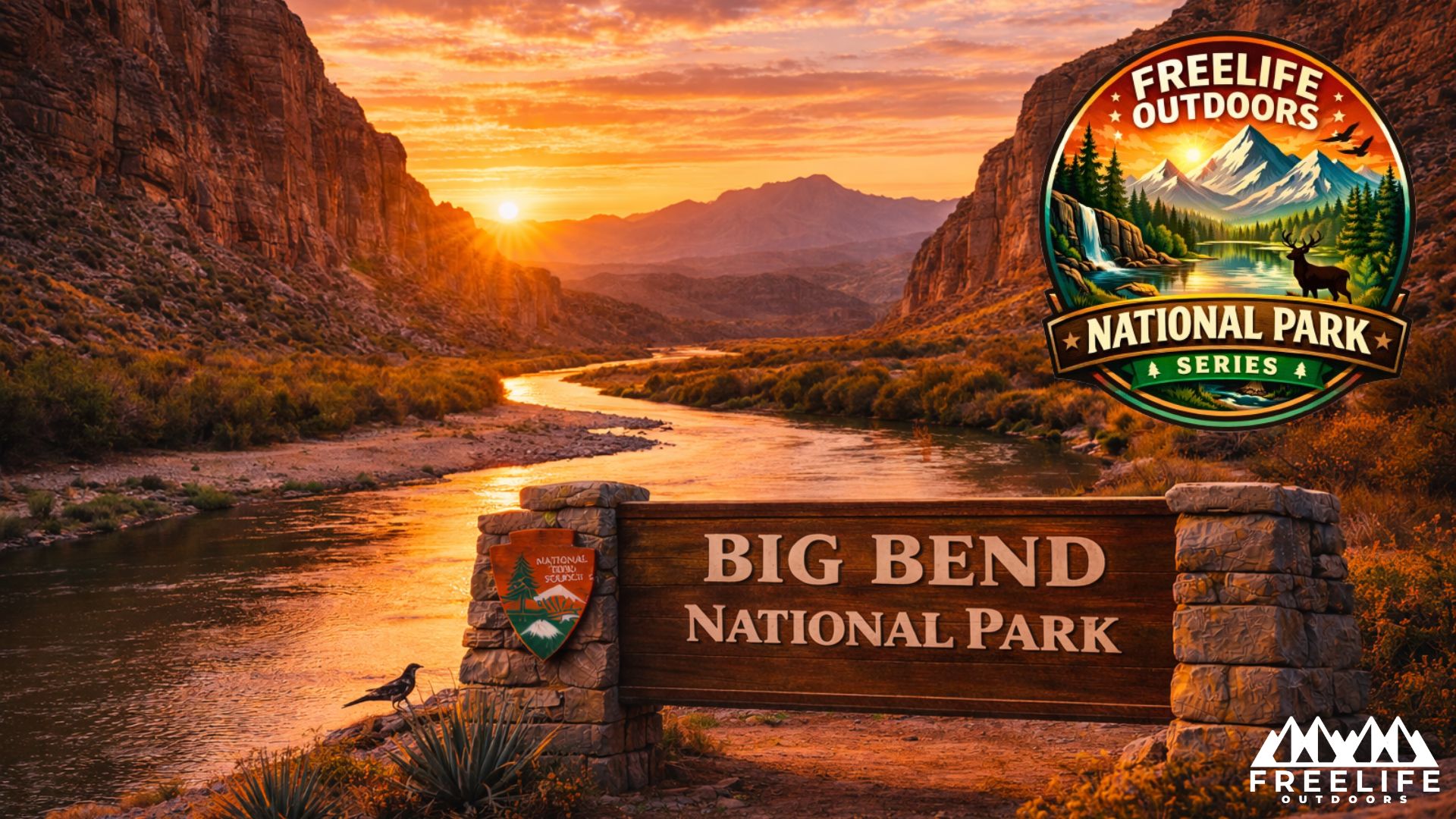
Big Bend National Park
Big Bend National Park protects one of the most remote and diverse landscapes in the United States. Located in southwest Texas along the Rio Grande River at the U.S.–Mexico border, the park features dramatic desert landscapes, rugged mountains, deep river canyons, and vast night skies. Visitors can explore the Chisos Mountains, hike through desert ecosystems, paddle the Rio Grande, and experience one of the darkest night skies in North America.
Park Data & Statistics
- State: Texas
- Established: June 12, 1944
- Park Size: ~801,163 acres
- Annual Visitors: ~500,000
- Highest Point: Emory Peak (7,825 ft)
- River Border: Rio Grande (118 miles within park boundaries)
- Designation: International Dark Sky Park
Best Time to Visit
Fall (October–November)
Comfortable temperatures and excellent hiking conditions.
Spring (March–April)
Wildflowers bloom and wildlife activity increases.
Summer
Extremely hot desert temperatures often exceeding 100°F.
Winter
Mild daytime temperatures and excellent stargazing conditions.
Best Photography Locations
- Santa Elena Canyon at sunset
- Balanced Rock at sunrise
- Chisos Mountains panoramic views
- Mule Ears peaks
- Rio Grande river canyon
Camping & Lodging Options
Chisos Basin Campground
Located in the mountains with cooler temperatures and scenic views.
Rio Grande Village Campground
Developed campground near the Rio Grande.
Cottonwood Campground
Quieter campground along the Ross Maxwell Scenic Drive.
Indigenous / Cultural Significance
Indigenous peoples including the Chisos People, Apache Tribe, and Comanche Nation historically lived and traveled through this region for hunting and seasonal migration.
Entrance Fees & Pass Information
- Private vehicle: Yes
- Motorcycle: Yes
- Individual: Yes
The America the Beautiful Annual Pass covers entry to all U.S. national parks for one year.
Hidden Gems Most Visitors Miss
- Ernst Tinaja desert canyon
- Hot Springs Historic District
- Balanced Rock sunset hike
- Pine Canyon remote hiking area
- Boquillas Canyon overlook
Additional Resources (1)
• Official Big Bend National Park Website (National Park Service) – Official park information, alerts, and trip planning resources.
• Big Bend National Park Maps – Download official park maps including roads, trails, and scenic drives.
• Big Bend Hiking Guide – Official hiking trail descriptions and safety tips.
• Big Bend Current Conditions & Alerts – Weather updates, closures, and park alerts.
• Big Bend Camping Information – Details about park campgrounds and reservations.
Popular Hiking Trails
- Lost Mine Trail
4.8 miles round trip – One of the best hikes for panoramic views of the Chisos Mountains. - Santa Elena Canyon Trail
1.7 miles round trip – Scenic hike into a massive limestone canyon along the Rio Grande. - South Rim Trail
12–14 miles – One of the most spectacular hikes in Texas with incredible desert views. - Window Trail
5.6 miles round trip – Leads to a dramatic window-shaped canyon opening. - Balanced Rock Trail
2.2 miles – Hike through Grapevine Hills to a unique rock formation.
Top Scenic Viewpoints
- Santa Elena Canyon overlook
- Sotol Vista Overlook
- Chisos Basin scenic viewpoints
- Rio Grande Village overlook
- Mule Ears Viewpoint
Beginner-Friendly Activities
- Santa Elena Canyon Trail
- Ross Maxwell Scenic Drive
- Window View Trail
- Rio Grande Village nature trail
- Fossil discovery exhibit
Nearby Getaway Towns
Terlingua, Texas – Historic desert town known for lodging, restaurants, and access to the park.
Study Butte, Texas – Nearby community with visitor services and supplies.
Waterfalls, Lakes, or Natural Highlights
- Santa Elena Canyon
- Rio Grande River
- Chisos Mountains
- Mule Ears volcanic formations
- Boquillas Canyon
Scenic Drives
Ross Maxwell Scenic Drive
A 30-mile scenic drive featuring some of the park’s best views including:
- Santa Elena Canyon
- Mule Ears Viewpoint
- Sotol Vista
- Desert landscapes
Maps & Navigation Resources
Visitors can use:
- Official NPS park maps
- onX Backcountry App
- AllTrails hiking maps
- Printed visitor center maps
- GPS navigation hiking apps
One Day Itinerary
Morning
- Sunrise hike on Lost Mine Trail
- Breakfast at Chisos Basin
Midday
- Scenic drive along Ross Maxwell Scenic Drive
- Hike Santa Elena Canyon Trail
Afternoon
- Visit Rio Grande Village nature trail
- Explore desert landscapes
Evening
- Sunset at Sotol Vista Overlook
- Stargazing after dark
Popular Flora
Big Bend features incredible desert plant diversity.
- Ocotillo
- Creosote bush
- Lechuguilla
- Yucca
- Prickly pear cactus
- Sotol desert plants
Popular Fauna
Mammals:
- Black bears
- Mountain lions
- Javelina
- Mule deer
Birds:
- Roadrunners
- Golden eagles
- Peregrine falcons
Reptiles:
- Texas horned lizards
- Rattlesnakes
Advanced/Backcountry Activites
- South Rim Trail
- Emory Peak summit hike
- Multi-day desert backpacking
- Rio Grande canoe trips
- Remote desert exploration
Park History
The Big Bend region has been inhabited for thousands of years by Indigenous peoples and later Spanish explorers. Ranching dominated the area during the 19th century before conservation efforts led to the creation of Big Bend National Park in 1944 to protect its unique desert ecosystem and scenic beauty.
Visitor Tips and Safety
- Carry plenty of water when hiking in the desert.
- Summer heat can be extreme.
- Cell service is very limited in the park.
- Watch for wildlife including bears and mountain lions.
- Check weather conditions before river trips.
Top 5 Bucket List Experiences
- Explore Santa Elena Canyon
- Hike the South Rim Trail
- Drive Ross Maxwell Scenic Drive
- Watch sunset over the Chisos Mountains
- Stargaze under Big Bend’s dark skies
Fun Facts
- Big Bend is larger than the state of Rhode Island.
- The park protects over 1,200 plant species.
- Big Bend is one of the best stargazing locations in North America.
- The Rio Grande forms 118 miles of the park’s southern border.
- Big Bend contains three major ecosystems: desert, river, and mountain environments.
Additional Resources (2)
• Visit Big Bend Tourism Guide – Regional travel information including lodging, activities, and attractions.
• AllTrails – Big Bend National Park Trails – Trail maps, reviews, and GPS navigation for hiking.
• National Park Foundation – Big Bend Overview – Park highlights and conservation information.
• Texas Parks & Wildlife – Big Bend Region – Information about nearby parks and outdoor recreation.
• Big Bend National Park Wikipedia Overview – Detailed background on park history, geography, and wildlife.