

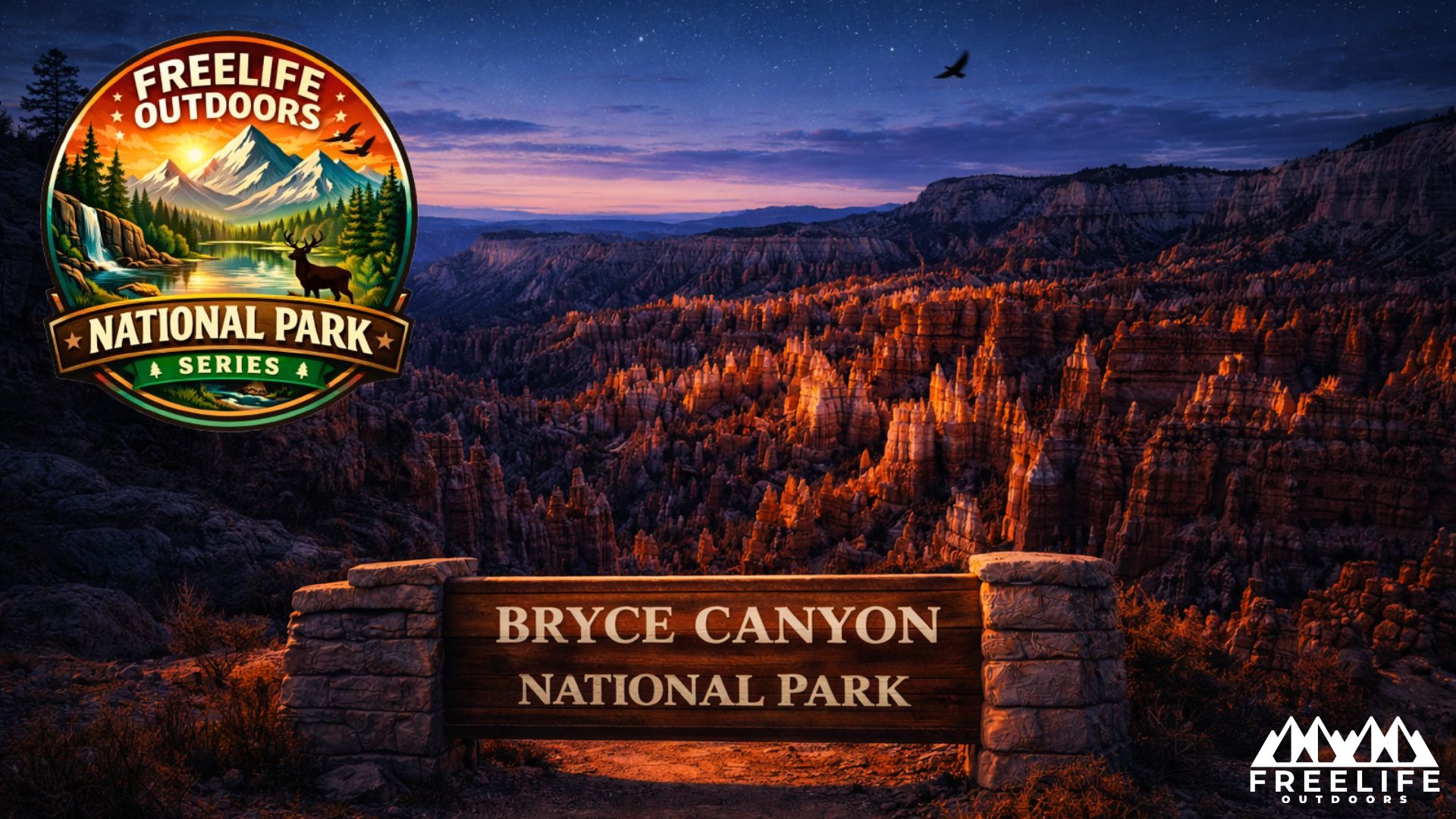
Bryce Canyon National Park
Bryce Canyon National Park is famous for its breathtaking amphitheaters filled with thousands of colorful rock spires known as hoodoos. Located in southern Utah, the park sits at a high elevation along the edge of the Paunsaugunt Plateau. Unlike traditional canyons carved by rivers, Bryce Canyon was formed primarily through frost weathering and erosion, creating one of the most unique landscapes in the world. Visitors enjoy scenic viewpoints, hiking among the hoodoos, horseback riding, and exceptional stargazing.
Park Data & Statistics
- State: Utah
- Established: September 15, 1928
- Park Size: ~35,835 acres
- Annual Visitors: ~2.7 million
- Elevation Range: 6,620 – 9,115 ft
- Highest Point: Rainbow Point
- Famous Feature: Largest concentration of hoodoos on Earth
Best Time to Visit
Spring (April–June)
Mild temperatures and blooming wildflowers.
Summer
Peak visitation season with warm weather and clear skies.
Fall (September–October)
Fewer crowds and cooler temperatures.
Winter
Snow-covered hoodoos create spectacular scenery.
Best Photography Locations
- Thor’s Hammer from Sunset Point
- Bryce Amphitheater at sunrise
- Inspiration Point overlooks
- Fairyland Point
- Rainbow Point panoramic views
Camping & Lodging Options
North Campground
Located near the visitor center with easy access to trails.
Sunset Campground
Large campground near Bryce Amphitheater.
Nearby lodging is available in Bryce Canyon City and Tropic, Utah.
Indigenous / Cultural Significance
The Bryce Canyon region has long been connected to the Paiute Tribe, whose legends describe the hoodoos as ancient people turned to stone by trickster spirits.
Entrance Fees & Pass Information
- Private vehicle: Yes
- Motorcycle: Yes
- Individual: Yes
The America the Beautiful Annual Pass covers entry to all U.S. national parks for one year.
Hidden Gems Most Visitors Miss
- Mossy Cave Trail
- Fairyland Loop scenic viewpoints
- Yovimpa Point overlook
- Bristlecone pine forests
- Paria View overlook
Additional Resources (1)
• Official Bryce Canyon National Park Website (National Park Service) – Official park information, alerts, and visitor planning resources.
• Bryce Canyon National Park Maps – Download official park maps including trails and scenic drives.
• Bryce Canyon Hiking Guide – Official trail descriptions and safety information.
• Bryce Canyon Current Conditions & Alerts – Weather updates, closures, and park alerts.
• Bryce Canyon Camping Information – Information about North and Sunset campgrounds.
Popular Hiking Trails
- Navajo Loop Trail
1.3 miles – One of the most famous hikes featuring Thor’s Hammer and Wall Street. - Queen’s Garden Trail
1.8 miles – Scenic trail descending into Bryce Amphitheater. - Peekaboo Loop Trail
5.5 miles – Moderate hike through spectacular hoodoo formations. - Fairyland Loop Trail
8 miles – Less crowded trail offering incredible views. - Rim Trail
5.5 miles between viewpoints – Scenic walking path along the canyon rim.
Top Scenic Viewpoints
- Sunrise Point
- Sunset Point
- Inspiration Point
- Bryce Point
- Rainbow Point
Beginner-Friendly Activities
- Rim Trail walks between viewpoints
- Sunrise and Sunset Point overlooks
- Visitor center exhibits
- Scenic drive through the park
- Ranger-led programs
Nearby Getaway Towns
Bryce Canyon City, Utah – Closest town with lodging and restaurants.
Tropic, Utah – Small town providing additional accommodations and services.
Waterfalls, Lakes, or Natural Highlights
- Bryce Amphitheater
- Thor’s Hammer hoodoo
- Natural Bridge rock formation
- Fairyland Canyon
- Colorful hoodoo formations
Scenic Drives
Bryce Canyon Scenic Drive
An 18-mile road connecting many spectacular viewpoints including:
- Bryce Amphitheater overlooks
- Natural Bridge
- Rainbow Point
- Yovimpa Point
Maps & Navigation Resources
Visitors can use:
- Official NPS park maps
- onX Backcountry App
- AllTrails hiking maps
- Printed visitor center maps
- GPS navigation hiking apps
One Day Itinerary
Morning
- Sunrise at Sunrise Point
- Hike Navajo Loop and Queen’s Garden Trail
Midday
- Lunch picnic near Sunset Point
- Explore visitor center exhibits
Afternoon
- Drive scenic viewpoints to Rainbow Point
- Short hikes along the Rim Trail
Evening
- Sunset at Inspiration Point
- Stargazing program after dark
Popular Flora
Bryce Canyon sits at high elevation and contains several forest ecosystems.
Common plants include:
- Ponderosa pine
- Douglas fir
- Bristlecone pine
- Utah juniper
- Aspen trees
- Wildflowers such as lupine and paintbrush
Popular Fauna
Mammals:
- Mule deer
- Utah prairie dogs
- Red foxes
- Mountain lions
Birds:
- Peregrine falcons
- Clark’s nutcrackers
- Ravens
Other wildlife:
- Pronghorn antelope
- Golden-mantled ground squirrels
Advanced/Backcountry Activites
- Fairyland Loop Trail
- Peekaboo Loop Trail
- Bryce Canyon backpacking routes
- Winter snowshoeing adventures
Park History
Bryce Canyon was originally inhabited by Indigenous peoples long before European settlers arrived. Mormon pioneers later settled nearby, including Ebenezer Bryce, for whom the canyon was eventually named. The area became a national monument in 1923 before being designated Bryce Canyon National Park in 1928.
Visitor Tips and Safety
- High elevation can cause altitude sickness.
- Bring layers as temperatures change quickly.
- Stay on designated trails to protect fragile formations.
- Summer thunderstorms can develop rapidly.
- Use sun protection at higher elevations.
Top 5 Bucket List Experiences
- Watch sunrise over Bryce Amphitheater
- Hike the Navajo Loop Trail
- Photograph Thor’s Hammer
- Drive the Bryce Canyon scenic road
- Stargaze in the park’s dark skies
Fun Facts
- Bryce Canyon contains the largest collection of hoodoos in the world.
- The park sits at elevations over 8,000 feet, making summers cooler than many nearby parks.
- Some bristlecone pine trees in the park are over 1,600 years old.
- Bryce Canyon is actually not a true canyon, but a series of amphitheaters.
- The park is recognized as an International Dark Sky Park.
Additional Resources (2)
• Utah Tourism – Bryce Canyon Guide – Travel tips and regional visitor information.
• AllTrails – Bryce Canyon National Park Trails – Trail maps, reviews, and GPS navigation.
• National Park Foundation – Bryce Canyon Overview – Park highlights and conservation information.
• Bryce Canyon Country Tourism Guide – Local travel resources including lodging and activities.
• Bryce Canyon National Park Wikipedia Overview – Background on park history, geology, and wildlife.