

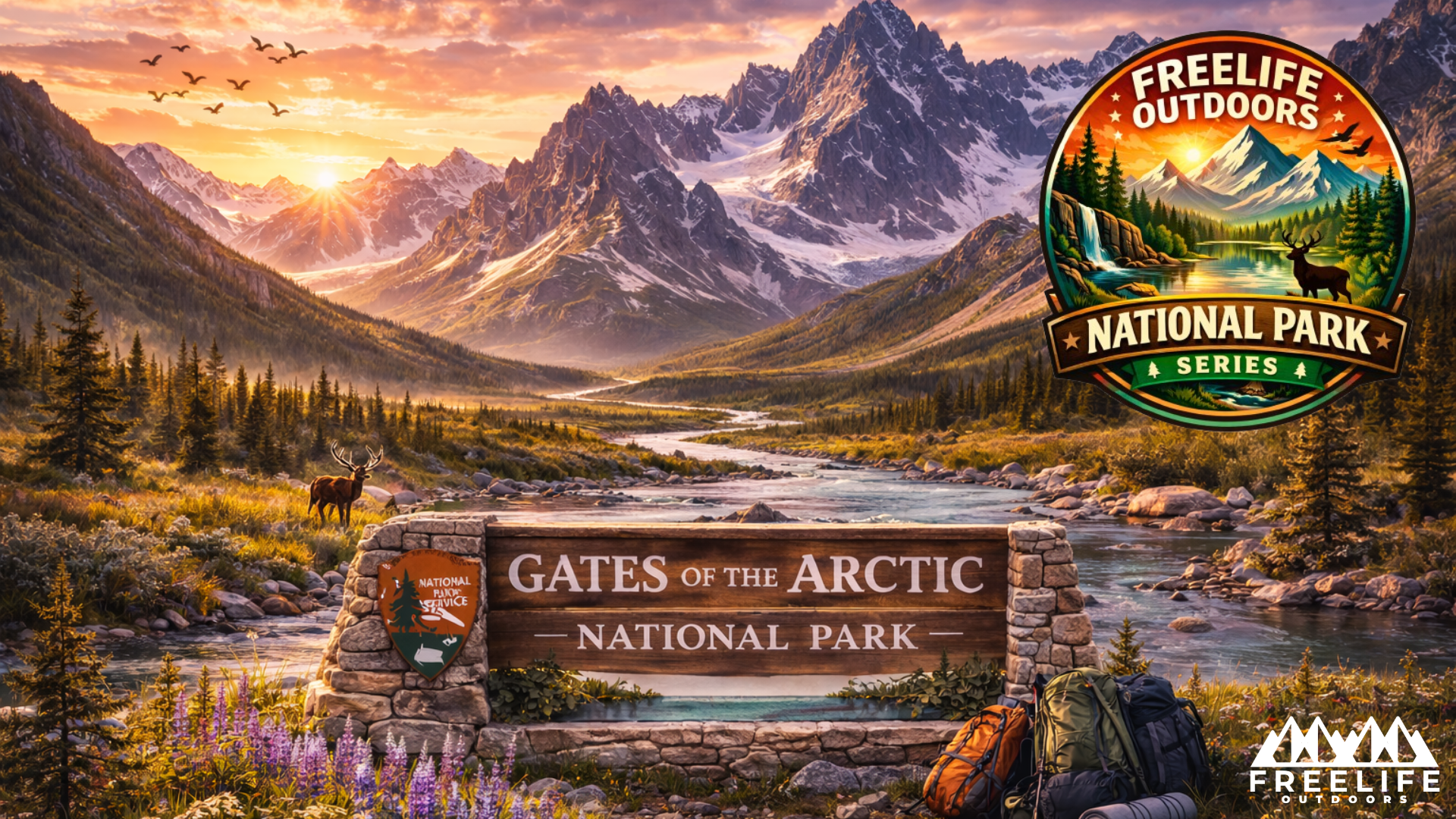
Gates of the Arctic National Park
Gates of the Arctic National Park and Preserve is one of the most remote and wild national parks in the United States. Located entirely north of the Arctic Circle in Alaska, the park protects vast wilderness including mountains, tundra, rivers, and boreal forests. With no roads, trails, or established campgrounds, visitors experience true backcountry adventure through backpacking, river rafting, and wilderness exploration. The park is centered around the rugged Brooks Range, where towering peaks and pristine valleys define the landscape.
Park Data & Statistics
- State: Alaska
- Established: December 2, 1980
- Park Size: ~8.4 million acres
- Annual Visitors: ~10,000
- Mountain Range: Brooks Range
- Primary Ecosystems: Arctic tundra and boreal forest
- Accessibility: No roads into the park
Best Time to Visit
Summer (June–August)
Best conditions for hiking, rafting, and exploring.
Fall (September)
Spectacular tundra colors and northern lights viewing.
Winter
Extreme cold but excellent aurora viewing opportunities.
Best Photography Locations
- Arrigetch Peaks granite spires
- Caribou migration areas
- Arctic tundra landscapes
- Brooks Range valleys
Camping & Lodging Options
There are no developed campgrounds inside the park.
Visitors practice wilderness camping anywhere within park boundaries following Leave No Trace principles.
Indigenous / Cultural Significance
The park is traditionally used by Alaska Native peoples including the Nunamiut Iñupiat People, who have lived in the Brooks Range region for generations.
Entrance Fees & Pass Information
There is no entrance fee for Gates of the Arctic National Park.
The America the Beautiful Annual Pass covers entry to all U.S. national parks for one year.
Hidden Gems Most Visitors Miss
- Upper Noatak River valleys
- Remote alpine lakes
- Arctic wildflower meadows
- Caribou migration routes
- Untouched tundra ridgelines
Additional Resources (1)
• Official Gates of the Arctic National Park Website (National Park Service) – Official park information, alerts, and wilderness planning resources.
• Gates of the Arctic National Park Maps – Download official wilderness maps and planning guides.
• Gates of the Arctic Backcountry Planning Guide – Important information for wilderness travel.
• Gates of the Arctic Current Conditions & Alerts – Weather updates and travel alerts.
• Gates of the Arctic Air Taxi Information – Transportation options to reach the park.
Popular Hiking Trails
- Unlike most national parks, Gates of the Arctic has no official trails. Visitors hike freely across the wilderness landscape.
- Popular areas for exploration include:
- Arrigetch Peaks Area
Dramatic granite spires popular with backpackers and climbers. - Brooks Range Valleys
Remote alpine valleys ideal for wilderness trekking. - Noatak River Region
Popular for rafting and remote backcountry travel.
Top Scenic Viewpoints
- Brooks Range mountain passes
- Arrigetch Peaks
- Noatak River valleys
- Arctic tundra landscapes
Beginner-Friendly Activities
Due to its extreme remoteness, the park is best suited for experienced wilderness travelers. However, beginners can:
- Take guided fly-in tours
- Scenic flights over the Brooks Range
- Guided rafting trips
Nearby Getaway Towns
Bettles, Alaska – Primary air access point for the park.
Coldfoot, Alaska – Small settlement along the Dalton Highway.
Waterfalls, Lakes, or Natural Highlights
- Brooks Range mountains
- Arrigetch Peaks granite towers
- Noatak River
- Arctic tundra landscapes
- Remote alpine valleys
Scenic Drives
There are no roads inside Gates of the Arctic National Park.
The nearest scenic drive is the Dalton Highway, which runs near the park boundary.
Maps & Navigation Resources
Visitors can use:
- Official NPS park maps
- onX Backcountry App
- AllTrails hiking maps
- Printed visitor center maps
- GPS navigation hiking apps
One Day Itinerary
Most visitors experience the park through fly-in adventures.
Morning
- Scenic flight from Bettles
- Landing near Brooks Range
Midday
- Short wilderness hike
- Wildlife viewing
Afternoon
- Photography and exploration
- Fly back to Bettles
Popular Flora
The park’s vegetation consists mainly of tundra and boreal ecosystems.
Common plants include:
- Arctic mosses
- Dwarf birch
- Willow shrubs
- Arctic wildflowers
- Lichens
Popular Fauna
Large mammals:
- Caribou
- Grizzly bears
- Wolves
- Moose
- Dall sheep
Birds:
- Golden eagles
- Gyrfalcons
- Snowy owls
Other wildlife:
- Arctic ground squirrels
- Foxes
Advanced/Backcountry Activites
- Multi-day wilderness backpacking
- Remote river rafting expeditions
- Mountaineering in the Brooks Range
- Arctic wildlife photography
Park History
The park was established in 1980 to protect one of the largest untouched wilderness areas in North America. Conservation efforts focused on preserving the Brooks Range ecosystem and the traditional lifestyles of Alaska Native communities.
Visitor Tips and Safety
- The park has no roads, trails, or visitor centers inside the wilderness area.
- Visitors must be prepared for remote travel.
- Weather conditions can change rapidly.
- Bring satellite communication devices.
- Always practice bear safety.
Top 5 Bucket List Experiences
- Backpack through the Brooks Range wilderness
- Photograph the Arrigetch Peaks
- Raft the Noatak River
- Watch the northern lights in fall
- Experience true Arctic wilderness solitude
Fun Facts
- Gates of the Arctic is one of the least visited national parks in the U.S.
- The park lies entirely north of the Arctic Circle.
- There are no roads, trails, or developed facilities inside the wilderness.
- The park protects one of the largest wilderness areas in North America.
- The name comes from two mountains known as the “Gates” along the Koyukuk River.
Additional Resources (2)
• Fairbanks Tourism – Gates of the Arctic Guide – Regional travel information.
• AllTrails – Gates of the Arctic Exploration Areas – Wilderness exploration routes and maps.
• National Park Foundation – Gates of the Arctic Overview – Conservation information and park highlights.
• Alaska Tourism – Gates of the Arctic Guide – Travel tips and regional visitor information.
• Gates of the Arctic National Park Wikipedia Overview – Background on park history, geography, and wildlife.