

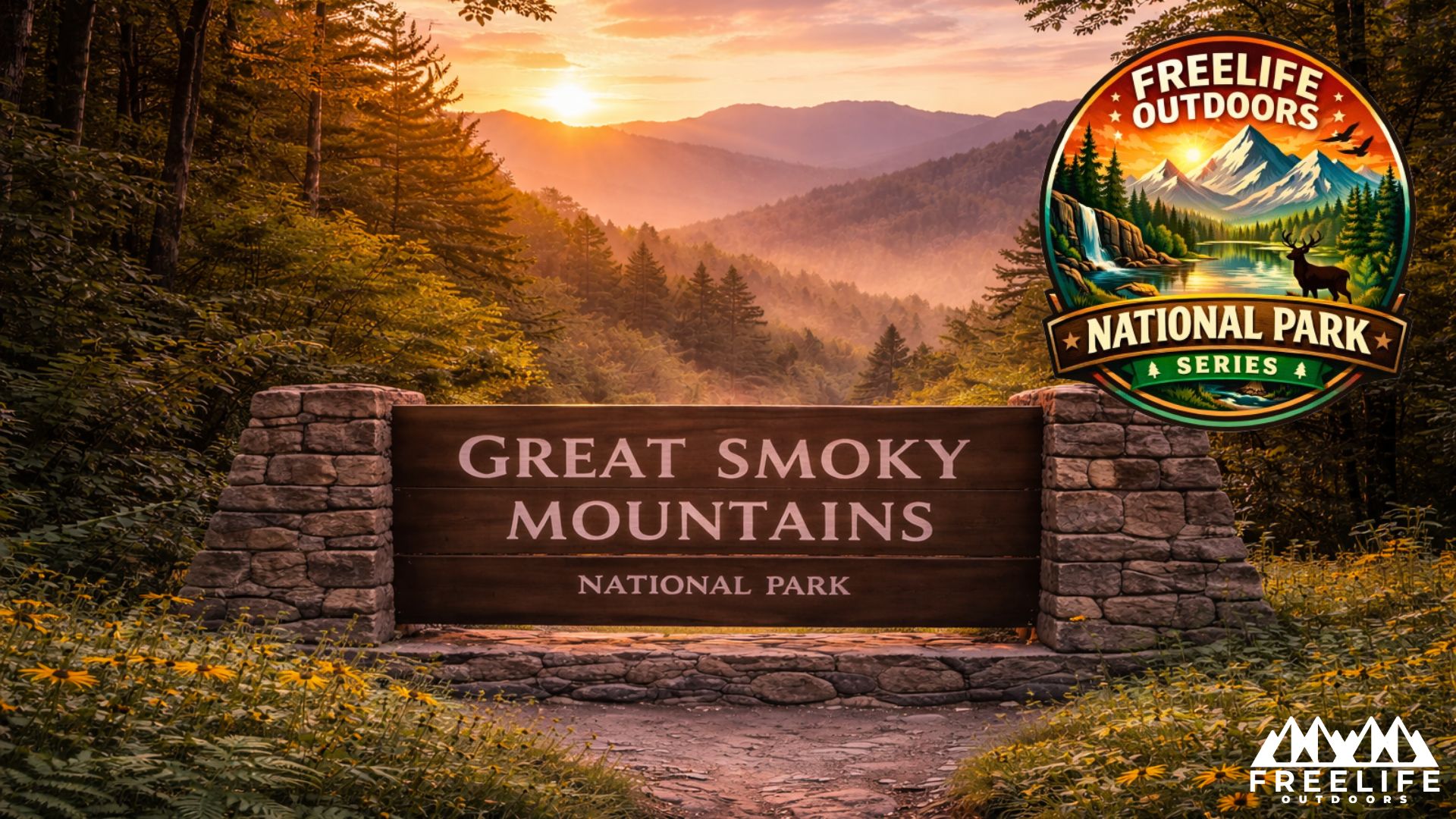
Great Smoky Mountains National Park
Great Smoky Mountains National Park is the most visited national park in the United States. Located along the border of Tennessee and North Carolina, the park is famous for its mist-covered mountain ridges, lush forests, historic Appalachian culture, and incredible biodiversity. Visitors explore scenic drives, waterfalls, wildlife-rich valleys, and more than 850 miles of hiking trails throughout the park.
Park Data & Statistics
- States: Tennessee and North Carolina
- Established: June 15, 1934
- Park Size: ~522,427 acres
- Annual Visitors: ~12–14 million
- Miles of Hiking Trails: 850+
- Highest Point: Clingmans Dome (6,643 ft)
- UNESCO World Heritage Site: Yes
Best Time to Visit
Spring (April–May)
Wildflower blooms and pleasant temperatures.
Summer
Green mountain landscapes and waterfall hikes.
Fall (October)
Spectacular fall foliage.
Winter
Quiet mountain scenery with occasional snow.
Best Photography Locations
- Cades Cove sunrise
- Clingmans Dome sunset
- Laurel Falls waterfall
- Blue Ridge mountain layers
- Historic cabins in Cataloochee Valley
Camping & Lodging Options
Popular campgrounds include:
Elkmont Campground
Large campground near hiking trails.
Cades Cove Campground
Excellent wildlife viewing area.
Smokemont Campground
Located on the North Carolina side of the park.
Nearby lodging options are available in surrounding towns.
Indigenous / Cultural Significance
The Smoky Mountains have long been home to Indigenous peoples including the Cherokee Nation, whose cultural heritage remains deeply connected to the region.
Entrance Fees & Pass Information
- There is no entrance fee for Great Smoky Mountains National Park.
- However, a parking tag is required for vehicles parked longer than 15 minutes.
The America the Beautiful Annual Pass covers entry to all U.S. national parks for one year.
Hidden Gems Most Visitors Miss
- Cataloochee Valley elk viewing
- Roaring Fork Motor Nature Trail
- Andrews Bald scenic hike
- Greenbrier area waterfalls
- Quiet Appalachian Trail sections
Additional Resources (1)
• Official Great Smoky Mountains National Park Website (National Park Service) – Official park information, alerts, and visitor planning resources.
• Great Smoky Mountains National Park Maps – Download official park maps including trails and scenic drives.
• Great Smoky Mountains Hiking Guide – Trail descriptions and safety information.
• Great Smoky Mountains Current Conditions & Alerts – Weather updates, closures, and park alerts.
• Great Smoky Mountains Camping Information – Information about campgrounds and backcountry camping.
Popular Hiking Trails
- Alum Cave Trail to Mount LeConte
11 miles round trip – One of the park’s most famous hikes. - Clingmans Dome Trail
1 mile round trip – Short but steep hike to an observation tower. - Laurel Falls Trail
2.6 miles round trip – Popular trail to a beautiful waterfall. - Chimney Tops Trail
4 miles round trip – Steep hike with incredible views. - Charlies Bunion via Appalachian Trail
8 miles round trip – Stunning high-elevation mountain hike.
Top Scenic Viewpoints
- Clingmans Dome
- Newfound Gap
- Morton Overlook
- Cades Cove valley
- Kuwohi observation tower
Beginner-Friendly Activities
- Scenic drive through Cades Cove
- Walk to Laurel Falls
- Visit Sugarlands Visitor Center
- Wildlife viewing in valleys
Nearby Getaway Towns
Gatlinburg – Popular tourist town near the park entrance.
Cherokee – Gateway town on the North Carolina side.
Waterfalls, Lakes, or Natural Highlights
- Laurel Falls
- Abrams Falls
- Clingmans Dome
- Cades Cove valley
- Appalachian mountain ridges
Scenic Drives
Cades Cove Loop Road
An 11-mile scenic loop through a valley featuring wildlife viewing, historic buildings, and beautiful mountain scenery.
Maps & Navigation Resources
Visitors can use:
- Official NPS park maps
- onX Backcountry App
- AllTrails hiking maps
- Printed visitor center maps
- GPS navigation hiking apps
One Day Itinerary
Morning
- Sunrise in Cades Cove
- Wildlife viewing in the valley
Midday
- Hike Laurel Falls
- Lunch in Gatlinburg or picnic in the park
Afternoon
- Scenic drive along Newfound Gap Road
- Visit Clingmans Dome
Evening
- Sunset at Morton Overlook
- Dinner in Gatlinburg
Popular Flora
The park contains one of the most diverse plant ecosystems in North America.
Common plants include:
- Rhododendron
- Mountain laurel
- Tulip poplar
- Hemlock trees
- Wildflowers such as trillium
Popular Fauna
Mammals:
- Black bears
- White-tailed deer
- Elk
- Coyotes
Birds:
- Wild turkeys
- Peregrine falcons
- Owls
Other wildlife:
- Salamanders (over 30 species)
- Numerous amphibians
Advanced/Backcountry Activites
- Backpacking along the Appalachian Trail
- Summit hikes to Mount LeConte
- Multi-day wilderness camping
- Long-distance ridge hiking
Park History
Great Smoky Mountains National Park was established in 1934 through a unique effort funded largely by public donations and private contributions. The park protects both natural ecosystems and historic Appalachian communities.
Visitor Tips and Safety
- Wildlife sightings are common—keep safe distances.
- Traffic can be heavy during peak seasons.
- Weather changes quickly in the mountains.
- Bears are active throughout the park.
Top 5 Bucket List Experiences
- Drive the Cades Cove Loop
- Watch sunrise from Clingmans Dome
- Hike the Alum Cave Trail
- Photograph fall foliage in the Smokies
- Spot wildlife in Cataloochee Valley
Fun Facts
- Great Smoky Mountains is the most visited national park in the United States.
- The park protects over 19,000 documented species.
- The mountains are called “Smoky” due to the natural fog created by vegetation.
- The park contains over 90 historic structures from Appalachian settlements.
- More than 850 miles of hiking trails run throughout the park.
Additional Resources (2)
• Smoky Mountains Tourism Guide – Regional visitor information and travel tips.
• AllTrails – Great Smoky Mountains Trails – Hiking maps, reviews, and GPS navigation.
• National Park Foundation – Great Smoky Mountains Overview – Conservation information and park highlights.
• Tennessee Tourism – Smoky Mountains Guide – Travel tips and visitor highlights.
• Great Smoky Mountains National Park Wikipedia Overview – Background on park history, geography, and wildlife.