

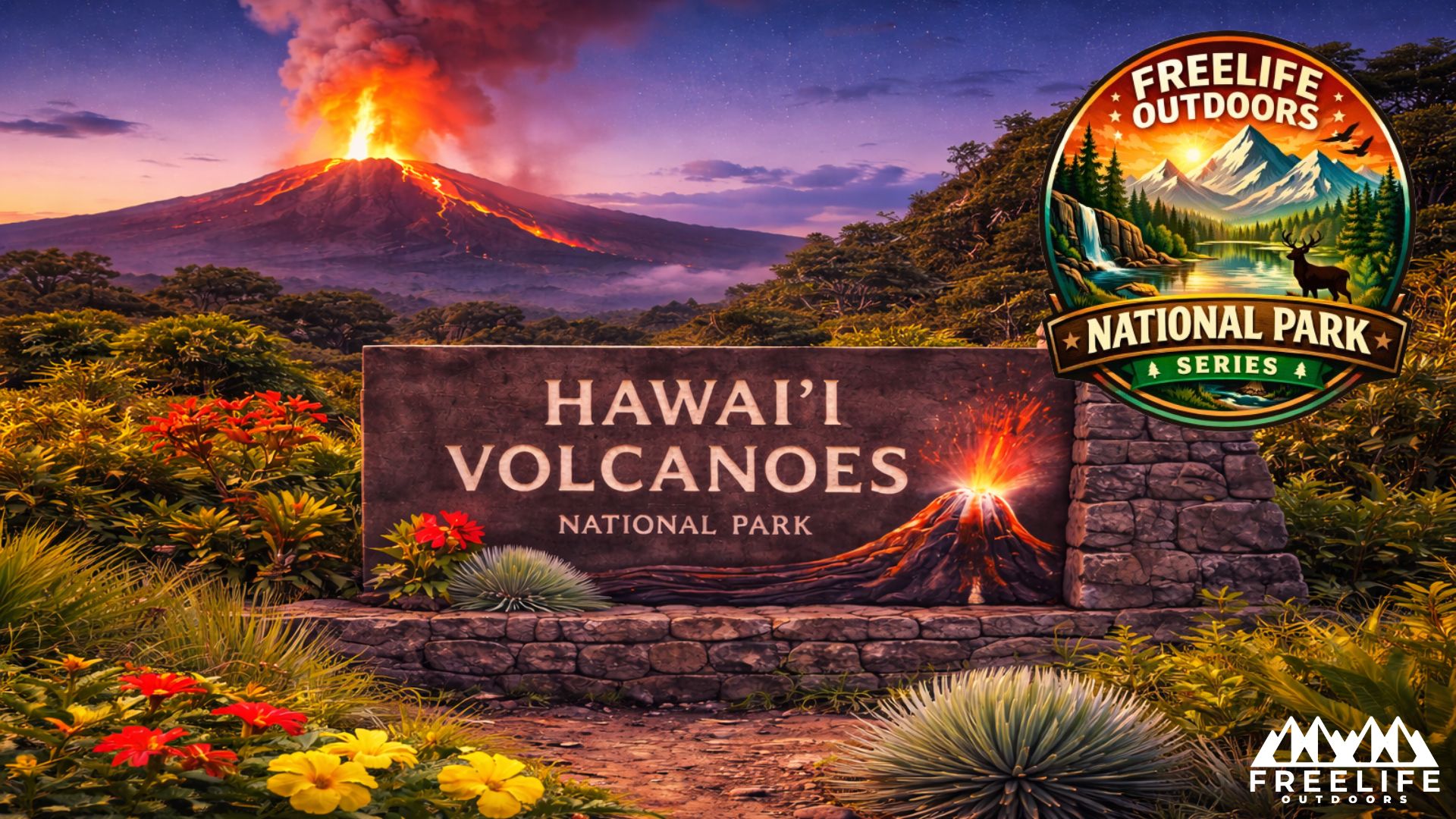
Hawaiʻi Volcanoes National Park
Hawaiʻi Volcanoes National Park protects one of the most geologically active landscapes on Earth. Located on the Big Island of Hawaii, the park contains two of the world’s most famous volcanoes—Kīlauea and Mauna Loa. Visitors can witness volcanic craters, lava flows, steam vents, lava tubes, and dramatic coastal cliffs. The park also features lush rainforests, rare native wildlife, and cultural sites connected to Native Hawaiian traditions.
Park Data & Statistics
- State: Hawaii
- Established: August 1, 1916
- Park Size: ~335,259 acres
- Annual Visitors: ~1.5 million
- Major Volcanoes: Kīlauea and Mauna Loa
- Highest Elevation: Mauna Loa summit (13,681 ft)
- UNESCO World Heritage Site: Yes
Best Time to Visit
Seasons are rather consistent.
Morning hours
Clear skies and cooler temperatures.
Evening
Best time to see glowing lava if eruptions are active.
Year-round
The park is open year-round due to Hawaii’s tropical climate.
Best Photography Locations
- Halemaʻumaʻu crater glow at night
- Lava flows during eruptions
- Kīlauea Iki crater floor
- Coastal lava cliffs along Chain of Craters Road
Camping & Lodging Options
Nāmakanipaio Campground
Developed campground with cabins.
Kulanaokuaiki Campground
Remote campground along Mauna Loa Road.
Nearby lodging options are available in surrounding communities.
Indigenous / Cultural Significance
The volcanoes hold deep cultural significance in Hawaiian tradition. According to Hawaiian belief, the goddess Pele resides within the volcanoes and shapes the landscape through eruptions.
Entrance Fees & Pass Information
- Private vehicle: Yes
- Motorcycle: Yes
- Individual: Yes
The America the Beautiful Annual Pass covers entry to all U.S. national parks for one year.
Hidden Gems Most Visitors Miss
- Pu‘u Loa petroglyph field
- Mauna Loa summit wilderness
- Devastation Trail lava landscapes
- Less crowded crater viewpoints
- Remote coastal lava fields
Additional Resources (1)
• Official Hawaiʻi Volcanoes National Park Website (National Park Service) – Official park information, alerts, and visitor planning resources.
• Hawaiʻi Volcanoes National Park Maps – Download official park maps including trails and scenic drives.
• Hawaiʻi Volcanoes Hiking Guide – Trail descriptions and safety information.
• Hawaiʻi Volcanoes Current Conditions & Alerts – Weather updates, closures, and park alerts.
• Volcano Activity & Geology Information – Updates about volcanic activity and geology.
Popular Hiking Trails
- Kīlauea Iki Trail
4 miles loop – Hike across a solidified lava lake. - Devastation Trail
1 mile – Short hike through a landscape altered by volcanic eruptions. - Nāhuku (Thurston Lava Tube) Trail
0.5 mile – Walk through a massive lava tube. - Crater Rim Trail
11 miles – Scenic trail along volcanic crater edges. - Pu‘u Loa Petroglyphs Trail
1.5 miles – Historic petroglyph site near the coast.
Top Scenic Viewpoints
- Kīlauea Overlook
- Halemaʻumaʻu crater viewpoints
- Chain of Craters Road overlooks
- Mauna Loa summit region
Beginner-Friendly Activities
- Walk through Thurston Lava Tube
- Visit Kīlauea Visitor Center
- Scenic drives through volcanic landscapes
- Short hikes along crater trails
Nearby Getaway Towns
Volcano – Small town located near the park entrance.
Hilo – Larger city located about 45 minutes from the park.
Waterfalls, Lakes, or Natural Highlights
- Kīlauea volcano
- Mauna Loa volcano
- Halemaʻumaʻu crater
- Thurston Lava Tube
- Chain of Craters coastal cliffs
Scenic Drives
Chain of Craters Road
A 19-mile scenic road descending from the summit region down to the ocean, passing lava fields, craters, and coastal cliffs.
Maps & Navigation Resources
Visitors can use:
- Official NPS park maps
- onX Backcountry App
- AllTrails hiking maps
- Printed visitor center maps
- GPS navigation hiking apps
One Day Itinerary
Morning
- Visit Kīlauea Visitor Center
- Hike Kīlauea Iki Trail
Midday
- Explore Thurston Lava Tube
- Lunch at scenic overlooks
Afternoon
- Drive Chain of Craters Road
- Visit coastal lava formations
Evening
- Return to crater overlooks
- Watch volcanic glow after dark
Popular Flora
Hawaiʻi Volcanoes hosts unique ecosystems ranging from rainforest to lava fields.
Common plants include:
- ʻŌhiʻa lehua trees
- Hawaiian tree ferns
- Native shrubs
- Lava-adapted plants
- Fern forests
Popular Fauna
Birds:
- Nēnē (Hawaiian goose)
- Hawaiian hawk
- Hawaiian honeycreepers
Other wildlife:
- Hawaiian hoary bats
- Native insects
- Sea turtles along the coast
Advanced/Backcountry Activites
- Hiking across volcanic crater landscapes
- Multi-day backcountry exploration
- Summit hikes on Mauna Loa
- Lava field exploration
Park History
Hawaiʻi Volcanoes National Park was established in 1916 to protect the volcanic landscapes of Kīlauea and Mauna Loa. The park remains one of the best places in the world to observe active volcanic processes.
Visitor Tips and Safety
- Check volcanic activity updates before visiting.
- Lava terrain can be sharp and unstable.
- Weather conditions vary dramatically with elevation.
- Stay on marked trails due to volcanic hazards.
Top 5 Bucket List Experiences
- Witness glowing lava at night (when eruptions are active)
- Walk through the Thurston Lava Tube
- Hike across Kīlauea Iki crater
- Drive Chain of Craters Road
- Explore volcanic landscapes shaped by recent eruptions
Fun Facts
- Kīlauea is one of the most active volcanoes in the world.
- Mauna Loa is the largest volcano on Earth by volume.
- The park protects landscapes created by millions of years of volcanic activity.
- Lava flows have dramatically reshaped the park many times.
- Hawaiʻi Volcanoes is both a UNESCO World Heritage Site and International Biosphere Reserve.
Additional Resources (2)
• Hawaii Tourism – Haleakalā Guide – Regional visitor information and travel tips.
• AllTrails – Haleakalā National Park Trails – Hiking maps, reviews, and GPS navigation.
• National Park Foundation – Haleakalā Overview – Conservation information and park highlights.
• Maui Information Guide – Haleakalā Travel Guide – Travel tips and visitor highlights.
• Haleakalā National Park Wikipedia Overview – Background on park history, geology, and wildlife.