

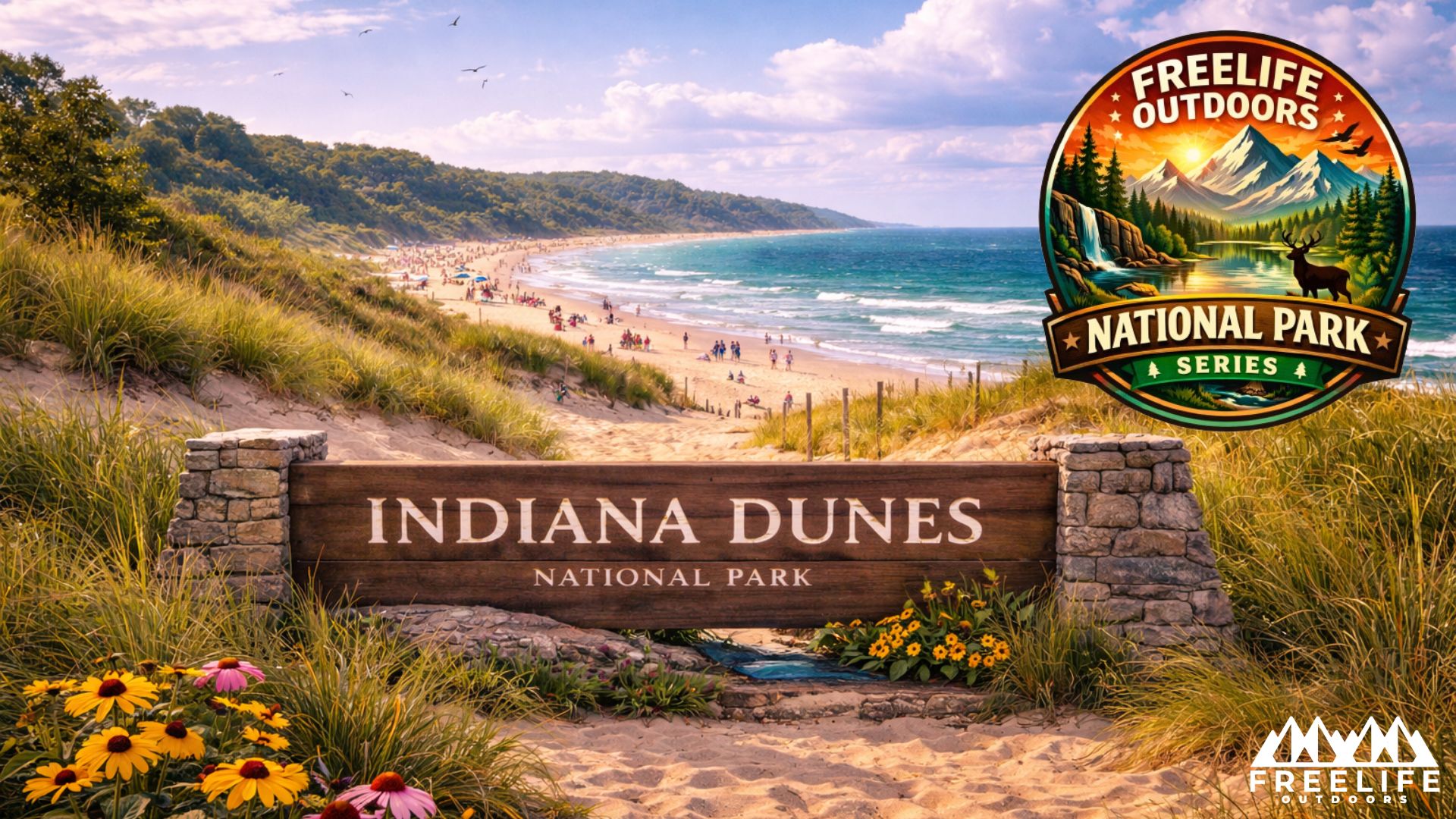
Indiana Dunes National Park
Indiana Dunes National Park protects a unique landscape of towering sand dunes, beaches, wetlands, prairies, and forests along the southern shore of Lake Michigan. The park offers incredible biodiversity with more than 1,000 plant species and numerous ecosystems packed into a relatively small area. Visitors enjoy hiking scenic dune trails, swimming along Lake Michigan beaches, birdwatching, and exploring diverse habitats that range from coastal dunes to oak savannas.
Park Data & Statistics
- State: Indiana
- Established as National Park: February 15, 2019
- Original Protection: Indiana Dunes National Lakeshore (1966)
- Park Size: ~15,349 acres
- Annual Visitors: ~3 million
- Shoreline Length: ~15 miles along Lake Michigan
- Highest Dune: Mount Baldy (~126 feet)
Best Time to Visit
Summer (June–August)
Best for beach activities and swimming.
Spring (April–May)
Excellent bird migration viewing.
Fall (September–October)
Beautiful fall foliage and quieter trails.
Winter
Snow-covered dunes create unique landscapes.
Best Photography Locations
- Sunset over Lake Michigan
- Mount Baldy dunes
- Indiana Dunes beaches
- Wetland landscapes
Camping & Lodging Options
Camping is available nearby at Indiana Dunes State Park, which offers a large campground.
Numerous lodging options are available in nearby communities.
Indigenous / Cultural Significance
The Lake Michigan shoreline was historically inhabited by Indigenous peoples including the Potawatomi Tribe, who lived in the region and relied on the rich natural resources of the Great Lakes.
Entrance Fees & Pass Information
- There is no entrance fee for Indiana Dunes National Park.
- However, nearby Indiana Dunes State Park requires a separate entrance fee.
The America the Beautiful Annual Pass covers entry to all U.S. national parks for one year.
Hidden Gems Most Visitors Miss
- Heron Rookery birdwatching area
- Paul H. Douglas wetlands trail
- Quiet dune ecosystems away from beaches
- Seasonal wildflower displays
Additional Resources (1)
• Official Indiana Dunes National Park Website (National Park Service) – Official park information, alerts, and visitor planning resources.
• Indiana Dunes National Park Maps – Download official park maps including trails and beaches.
• Indiana Dunes Hiking Guide – Trail descriptions and safety information.
• Indiana Dunes Current Conditions & Alerts – Weather updates and park alerts.
• Indiana Dunes Beaches Guide – Information about Lake Michigan beaches and safety.
Popular Hiking Trails
- Dune Succession Trail
1 mile – Classic trail showing the stages of dune formation. - Mount Baldy Beach Trail
0.75 miles – Trail leading to one of the tallest dunes in the park. - Cowles Bog Trail
4.7 miles loop – Excellent hike through wetlands, forests, and dunes. - Paul H. Douglas Trail
3.4 miles – Scenic hike through wetlands and oak savanna. - Heron Rookery Trail
3.3 miles – Popular birdwatching trail along the Little Calumet River.
Top Scenic Viewpoints
- Mount Baldy
- Dune Ridge Trail overlook
- Lake Michigan beaches
- Cowles Bog dune views
Beginner-Friendly Activities
- Walk along Lake Michigan beaches
- Explore Dune Succession Trail
- Birdwatching in wetlands
- Visitor center exhibits
Nearby Getaway Towns
Porter – Close to the park visitor center.
Michigan City – Larger nearby town with hotels and restaurants.
Waterfalls, Lakes, or Natural Highlights
- Lake Michigan shoreline
- Mount Baldy sand dune
- Cowles Bog wetlands
- Oak savanna ecosystems
Scenic Drives
West Mountain Drive
A scenic drive through the Ouachita Mountains offering overlooks of Hot Springs and surrounding forests.
Maps & Navigation Resources
Visitors can use:
- Official NPS park maps
- onX Backcountry App
- AllTrails hiking maps
- Printed visitor center maps
- GPS navigation hiking apps
One Day Itinerary
Morning
- Visit Indiana Dunes Visitor Center
- Hike Dune Succession Trail
Midday
- Relax at Lake Michigan beaches
- Picnic along the shoreline
Afternoon
- Hike Cowles Bog Trail
- Explore wetland birdwatching areas
Evening
- Watch sunset over Lake Michigan
- Dinner in Michigan City
Popular Flora
Indiana Dunes has one of the highest plant diversity rates of any national park.
Common plants include:
- Marram grass
- Cottonwood trees
- Oak savanna species
- Prairie grasses
- Wildflowers such as lupine
Popular Fauna
Mammals:
- White-tailed deer
- Red foxes
- Raccoons
Birds:
- Great blue herons
- Bald eagles
- Sandhill cranes
Other wildlife:
- Frogs and turtles
- Numerous migratory birds
Advanced/Backcountry Activites
- Long-distance dune hikes
- Birding expeditions
- Multi-trail exploration across ecosystems
Park History
The Indiana Dunes area became famous in the early 1900s for its ecological importance. Scientists recognized that the dunes provided valuable insights into ecological succession. After decades of conservation efforts, the area became Indiana Dunes National Lakeshore in 1966 and was redesignated as a national park in 2019.
Visitor Tips and Safety
- Lake Michigan currents can be strong—swim only at designated beaches.
- Sand dunes can shift and change with wind conditions.
- Summer weekends can be busy due to proximity to Chicago.
- Bring sunscreen when exploring dunes.
Top 5 Bucket List Experiences
- Climb Mount Baldy
- Watch sunset over Lake Michigan
- Hike Cowles Bog Trail
- Explore Indiana Dunes beaches
- Experience bird migration seasons
Fun Facts
- Indiana Dunes contains over 1,100 plant species, one of the most diverse areas in the U.S.
- The dunes were critical in developing the scientific theory of ecological succession.
- The park sits just about an hour from Chicago.
- Lake Michigan’s shoreline offers beautiful freshwater beaches.
- Indiana Dunes became a national park in 2019, making it one of the newest parks.
Additional Resources (2)
• Indiana Dunes Tourism Guide – Regional travel information and visitor services.
• AllTrails – Indiana Dunes National Park Trails – Hiking maps, reviews, and GPS navigation.
• National Park Foundation – Indiana Dunes Overview – Conservation information and park highlights.
• Indiana Dunes State Park Information – Information about the adjacent state park.
• Indiana Dunes National Park Wikipedia Overview – Background on park history, geography, and wildlife.