

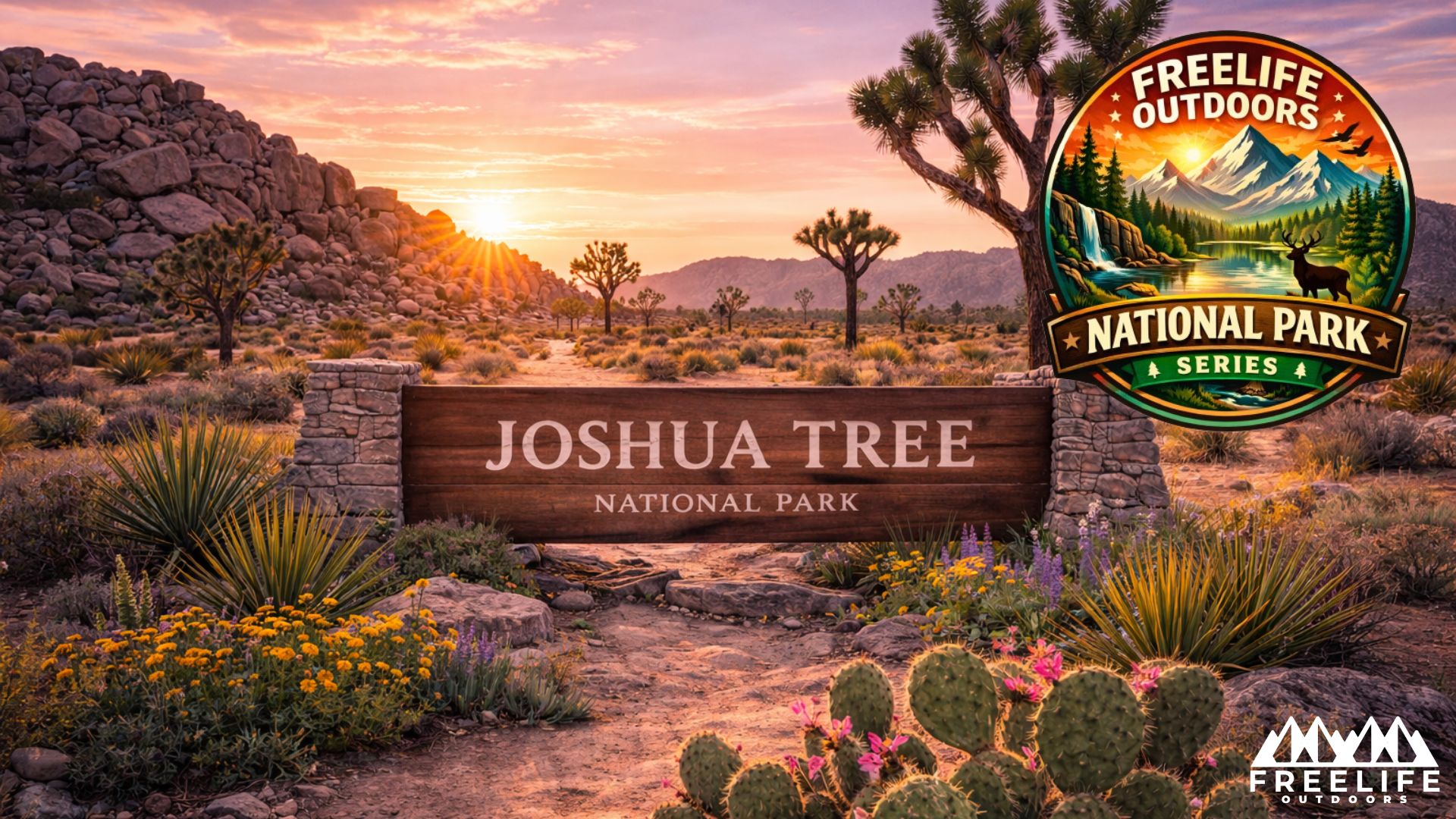
Joshua Tree National Park
Joshua Tree National Park is a stunning desert park where two unique ecosystems—the Mojave Desert and the Colorado Desert—meet. The park is famous for its otherworldly landscapes filled with twisted Joshua trees, massive granite rock formations, and wide-open desert vistas. Visitors enjoy hiking, rock climbing, stargazing, and exploring scenic desert landscapes that feel unlike anywhere else in the United States.
Park Data & Statistics
- State: California
- Established: October 31, 1994 (National Park designation)
- Original Protection: Joshua Tree National Monument (1936)
- Park Size: ~795,156 acres
- Annual Visitors: ~3 million
- Highest Peak: Quail Mountain (5,814 ft)
- Desert Ecosystems: Mojave and Colorado Deserts
Best Time to Visit
Spring (March–May)
Wildflower blooms and pleasant temperatures.
Fall (October–November)
Excellent hiking weather and fewer crowds.
Winter
Cool temperatures and great stargazing.
Summer
Extremely hot desert temperatures.
Best Photography Locations
- Joshua tree forests at sunrise
- Arch Rock formations
- Keys View sunset
- Skull Rock
Camping & Lodging Options
Popular campgrounds include:
Jumbo Rocks Campground
Famous campground surrounded by rock formations.
Hidden Valley Campground
Popular with rock climbers.
Cottonwood Campground
Located in the southern portion of the park.
Numerous lodging options are available in nearby desert towns.
Indigenous / Cultural Significance
The desert landscapes of Joshua Tree were historically inhabited by Indigenous peoples including the Cahuilla Tribe, Serrano Tribe, and Chemehuevi Tribe, who used the desert environment for food, shelter, and cultural practices.
Entrance Fees & Pass Information
- Private vehicle: Yes
- Motorcycle: Yes
- Individual: Yes
The America the Beautiful Annual Pass covers entry to all U.S. national parks for one year.
Hidden Gems Most Visitors Miss
- Wall Street Mill historic site
- Barker Dam wildlife area
- Fortynine Palms Oasis
- Desert Queen Mine ruins
- Quiet backcountry desert landscapes
Additional Resources (1)
• Official Joshua Tree National Park Website (National Park Service) – Official park information, alerts, and visitor planning resources.
• Joshua Tree National Park Maps – Download official park maps including hiking trails.
• Joshua Tree Hiking Guide – Trail descriptions and safety information.
• Joshua Tree Current Conditions & Alerts – Weather updates and park alerts.
• Joshua Tree Camping Information – Information about campgrounds and reservations.
Popular Hiking Trails
- Hidden Valley Trail
1 mile loop – One of the park’s most popular hikes. - Ryan Mountain Trail
3 miles round trip – Excellent panoramic views of the park. - Barker Dam Trail
1.3 miles loop – Historic dam and desert wildlife viewing. - Arch Rock Trail
1.4 miles round trip – Unique rock formations and desert scenery. - Fortynine Palms Oasis Trail
3 miles round trip – Hike to a rare desert oasis.
Top Scenic Viewpoints
- Keys View overlook
- Hidden Valley
- Skull Rock
- Ryan Mountain summit
Beginner-Friendly Activities
- Walk the Hidden Valley loop
- Explore Skull Rock area
- Scenic drives through the park
- Stargazing programs
Nearby Getaway Towns
Joshua Tree – Popular gateway community near the park.
Twentynine Palms – Major entrance town on the north side of the park.
Waterfalls, Lakes, or Natural Highlights
- Joshua tree forests
- Massive granite rock formations
- Desert oases
- Cholla cactus gardens
Scenic Drives
Park Boulevard
The main scenic road through Joshua Tree National Park featuring access to major attractions such as Hidden Valley, Skull Rock, and Keys View.
Maps & Navigation Resources
Visitors can use:
- Official NPS park maps
- onX Backcountry App
- AllTrails hiking maps
- Printed visitor center maps
- GPS navigation hiking apps
One Day Itinerary
Morning
- Sunrise photography among Joshua trees
- Hike Hidden Valley Trail
Midday
- Visit Skull Rock
- Picnic lunch near Jumbo Rocks
Afternoon
- Hike Ryan Mountain
- Explore Cholla Cactus Garden
Evening
- Sunset at Keys View
- Stargazing after dark
Popular Flora
The park contains diverse desert plant life.
Common plants include:
- Joshua trees
- Cholla cactus
- Creosote bushes
- Mojave yucca
- Desert wildflowers
Popular Fauna
Mammals:
- Desert bighorn sheep
- Coyotes
- Jackrabbits
- Kangaroo rats
Birds:
- Roadrunners
- Red-tailed hawks
- Golden eagles
Other wildlife:
- Desert tortoises
- Lizards and snakes
Advanced/Backcountry Activites
- Rock climbing on granite formations
- Long desert hikes
- Backcountry camping
- Wilderness exploration
Park History
Joshua Tree was designated a national monument in 1936 and later became a national park in 1994. The park protects unique desert ecosystems and iconic Joshua tree forests that have become symbols of the American Southwest.
Visitor Tips and Safety
- Bring plenty of water when hiking in the desert.
- Summer temperatures can exceed 100°F.
- Cell service is limited inside the park.
- Stay on designated trails to protect fragile desert ecosystems.
Top 5 Bucket List Experiences
- Hike the Hidden Valley Trail
- Watch sunset from Keys View
- Explore Skull Rock formations
- Stargaze in dark desert skies
- Climb Ryan Mountain for panoramic views
Fun Facts
- Joshua trees are actually a species of yucca plant.
- The park sits where two major deserts meet.
- Joshua Tree is one of the best rock climbing destinations in the world.
- The park has some of the darkest night skies in Southern California.
- The park protects over 790,000 acres of desert wilderness.
Additional Resources (2)
• Twentynine Palms Tourism Guide – Regional visitor information and travel tips.
• AllTrails – Joshua Tree National Park Trails – Hiking maps, reviews, and GPS navigation.
• National Park Foundation – Joshua Tree Overview – Conservation information and park highlights.
• California Tourism – Joshua Tree Guide – Travel tips and visitor highlights.
• Joshua Tree National Park Wikipedia Overview – Background on park history, geography, and wildlife.