

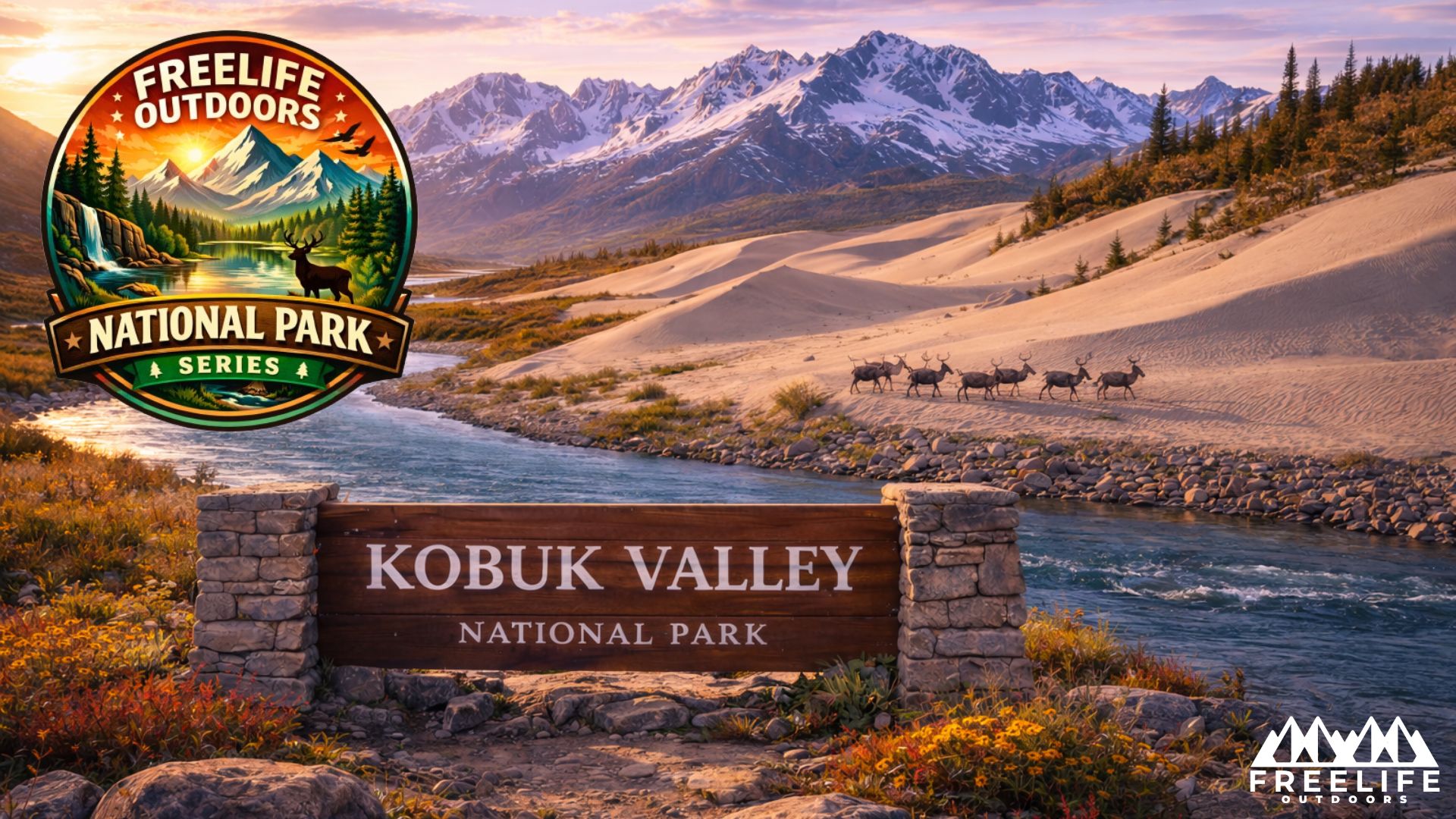
Kobuk Valley National Park
Kobuk Valley National Park protects a remote Arctic wilderness famous for its massive sand dunes, caribou migrations, and pristine tundra landscapes. Located north of the Arctic Circle in northwestern Alaska, the park is one of the least visited national parks in the United States. The park contains the Great Kobuk Sand Dunes, towering dunes rising from the Arctic landscape, along with vast rivers, boreal forests, and wildlife-rich tundra ecosystems.
Park Data & Statistics
- State: Alaska
- Established: December 2, 1980
- Park Size: ~1,750,716 acres
- Annual Visitors: ~15,000
- Major River: Kobuk River
- Sand Dune Height: Up to 100 feet
- Location: North of the Arctic Circle
Best Time to Visit
Summer (June–August)
Best weather for exploring the dunes and wildlife viewing.
Late Summer / Early Fall (August–September)
Peak caribou migration season.
Winter travel is extremely difficult due to Arctic conditions.
Best Photography Locations
- Great Kobuk Sand Dunes
- Caribou migration landscapes
- Arctic sunsets over tundra
- Kobuk River aerial views
Camping & Lodging Options
There are no developed campgrounds in the park.
Visitors must practice backcountry wilderness camping.
Lodging is available in nearby communities outside the park.
Indigenous / Cultural Significance
The Kobuk River region has long been inhabited by Indigenous peoples including the Iñupiat People, who have lived along the river and depended on caribou migrations for subsistence.
Entrance Fees & Pass Information
There is no entrance fee for Kobuk Valley National Park.
However, transportation costs to reach the park can be significant.
The America the Beautiful Annual Pass covers entry to all U.S. national parks for one year.
Hidden Gems Most Visitors Miss
- Little Kobuk Sand Dunes
- Remote tundra lakes
- Quiet stretches of the Kobuk River
- Arctic wildflower meadows
Additional Resources (1)
• Official Kobuk Valley National Park Website (National Park Service) – Official park information, alerts, and visitor planning resources.
• Kobuk Valley National Park Maps – Download official park maps including wilderness areas.
• Kobuk Valley Current Conditions & Alerts – Weather updates and park alerts.
• Kobuk Valley Air Taxi Access Information – Details about bush plane access to the park.
• Kobuk Valley Backcountry Travel Guide – Information about wilderness travel and safety.
Popular Hiking Trails
- There are no developed trails in Kobuk Valley National Park due to its remote wilderness nature. Visitors explore the park through off-trail hiking and wilderness travel.
- Common hiking destinations include:
- Great Kobuk Sand Dunes
Explore massive sand dunes rising above the tundra. - Little Kobuk Sand Dunes
Smaller dune fields offering unique Arctic scenery. - Kobuk River Valley
Remote wilderness hiking along the river corridor.
Top Scenic Viewpoints
- Great Kobuk Sand Dunes
- Kobuk River valley
- Arctic tundra landscapes
- Sand dune ridges overlooking the river
Beginner-Friendly Activities
- Guided wilderness tours
- Scenic bush flights
- Short hikes on sand dunes
- Wildlife viewing
Nearby Getaway Towns
The park is primarily accessed via flights from:
Kotzebue – Main regional hub for air access to Kobuk Valley.
Waterfalls, Lakes, or Natural Highlights
- Great Kobuk Sand Dunes
- Kobuk River
- Arctic tundra landscapes
- Caribou migration routes
Scenic Drives
There are no roads into Kobuk Valley National Park.
Visitors access the park through:
- Bush plane flights
- River travel along the Kobuk River
- Wilderness expeditions
Maps & Navigation Resources
Visitors can use:
- Official NPS park maps
- onX Backcountry App
- AllTrails hiking maps
- Printed visitor center maps
- GPS navigation hiking apps
One Day Itinerary
Morning
- Fly into the park by bush plane
- Land near the Great Kobuk Sand Dunes
Midday
- Explore the dunes and surrounding tundra
- Picnic in the Arctic wilderness
Afternoon
- Wildlife viewing along the Kobuk River
- Scenic aerial photography flight
Evening
-
Return flight to Kotzebue
Popular Flora
The park contains Arctic tundra and boreal forest ecosystems.
Common plants include:
- Spruce trees
- Willow shrubs
- Mosses and lichens
- Arctic grasses
- Tundra wildflowers
Popular Fauna
Mammals:
- Western Arctic caribou
- Grizzly bears
- Wolves
- Red foxes
Birds:
- Golden eagles
- Tundra swans
- Arctic loons
Other wildlife:
- Arctic ground squirrels
- Migratory birds
Advanced/Backcountry Activites
- Remote wilderness backpacking
- Arctic river float trips
- Expedition-style camping
- Wildlife photography expeditions
Park History
Kobuk Valley National Park was established in 1980 to protect the unique Arctic ecosystems and wildlife migration routes of the region. The park also preserves the unusual sand dune systems formed thousands of years ago during glacial periods.
Visitor Tips and Safety
- Access requires bush plane transportation.
- Visitors must be self-sufficient in the wilderness.
- Weather conditions can change quickly in the Arctic.
- Bears and other wildlife are common.
Top 5 Bucket List Experiences
- Walk across the Great Kobuk Sand Dunes
- Witness the Western Arctic caribou migration
- Explore remote Arctic wilderness
- Fly over the Kobuk River valley
- Experience true solitude in one of the least visited parks
Fun Facts
- Kobuk Valley contains massive sand dunes north of the Arctic Circle.
- The Great Kobuk Sand Dunes cover over 25 square miles.
- The Western Arctic caribou herd migration passes through the park.
- Kobuk Valley is one of the least visited national parks in the U.S.
- The dunes were formed by glacial winds thousands of years ago.
Additional Resources (2)
• Alaska Tourism – Kobuk Valley Guide – Regional visitor information and travel tips.
• National Park Foundation – Kobuk Valley Overview – Conservation information and park highlights.
• Kotzebue Alaska Visitor Guide – Local travel information and services.
• AllTrails – Kobuk Valley National Park Information – General hiking and exploration guidance.
• Kobuk Valley National Park Wikipedia Overview – Background on park history, geography, and wildlife.