

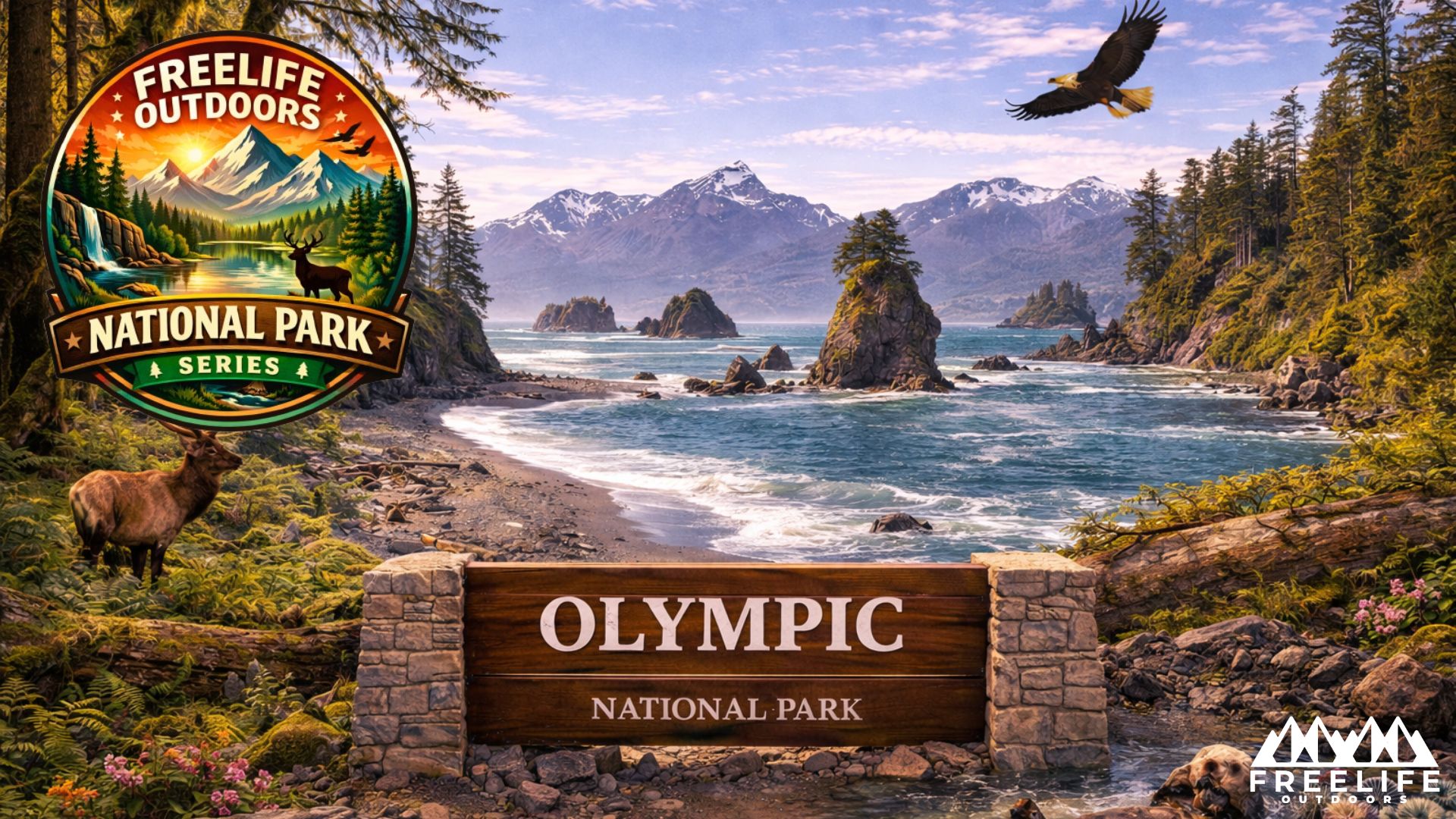
Olympic National Park
Olympic National Park protects one of the most diverse ecosystems in the United States. Located on the Olympic Peninsula, the park features rugged Pacific coastline, temperate rainforests, alpine mountains, and glacier-covered peaks. Visitors can explore moss-draped forests, hike to glacier viewpoints, relax on wild coastal beaches, and discover an incredible variety of wildlife and landscapes within a single park.
Park Data & Statistics
- State: Washington
- Established: June 29, 1938
- Park Size: ~922,651 acres
- Annual Visitors: ~3 million
- Highest Peak: Mount Olympus (7,980 ft)
- Glaciers: Over 60 glaciers
- UNESCO World Heritage Site: Designated in 1981
Best Time to Visit
Summer (June–September)
Best weather and easiest access to mountain trails.
Spring (April–May)
Waterfalls and wildflowers.
Fall (September–October)
Fewer crowds and beautiful forest scenery.
Winter
Snow sports at Hurricane Ridge.
Best Photography Locations
- Hoh Rainforest moss-covered trees
- Ruby Beach sea stacks
- Hurricane Ridge mountain views
- Lake Crescent reflections
Camping & Lodging Options
Popular campgrounds include:
Kalaloch Campground
Oceanfront campground along the coast.
Hoh Campground
Located within the rainforest.
Sol Duc Campground
Near waterfalls and hot springs.
Lodging is available at the Lake Crescent Lodge, a historic lodge overlooking the lake.
Indigenous / Cultural Significance
The Olympic Peninsula has long been home to Indigenous peoples including the Quileute Tribe, Hoh Tribe, and Makah Tribe, who have deep cultural ties to the land and coastal waters.
Entrance Fees & Pass Information
- Private vehicle: Yes
- Motorcycle: Yes
- Individual: Yes
The America the Beautiful Annual Pass covers entry to all U.S. national parks for one year.
Hidden Gems Most Visitors Miss
- Shi Shi Beach coastal wilderness
- Sol Duc hot springs
- Quiet rainforest trails
- Early morning elk sightings
Additional Resources (1)
• Official Olympic National Park Website (National Park Service) – Official park information, alerts, and visitor planning resources.
• Olympic National Park Maps – Download official park maps including trails and scenic drives.
• Olympic National Park Hiking Guide – Trail descriptions and safety information.
• Olympic National Park Current Conditions & Alerts – Weather updates and park alerts.
• Olympic National Park Camping Information – Campground details and reservations.
Popular Hiking Trails
- Hoh River Trail
17 miles – Scenic trail through lush rainforest and river valleys. - Sol Duc Falls Trail
1.6 miles – Short hike to a beautiful waterfall. - Hurricane Hill Trail
3.2 miles – Panoramic views of the Olympic Mountains. - Rialto Beach to Hole-in-the-Wall
3.3 miles round trip – Coastal hike along dramatic sea stacks. - Marymere Falls Trail
1.8 miles – Popular trail to a scenic waterfall near Lake Crescent.
Top Scenic Viewpoints
- Hurricane Ridge viewpoints
- Hoh Rainforest canopy views
- Rialto Beach sea stacks
- Lake Crescent
Beginner-Friendly Activities
- Walk the Hall of Mosses Trail
- Visit Hurricane Ridge viewpoints
- Explore Lake Crescent shoreline
- Ranger-led rainforest walks
Nearby Getaway Towns
Port Angeles – Primary gateway town to the park.
Forks – Gateway town near the coastal areas and rainforest.
Waterfalls, Lakes, or Natural Highlights
- Hoh Rainforest
- Hurricane Ridge
- Sol Duc Falls
- Lake Crescent
- Pacific Ocean coastline
Scenic Drives
Olympic Peninsula Loop
A scenic drive circling the Olympic Peninsula, offering access to rainforest, mountain, and coastal areas of the park.
Maps & Navigation Resources
Visitors can use:
- Official NPS park maps
- onX Backcountry App
- AllTrails hiking maps
- Printed visitor center maps
- GPS navigation hiking apps
One Day Itinerary
Morning
- Visit Hurricane Ridge viewpoints
- Short hike on Hurricane Hill Trail
Midday
- Drive to Lake Crescent
- Lunch and short hike to Marymere Falls
Afternoon
- Explore Hoh Rainforest trails
- Walk the Hall of Mosses
Evening
- Sunset photography at Ruby Beach
- Dinner in Port Angeles or Forks
Popular Flora
Olympic National Park contains one of the largest temperate rainforests in North America.
Common plants include:
- Sitka spruce
- Western hemlock
- Mosses and ferns
- Bigleaf maple
- Wild berries
Popular Fauna
Mammals:
- Roosevelt elk
- Black bears
- Mountain goats
- River otters
Birds:
- Bald eagles
- Owls
- Woodpeckers
Marine wildlife:
- Harbor seals
- Sea lions
- Whales offshore
Advanced/Backcountry Activites
- Multi-day backpacking trips
- Coastal wilderness hiking
- Mountaineering on Mount Olympus
- Backcountry camping
Park History
Olympic National Park was established in 1938 to protect the unique ecosystems of the Olympic Peninsula. The park preserves ancient rainforests, glacial mountains, and rugged Pacific coastline.
Visitor Tips and Safety
- Weather can vary greatly between park regions.
- Rainforest areas receive heavy rainfall.
- Tides affect coastal hiking routes.
- Wildlife viewing is common throughout the park.
Top 5 Bucket List Experiences
- Walk the Hall of Mosses in Hoh Rainforest
- Watch sunset at Ruby Beach
- Explore Hurricane Ridge mountain views
- Hike to Sol Duc Falls
- Visit Lake Crescent
Fun Facts
- Olympic National Park contains three distinct ecosystems: rainforest, mountains, and coastline.
- The Hoh Rainforest receives over 140 inches of rain annually.
- The park protects one of the largest temperate rainforests in the world.
- Olympic National Park contains over 60 glaciers.
- Many species found here exist nowhere else on Earth.
Additional Resources (2)
• Port Angeles Visitor Guide – Regional tourism information and travel planning.
• AllTrails – Olympic National Park Trails – Hiking maps and trail reviews.
• National Park Foundation – Olympic National Park Overview – Conservation information and park highlights.
• Washington Tourism – Olympic National Park Guide – Travel tips and visitor highlights.
• Olympic National Park Wikipedia Overview – Background on park history, geography, and wildlife.