

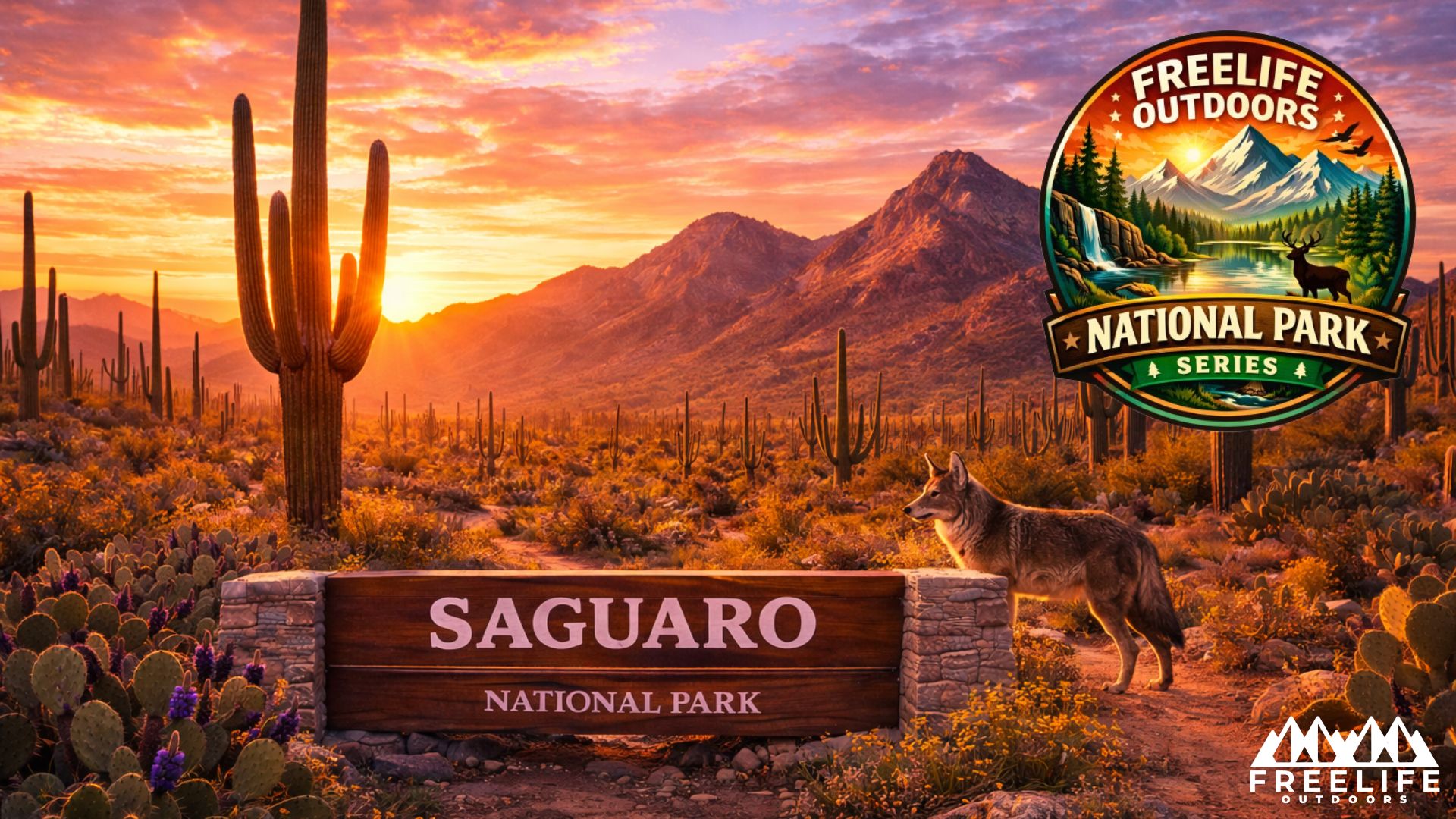
Saguaro National Park
Saguaro National Park protects one of the most iconic desert landscapes in the United States. Located near Tucson in southern Arizona, the park is famous for its towering saguaro cacti, some of which can grow over 40 feet tall and live more than 150 years. The park is divided into two districts—Tucson Mountain District (west) and Rincon Mountain District (east)—both offering scenic desert hikes, mountain views, and incredible sunsets across the Sonoran Desert.
Park Data & Statistics
- State: Arizona
- Established as National Park: October 14, 1994
- Original Protection: Saguaro National Monument (1933)
- Park Size: ~92,867 acres
- Annual Visitors: ~1 million
- Tallest Cactus Species: Saguaro cactus (Carnegiea gigantea)
- Largest Desert Ecosystem: Sonoran Desert
Best Time to Visit
Spring (March–April)
Wildflowers bloom across the desert.
Fall (October–November)
Comfortable hiking temperatures.
Winter (December–February)
Cool weather and clear desert skies.
Summer
Very hot temperatures but dramatic monsoon storms.
Best Photography Locations
- Dense saguaro cactus forests
- Sunset over Tucson Mountains
- Signal Hill petroglyphs
- Desert landscapes during monsoon season
Camping & Lodging Options
There are no developed campgrounds in the Tucson Mountain District.
Backcountry camping is available in the Rincon Mountain District.
Numerous lodging options are available in nearby Tucson.
Indigenous / Cultural Significance
The Sonoran Desert has long been home to Indigenous peoples including the Tohono O'odham Nation, who have deep cultural ties to the desert and its plants, especially the saguaro cactus.
Entrance Fees & Pass Information
- Private vehicle: Yes
- Motorcycle: Yes
- Individual: Yes
The America the Beautiful Annual Pass covers entry to all U.S. national parks for one year.
Hidden Gems Most Visitors Miss
- Tanque Verde Ridge scenic hike
- Quiet desert trails in Rincon Mountains
- Early morning wildlife sightings
- Monsoon lightning storms over desert landscapes
Additional Resources (1)
• Official Saguaro National Park Website (National Park Service) – Official park information, alerts, and visitor planning resources.
• Saguaro National Park Maps – Download official park maps including trails and scenic drives.
• Saguaro National Park Hiking Guide – Trail descriptions and safety information.
• Saguaro National Park Current Conditions & Alerts – Weather updates and park alerts.
• Saguaro Scenic Drives Guide – Details about scenic driving routes.
Popular Hiking Trails
- Valley View Overlook Trail
0.8 miles – Short hike with excellent desert views. - Signal Hill Trail
0.5 miles – Trail to ancient petroglyphs. - Seven Falls Trail
8 miles round trip – Scenic hike to desert waterfalls. - Tanque Verde Ridge Trail
Long trail with dramatic views of the desert and mountains. - Cactus Forest Trail
Various distances – Walk among dense saguaro forests.
Top Scenic Viewpoints
- Valley View Overlook
- Signal Hill petroglyph site
- Javelina Rocks viewpoint
- Tucson Mountain scenic overlooks
Beginner-Friendly Activities
- Scenic drives through cactus forests
- Short desert hikes
- Visitor center exhibits
- Wildlife viewing
Nearby Getaway Towns
Tucson – Major city located between the two districts of the park.
Waterfalls, Lakes, or Natural Highlights
- Saguaro cactus forests
- Sonoran Desert landscapes
- Desert mountain ranges
- Ancient petroglyph sites
Scenic Drives
Bajada Loop Drive
A scenic drive through the Tucson Mountain District featuring dense saguaro forests and stunning desert landscapes.
Maps & Navigation Resources
Visitors can use:
- Official NPS park maps
- onX Backcountry App
- AllTrails hiking maps
- Printed visitor center maps
- GPS navigation hiking apps
One Day Itinerary
Morning
- Drive Bajada Loop Scenic Drive
- Hike Valley View Overlook Trail
Midday
- Visit Signal Hill petroglyphs
- Picnic lunch in the park
Afternoon
- Explore Cactus Forest Drive
- Wildlife viewing
Evening
- Sunset photography across the desert
- Dinner in Tucson
Popular Flora
The park contains diverse Sonoran Desert vegetation.
Common plants include:
- Saguaro cactus
- Prickly pear cactus
- Cholla cactus
- Palo verde trees
- Ocotillo
Popular Fauna
Mammals:
- Javelinas
- Coyotes
- Bobcats
Birds:
- Gila woodpeckers
- Roadrunners
- Harris’s hawks
Other wildlife:
- Desert tortoises
- Rattlesnakes
- Lizards
Advanced/Backcountry Activites
- Long desert ridge hikes
- Backcountry camping in Rincon Mountains
- Mountain biking nearby trails
- Desert photography expeditions
Park History
Saguaro National Park was originally designated as a national monument in 1933 to protect the giant saguaro cactus forests of southern Arizona. The area became a national park in 1994 to preserve the unique Sonoran Desert ecosystem.
Visitor Tips and Safety
- Summer temperatures can exceed 100°F.
- Bring plenty of water when hiking.
- Wear sun protection in the desert environment.
- Watch for rattlesnakes on trails.
Top 5 Bucket List Experiences
- Walk among giant saguaro cactus forests
- Drive Bajada Loop Scenic Drive
- Watch sunset over the Sonoran Desert
- Visit Signal Hill petroglyphs
- Hike desert mountain trails
Fun Facts
- Saguaro cacti can grow over 40 feet tall.
- Some saguaros live over 150 years.
- The first arm on a saguaro may not grow until the cactus is 50–75 years old.
- The park protects part of the Sonoran Desert—the most biologically diverse desert in North America.
- Saguaros provide nesting sites for many desert birds.
Additional Resources (2)
• Visit Tucson Tourism Guide – Regional travel information and lodging.
• AllTrails – Saguaro National Park Trails – Hiking maps and trail reviews.
• National Park Foundation – Saguaro Overview – Conservation information and park highlights.
• Arizona Tourism – Saguaro Guide – Travel tips and visitor highlights.
• Saguaro National Park Wikipedia Overview – Background on park history, ecology, and wildlife.