

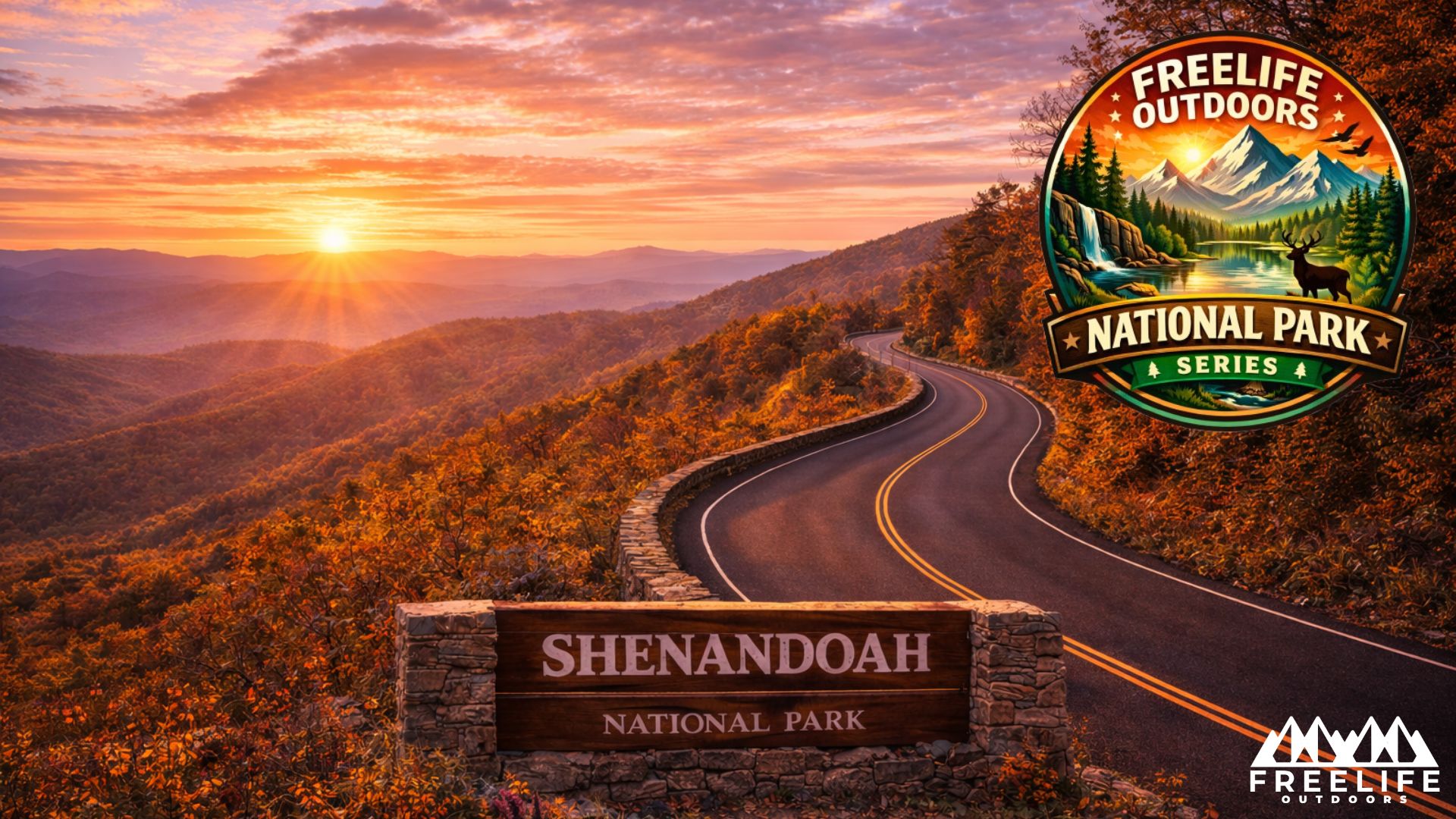
Shenandoah National Park
Shenandoah National Park protects a stunning stretch of the Blue Ridge Mountains in Virginia, offering sweeping mountain vistas, cascading waterfalls, forested valleys, and abundant wildlife. The park is famous for Skyline Drive, a scenic roadway running the length of the park along the mountain crest. With over 500 miles of hiking trails—including a portion of the Appalachian Trail—Shenandoah is a favorite destination for hiking, scenic drives, wildlife viewing, and fall foliage.
Park Data & Statistics
- State: Virginia
- Established: December 26, 1935
- Park Size: ~199,223 acres
- Annual Visitors: ~1.4 million
- Length of Skyline Drive: 105 miles
- Appalachian Trail Mileage: Over 100 miles within the park
Best Time to Visit
Spring (April–May)
Wildflowers bloom and waterfalls flow strongly.
Summer (June–August)
Great hiking weather and lush forests.
Fall (October)
Spectacular fall foliage season.
Winter offers peaceful scenery but limited services.
Best Photography Locations
- Skyline Drive overlooks
- Dark Hollow Falls
- Blue Ridge Mountain ridgelines
- Fall foliage landscapes
Camping & Lodging Options
Popular campgrounds include:
Big Meadows Campground
Large campground in the center of the park.
Lewis Mountain Campground
Smaller and quieter campground.
Loft Mountain Campground
Large campground with scenic mountain views.
Lodging is available at the Skyland Resort, located along Skyline Drive.
Indigenous / Cultural Significance
The Blue Ridge Mountains were historically used by Indigenous peoples including the Monacan Indian Nation, who lived in and traveled through the region for centuries.
Entrance Fees & Pass Information
- Private vehicle: Yes
- Motorcycle: Yes
- Individual: Yes
The America the Beautiful Annual Pass covers entry to all U.S. national parks for one year.
Hidden Gems Most Visitors Miss
- Lewis Falls Trail
- Quiet Appalachian Trail sections
- Early morning wildlife sightings
- Remote waterfall hikes
Additional Resources (1)
• Official Shenandoah National Park Website (National Park Service) – Official park information, alerts, and visitor planning resources.
• Shenandoah National Park Maps – Download official park maps including Skyline Drive and hiking trails.
• Shenandoah Hiking Guide – Trail descriptions and safety information.
• Shenandoah Current Conditions & Alerts – Weather updates and park alerts.
• Skyline Drive Guide – Information about the scenic drive and overlooks.
Popular Hiking Trails
- Old Rag Mountain Loop
9 miles – One of the park’s most famous and challenging hikes with rock scrambling. - Dark Hollow Falls Trail
1.4 miles round trip – Short hike to one of the park’s most popular waterfalls. - Stony Man Trail
1.6 miles – Easy hike to panoramic mountain views. - Hawksbill Summit Trail
2.9 miles – Trail to the highest peak in the park. - Whiteoak Canyon Trail
7 miles round trip – Series of beautiful waterfalls.
Top Scenic Viewpoints
- Skyline Drive overlooks
- Stony Man summit
- Hawksbill summit
- Big Meadows viewpoints
Beginner-Friendly Activities
- Backpacking along the Appalachian Trail
- Long mountain hikes
- Backcountry camping
- Wildlife photography expeditions
Nearby Getaway Towns
Front Royal – Northern gateway town to the park.
Luray – Popular gateway town near Luray Caverns.
Waterfalls, Lakes, or Natural Highlights
- Dark Hollow Falls
- Whiteoak Canyon waterfalls
- Blue Ridge Mountain vistas
- Skyline Drive overlooks
Scenic Drives
Skyline Drive
A 105-mile scenic roadway running the entire length of the park along the crest of the Blue Ridge Mountains, featuring over 70 scenic overlooks.
Maps & Navigation Resources
Visitors can use:
- Official NPS park maps
- onX Backcountry App
- AllTrails hiking maps
- Printed visitor center maps
- GPS navigation hiking apps
One Day Itinerary
Morning
- Enter the park via Front Royal
- Drive Skyline Drive scenic overlooks
Midday
- Hike Stony Man Trail
- Picnic at Big Meadows
Afternoon
- Hike Dark Hollow Falls
- Wildlife viewing along Skyline Drive
Evening
- Sunset from mountain overlooks
- Dinner in Luray
Popular Flora
Shenandoah contains rich Appalachian forest ecosystems.
Common plants include:
- Oak trees
- Maple trees
- Mountain laurel
- Rhododendron
- Wildflowers
Popular Fauna
Mammals:
- Black bears
- Mule deer
- Mountain lions
- Bobcats
Birds:
- Stellar’s jays
- Peregrine falcons
- Owls
Other wildlife:
- Marmots
- Pikas
Advanced/Backcountry Activites
- Summit climbs such as Alta Peak
- Multi-day backpacking trips
- High Sierra wilderness hiking
- Mount Whitney expeditions
Park History
Shenandoah National Park was established in 1935 to protect the natural beauty of the Blue Ridge Mountains and provide a scenic escape for visitors from nearby cities such as Washington, D.C.
Visitor Tips and Safety
- Black bears are common—store food properly.
- Skyline Drive speed limits are low due to wildlife crossings.
- Weather can change quickly in the mountains.
- Fall foliage season brings large crowds.
Top 5 Bucket List Experiences
- Drive the entire Skyline Drive
- Hike to the summit of Old Rag Mountain
- Visit Dark Hollow Falls
- Watch sunrise from Stony Man summit
- See fall foliage across the Blue Ridge Mountains
Fun Facts
- Skyline Drive runs 105 miles along the Blue Ridge Mountains.
- Over 100 miles of the Appalachian Trail pass through the park.
- Shenandoah contains more than 70 scenic overlooks.
- The park protects a wide range of Appalachian forest ecosystems.
- Black bears are commonly seen throughout the park.
Additional Resources (2)
• Luray & Page County Visitor Guide – Regional tourism information and travel planning.
• AllTrails – Shenandoah National Park Trails – Hiking maps and trail reviews.
• National Park Foundation – Shenandoah Overview – Conservation information and park highlights.
• Virginia Tourism – Shenandoah Guide – Travel tips and visitor highlights.
• Shenandoah National Park Wikipedia Overview – Background on park history, geography, and wildlife.