

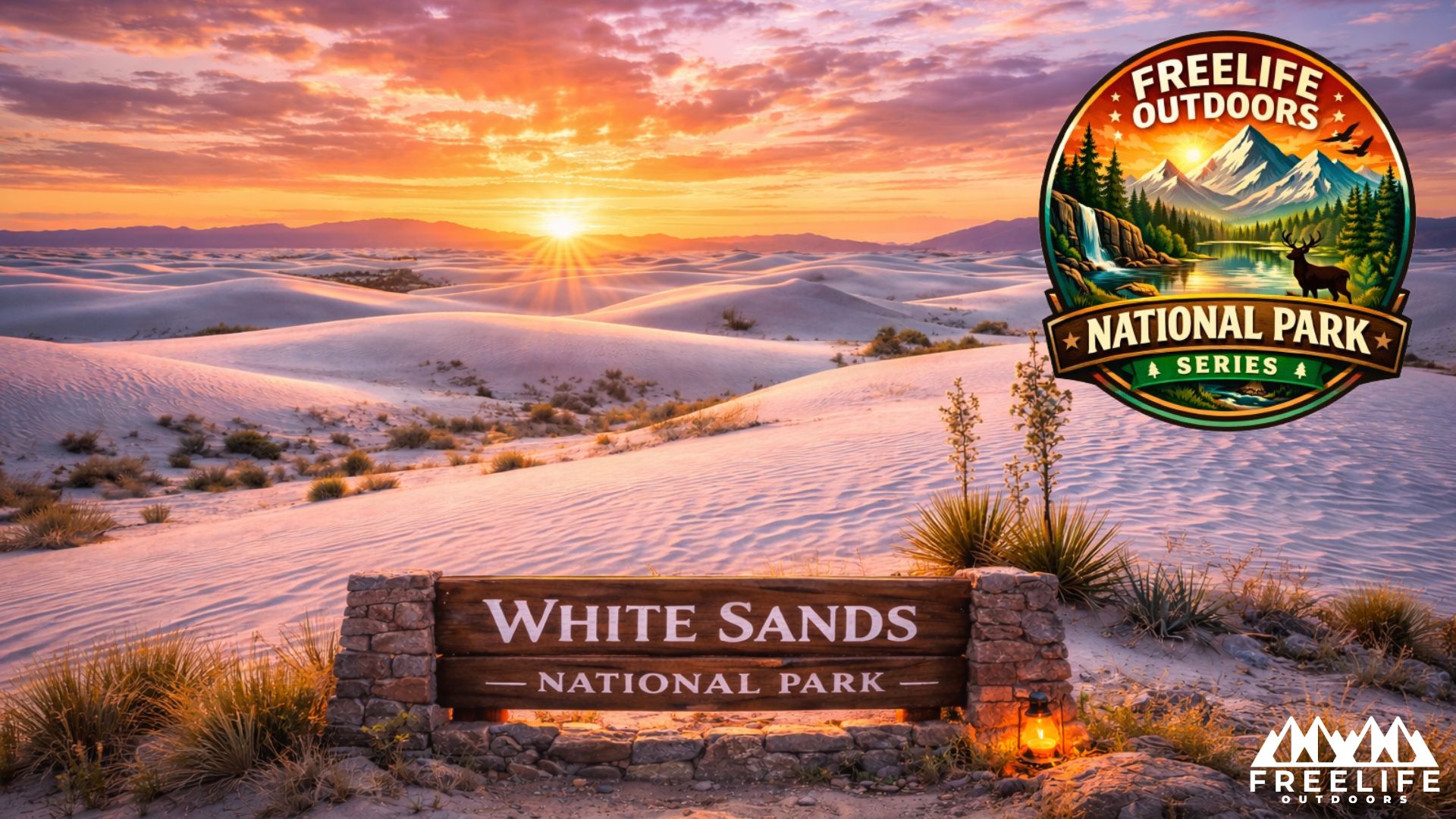
White Sands National Park
White Sands National Park protects the largest gypsum dune field in the world. Located in southern New Mexico, the park features vast waves of brilliant white sand dunes stretching across the Tularosa Basin. Visitors can hike across the soft dunes, go sand sledding, photograph incredible desert landscapes, and experience one of the most unique environments in the national park system.
Park Data & Statistics
- State: New Mexico
- Established as National Park: December 20, 2019
- Original Protection: White Sands National Monument (1933)
- Park Size: ~145,762 acres
- Annual Visitors: ~700,000
- Dune Field Size: Largest gypsum dune field on Earth
Best Time to Visit
Fall (October–November)
Comfortable temperatures and beautiful desert scenery.
Spring (March–April)
Wildflowers bloom and pleasant hiking weather.
Winter (December–February)
Cool weather and fewer crowds.
Summer can be extremely hot but offers dramatic sunsets.
Best Photography Locations
- Sunrise across the dunes
- Sunset lighting on white sand
- Rippled dune ridges
- Star-filled night skies
Camping & Lodging Options
Backcountry Campsites
Primitive campsites located deep within the dune field.
Most visitors stay in nearby towns for lodging.
Indigenous / Cultural Significance
The Tularosa Basin region has long been inhabited by Indigenous peoples including the Mescalero Apache Tribe, who have cultural ties to the desert landscapes of southern New Mexico.
Entrance Fees & Pass Information
- Private vehicle: Yes
- Motorcycle: Yes
- Individual: Yes
The America the Beautiful Annual Pass covers entry to all U.S. national parks for one year.
Hidden Gems Most Visitors Miss
- Backcountry dune campsites
- Sunrise dune photography
- Remote dune ridges away from the road
- Night sky photography in the desert
Additional Resources (1)
• Official White Sands National Park Website (National Park Service) – Official park information, alerts, and visitor planning resources.
• White Sands National Park Maps – Download official park maps including Dunes Drive and hiking trails.
• White Sands Hiking Guide – Trail descriptions and safety information.
• White Sands National Park Current Conditions & Alerts – Weather updates and park alerts.
• White Sands Sand Sledding Guide – Information about sledding on the dunes.
Popular Hiking Trails
- Dune Life Nature Trail
1 mile – Educational trail highlighting desert wildlife and plant life. - Interdune Boardwalk Trail
0.4 miles – Accessible boardwalk with views of the dunes. - Alkali Flat Trail
5 miles – Scenic hike deep into the heart of the dune field. - Playa Trail
0.5 miles – Short trail to a dry lakebed area. - Backcountry Camping Trail
Various distances – Access to remote dune campsites.
Top Scenic Viewpoints
- Dune field overlooks
- Sunset views across the gypsum dunes
- Interdune landscapes
- Alkali Flat viewpoints
Beginner-Friendly Activities
- Sand sledding on the dunes
- Short dune walks
- Scenic drive through the park
- Visitor center exhibits
Nearby Getaway Towns
Alamogordo – Closest gateway city to the park.
Las Cruces – Larger nearby city with lodging and services.
Waterfalls, Lakes, or Natural Highlights
- Gypsum dune field
- Tularosa Basin desert
- Alkali Flat playa
- Unique dune ecosystems
Scenic Drives
Dunes Drive
An 8-mile scenic road that winds through the heart of the gypsum dune field with numerous pullouts and hiking access points.
Maps & Navigation Resources
Visitors can use:
- Official NPS park maps
- onX Backcountry App
- AllTrails hiking maps
- Printed visitor center maps
- GPS navigation hiking apps
One Day Itinerary
Morning
- Drive the Dunes Drive scenic route
- Walk the Dune Life Nature Trail
Midday
- Sand sledding in the dunes
- Picnic in the park
Afternoon
- Hike the Alkali Flat Trail
- Explore dune landscapes
Evening
- Sunset photography across the dunes
- Stargazing under dark desert skies
Popular Flora
Despite the harsh environment, many plants survive in the gypsum dunes.
Common plants include:
- Soaptree yucca
- Saltbush
- Desert grasses
- Skunkbush sumac
- Evening primrose
Popular Fauna
Mammals:
- Kit foxes
- Coyotes
- Black-tailed jackrabbits
Birds:
- Roadrunners
- Northern harriers
- Hawks
Other wildlife:
- White Sands pupfish
- Lizards adapted to white sand
- Snakes
Advanced/Backcountry Activites
- Backcountry dune hiking
- Overnight camping in the dunes
- Night sky photography
- Long-distance dune exploration
Park History
White Sands was originally designated as a national monument in 1933 to protect the unique gypsum dune landscape. In 2019, the site was redesignated as a national park to recognize its global geological significance.
Visitor Tips and Safety
- Bring plenty of water when hiking.
- Sand temperatures can be very hot in summer.
- Use GPS or trail markers to avoid getting lost in the dunes.
- Check missile testing closures due to nearby military ranges.
Top 5 Bucket List Experiences
- Sand sled down the white dunes
- Hike the Alkali Flat Trail
- Watch sunset across the dune field
- Explore the Dunes Drive scenic route
- Experience the night sky in the desert
Fun Facts
- White Sands protects the largest gypsum dune field in the world.
- The dunes cover over 275 square miles of desert.
- The white sand stays cooler than typical desert sand because it reflects sunlight.
- Many animals here have evolved white coloring to blend into the dunes.
- The park became a national park in 2019.
Additional Resources (2)
• Alamogordo Tourism Guide – Regional visitor information and travel planning.
• AllTrails – White Sands National Park Trails – Hiking maps and trail reviews.
• National Park Foundation – White Sands Overview – Conservation information and park highlights.
• New Mexico Tourism – White Sands Guide – Travel tips and visitor highlights.
• White Sands National Park Wikipedia Overview – Background on park history, geology, and ecology.