

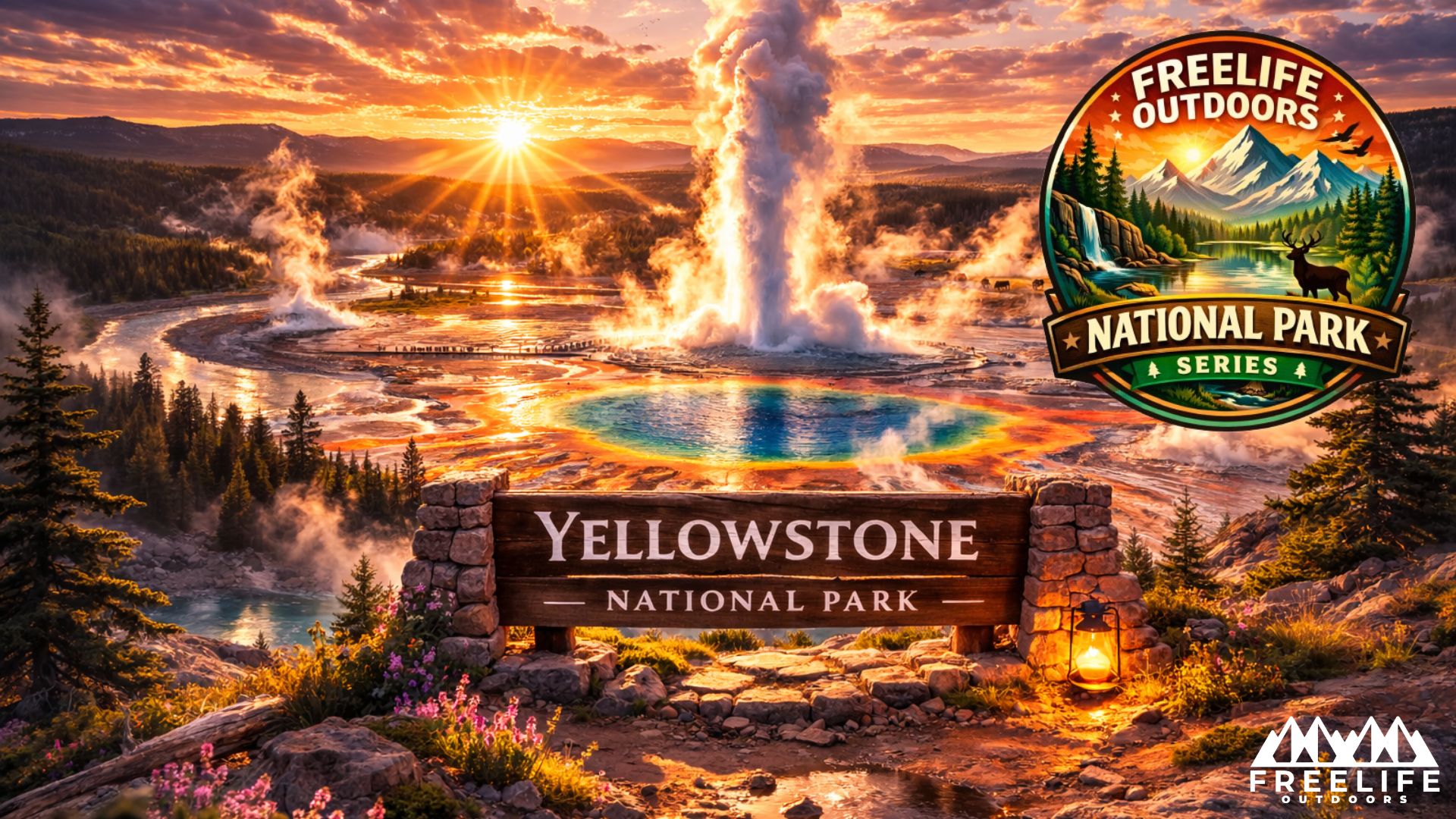
Yellowstone National Park
Yellowstone National Park is the first national park in the world and one of the most famous natural landscapes on Earth. Established in 1872, Yellowstone protects a massive geothermal landscape filled with geysers, hot springs, mud pots, and fumaroles. The park is also home to abundant wildlife, dramatic mountain scenery, waterfalls, and the vast Yellowstone Caldera—one of the largest volcanic systems on the planet.
Park Data & Statistics
- States: Wyoming, Montana, Idaho
- Established: March 1, 1872
- Park Size: ~2.2 million acres
- Annual Visitors: ~4.5 million
- Number of Geysers: Over 500
- Largest Supervolcano in North America: Yellowstone Caldera
- Number of Waterfalls: Over 290
Best Time to Visit
Spring (April–May)
Wildlife viewing and baby animals.
Summer (June–August)
Full park access and peak tourism season.
Fall (September–October)
Fewer crowds and elk rut season.
Winter
Snowmobile and snowcoach tours through a winter landscape.
Best Photography Locations
- Grand Prismatic Spring
- Old Faithful geyser eruptions
- Lower Yellowstone Falls
- Lamar Valley wildlife scenes
Camping & Lodging Options
Popular campgrounds include:
Madison Campground
Central campground near major geyser basins.
Grant Village Campground
Located near Yellowstone Lake.
Bridge Bay Campground
Large campground near the lake.
Historic lodging is available at the Old Faithful Inn, one of the most famous national park lodges.
Indigenous / Cultural Significance
The Yellowstone region has long been used by Indigenous peoples including the Shoshone Tribe, Crow Tribe, and the Blackfeet Nation, who traveled through the region for thousands of years.
Entrance Fees & Pass Information
- Private vehicle: Yes
- Motorcycle: Yes
- Individual: Yes
The America the Beautiful Annual Pass covers entry to all U.S. national parks for one year.
Hidden Gems Most Visitors Miss
- Fairy Falls Grand Prismatic overlook
- Quiet backcountry trails
- Early morning geyser basin walks
- Remote areas of the park’s northern range
Additional Resources (1)
• Official Yellowstone National Park Website (National Park Service) – Official park information, alerts, and visitor planning resources.
• Yellowstone National Park Maps – Download official park maps including the Grand Loop Road.
• Yellowstone Geyser Basin Guide – Information about geothermal areas.
• Yellowstone Current Conditions & Alerts – Weather updates and park alerts.
• Yellowstone Wildlife Safety Guide – Wildlife viewing rules and safety tips.
Popular Hiking Trails
- Fairy Falls Trail
5 miles round trip – Hike to a beautiful waterfall and Grand Prismatic Spring overlook. - Mount Washburn Trail
6 miles round trip – Popular summit hike with panoramic park views. - Uncle Tom’s Trail
0.7 miles – Steep stairway hike to Lower Falls viewpoints. - Mystic Falls Trail
2.4 miles – Scenic waterfall hike in Biscuit Basin. - Storm Point Trail
2.3 miles – Wildlife viewing along Yellowstone Lake.
Top Scenic Viewpoints
- Grand Canyon of the Yellowstone
- Artist Point overlook
- Hayden Valley wildlife viewing
- Yellowstone Lake vistas
Beginner-Friendly Activities
- Boardwalk walks through geyser basins
- Scenic drives around the park
- Visitor center exhibits
- Wildlife viewing in valleys
Nearby Getaway Towns
West Yellowstone – Popular gateway town near the west entrance.
Gardiner – Northern gateway town near the Roosevelt Arch.
Waterfalls, Lakes, or Natural Highlights
- Old Faithful geyser
- Grand Prismatic Spring
- Grand Canyon of the Yellowstone
- Yellowstone Lake
- Lamar Valley wildlife habitat
Scenic Drives
Grand Loop Road
A 142-mile scenic route connecting Yellowstone’s major attractions including geysers, waterfalls, lakes, and wildlife valleys.
Maps & Navigation Resources
Visitors can use:
- Official NPS park maps
- onX Backcountry App
- AllTrails hiking maps
- Printed visitor center maps
- GPS navigation hiking apps
One Day Itinerary
Morning
- Visit Old Faithful and Upper Geyser Basin
- Walk the geyser boardwalk trails
Midday
- Picnic near Yellowstone Lake
- Drive through Hayden Valley
Afternoon
- Explore the Grand Canyon of the Yellowstone
- Visit Artist Point
Evening
- Wildlife viewing in Lamar Valley
- Dinner in West Yellowstone
Popular Flora
Yellowstone contains diverse ecosystems including forests and alpine landscapes.
Common plants include:
- Lodgepole pine
- Whitebark pine
- Aspen trees
- Wildflowers
- Sagebrush
Popular Fauna
Mammals:
- American bison
- Gray wolves
- Grizzly bears
- Elk
Birds:
- Bald eagles
- Ospreys
- Trumpeter swans
Other wildlife:
- Coyotes
- Moose
- Foxes
Advanced/Backcountry Activites
- Multi-day backpacking trips
- Backcountry camping
- Wildlife photography expeditions
- High mountain hiking
Park History
Yellowstone became the world’s first national park in 1872 when President Ulysses S. Grant signed legislation protecting the area’s geothermal wonders and wildlife. The park helped inspire the global national park movement.
Visitor Tips and Safety
- Stay on boardwalks in geothermal areas.
- Wildlife such as bison and bears require safe viewing distances.
- Weather can change quickly in mountain environments.
- Summer traffic congestion is common.
Top 5 Bucket List Experiences
- Watch Old Faithful erupt
- See the vibrant colors of Grand Prismatic Spring
- Visit the Grand Canyon of the Yellowstone
- Spot wolves and wildlife in Lamar Valley
- Drive the Grand Loop Road
Fun Facts
- Yellowstone was the first national park in the world.
- The park contains over half of the world’s geysers.
- Yellowstone sits atop a massive supervolcano.
- The park contains more than 10,000 geothermal features.
- The Yellowstone ecosystem is one of the largest intact temperate ecosystems on Earth.
Additional Resources (2)
• Yellowstone Tourism Guide – Regional visitor information and travel planning.
• AllTrails – Yellowstone National Park Trails – Hiking maps and trail reviews.
• National Park Foundation – Yellowstone Overview – Conservation information and park highlights.
• Wyoming Tourism – Yellowstone Guide – Travel tips and visitor highlights.
• Yellowstone National Park Wikipedia Overview – Background on park history, geology, and wildlife.